For millions of workers in the construction, maintenance, mining, forestry, transportation, agriculture and automotive industries, the effects of sustained on-the-job exposure to vibration – whether hand-arm or whole-body – may lead to various health problems.
Workers exposed to vibration through regular use of power tools are at risk of hand-arm vibration syndrome, which NIOSH calls “a collective term for vibration-induced neurological, vascular and musculoskeletal disorders in the hand-arm system.”
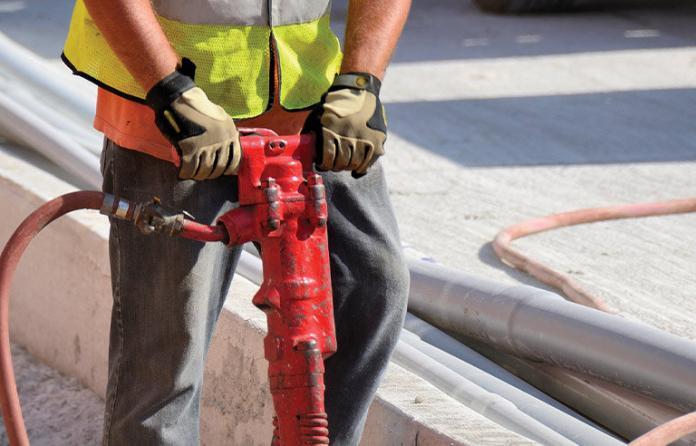
Tools linked to hand-arm vibration include chain saws, drills, grinders, riveters and jackhammers. The risk exists regardless of whether the tool is powered by electricity, gasoline or air.
Symptoms of HAVS include tingling, numbness, pain and discoloration in the fingers, as well as weakened grip from nerve and blood vessel damage.
A hallmark disorder of HAVS is vibration white finger, or Raynaud’s syndrome – an irreversible, potentially disabling condition that arises when repeated vibration exposure causes the blood vessels in the affected fingers to collapse.
OSHA offers tips for reducing the risk of HAVS. Among them:
- Use damping techniques or vibration isolators on equipment.
- Keep machines and tools in proper working order.
- Alternate between vibrating and nonvibrating tools.
- Allow workers to take 10- to- 15-minute breaks each hour.
- Educate workers on vibration hazards and best practices for limiting exposure.
- Advise workers to keep their hands warm and dry and to grip tools lightly.