

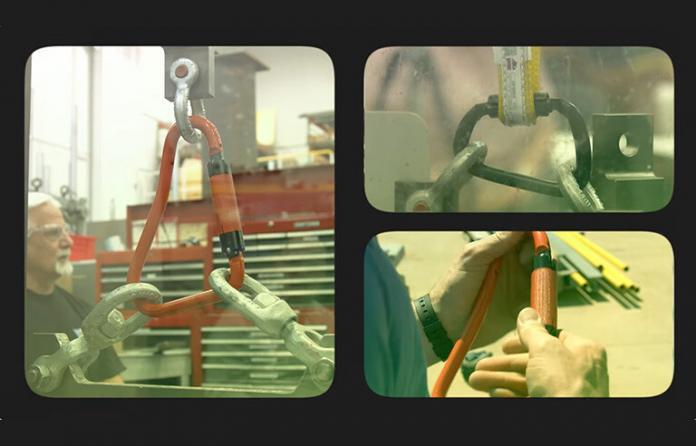
Dayton, OH — What’s the difference between carabiners designed as personal protective equipment for communications tower workers and quick rigging connectors used for material handling?
A new video from NATE: The Communications Infrastructure Contractors Association explains.
“We all use carabiners when it comes to fall protection and rescue gear,” host Sean Gilhooley says in the video, “but the bottom line is that these devices are out of scope for the [American Society of Mechanical Engineers] B30 standard for rigging hardware.
“Unfortunately, there are people out there in the field that are using these improperly and they’re paying a high price.”
Richard Cullum of NATE’s Safety Equipment Manufacturers Committee offers guidance while exploring the differences between carabiners and QRCs.
The latter equipment is designed to handle certain loading demands in work performed at high elevations and in potentially dangerous elements. QRC manufacturers often list a working load limit for the equipment, while carabiners contain a listing for kilonewtons, which apply to the force placed on harnesses, Cullum said.
In the absence of a specific industry standard on QRCs or equipment testing protocols, communications tower workers and employers may have other considerations to ponder. Although standard rigging components are ASME B30-approved, an allowance for nonstandard rigging components exists under the American National Standards Institute/American Society of Safety Professionals A10.48 standard covering fall protection and pre-job planning, among other topics.
“That allows a rigger to use nonstandard rigging components as long as the manufacturer stamps a working load limit on it or an engineer approves it,” Cullum said. “However, it could be against the corporate policy of your own company or the company you’re working for that owns the tower site.”
The Safety Equipment Manufacturers Committee is collaborating with the University of Dayton’s Structures and Materials Assessment, Research, and Test (SMART) Laboratory to test QRCs under real-world conditions as NATE helps work toward an industry standard on QRCs and testing.
Gilhooley says the objective of testing is to provide the industry “peace of mind when you use a QRC that it’s been made right and it will be able to take the forces that you’ve put into it.”
The video is the most recent installment in NATE’s Climber Connection series, which promotes safe work practices for communication tower workers.

