

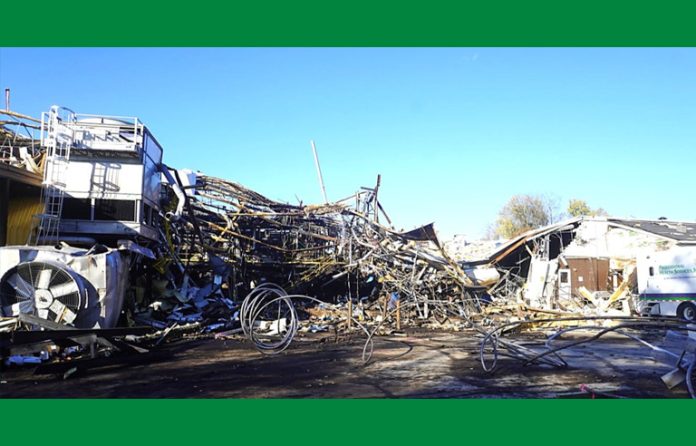
Washington — Chemical facility operators need to ensure their equipment can function within safe operating limits, the Chemical Safety Board says in a new final report.
The report details the investigation of a November 2024 incident at the Givaudan Sense Colour facility in Louisville, KY. Two workers died and three were seriously injured when a batch reactor vessel exploded after pressure accumulated during the production of food coloring. The explosion also caused extensive property damage to the facility and surrounding community.
CSB found that Givaudan didn’t fully realize the reactive hazards related to certain ingredients used in the coloring process. “The high pressure could not be adequately relieved through the undersized emergency pressure relief system,” which needed to be four times larger, the report states.
“This tragedy demonstrates that companies handling reactive chemical processes must fully understand the hazards of their materials, implement effective safeguards, and ensure that workers and surrounding communities are protected from catastrophic events,” CSB member Sylvia Johnson said in a press release.
The board issued multiple recommendations, including reiterating a call on OSHA to amend its standard on process safety management of highly hazardous chemicals (1910.119) to achieve more comprehensive control of reactive hazards that could have catastrophic consequences.
CSB also repeated a recommendation to the Environmental Protection Agency to revise accidental release prevention requirements to explicitly cover catastrophic reactive hazards that have the potential to seriously impact the public, including those resulting from self-reactive chemicals and combinations of chemicals and process-specific conditions.
Additionally, the agency offers lessons to help prevent similar incidents. Among them:
- Analyze any event in which chemicals or processes produce unanticipated temperature or pressure changes. This may indicate that the chemicals underwent a reaction that must be understood to allow for proper and safe equipment design.
- Perform additional hazard analyses or obtain further information to supplement chemical hazard information found in Safety Data Sheets.
- Ensure compliance with industry guidance for revalidation timelines of hazard analyses. Make sure competent workers are leading and contributing to discussions.
- Use visual and audible alarms to alert workers when safe operating limits are exceeded and follow established response protocol.
- Design or locate buildings containing workers or equipment critical for safe operation to protect from fires, explosions or toxic releases.

