

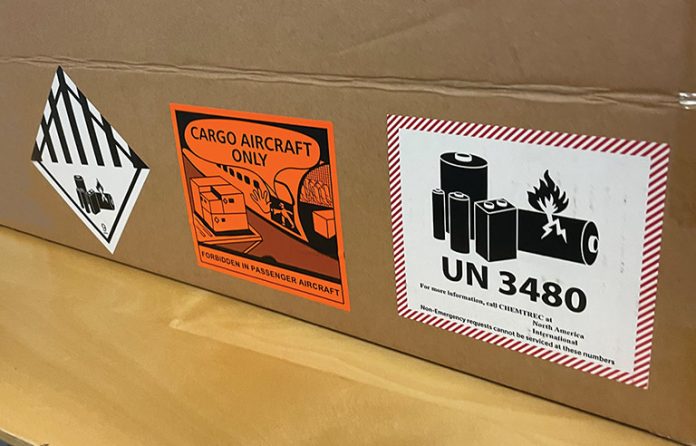
Explosions and fires sparked by the improper use, storage or disposal of lithium-ion batteries have made headlines nationwide for several years now.
Because these batteries store a large amount of energy in a small space, they’re used to power rechargeable power tools, wearable devices, laptop computers, electric vehicles and other items found in the workplace. They also serve as the main component for energy storage and battery backup systems.
OSHA and other safety experts say the batteries are generally safe to use under normal conditions. However, fires caused by lithium-ion batteries have some challenging properties that make it critical to ensure your workplace is prepared, said Holly Burgess, technical lead for industrial and chemical safety at the National Fire Protection Association, and Daniel Majano, program director at Electrical Safety Foundation International:
- They can emit toxic gases.
- They may spread out across an area because of combustion, resulting in a multipoint fire.
- They can burn so long that your facility’s sprinkler system may not provide enough water to extinguish them.
- They may reginite after the initial burn is over.
Here’s what can be done to help prevent lithium-ion battery fires.
Use lab-certified products
Some lithium-ion battery fires start because a “small number” of them are defective, Burgess notes.
According to a study published last year in the journal Green Energy and Intelligent Transportation, a common defect is manufacturing contamination from copper particles. This can cause short circuits inside the battery, which can lead to overheating or a dangerous “thermal runaway,” fires or explosions, and other dangers.
To help ensure your product isn’t defective, check to see if it’s certified by a Nationally Recognized Testing Laboratory.
Typical markings or symbols to look for on lithium-ion batteries: CSA (CSA Group), ETL (Interlek) or UL Solutions. A CE marking is for products sold in Europe. Those products aren’t certified by an NRTL.
Watch for warning signs
Another tip: Watch for any troubling changes to the battery – especially for wearable devices, OSHA says. Those changes can include heat, color, smell, noises, bulging, leaking or smoking.
“If safe to do so, move suspected damaged or defective batteries or devices to an area away from the structure or into fireproof containers and notify 911,” Majano said.
Also, keep lithium-ion batteries and their powered devices away from flammable materials.
Charge devices the right way
Overcharging is another issue. Experts say it’s best to remove a battery or battery-powered device from its charger as soon as it reaches 100%, or not too long afterward.
“Many times, batteries for power tools just get placed on the charger and left there until they are needed, sometimes days at a time,” Burgess said. “It’s important to charge batteries to their full capacity and then remove them from the charger.”
Only use charging equipment that’s specifically designed for the battery or device and avoid using “aftermarket” chargers. Follow all the manufacturer’s instructions for charging, as well as for storage, use and maintenance, OSHA says.
“When replacing batteries and chargers for an electronic device,” the agency adds, “ensure they are specifically designed and approved for use with the device and they are purchased from the device’s manufacturer or a manufacturer-authorized reseller.”
Don’t charge batteries or devices in front of doors/windows or in hallways, Majano advises, because they can block exits during a fire.
Store and use batteries safely
- Keep lithium-ion batteries as close to room temperature as possible.
- Don’t store them in direct sunlight or inside vehicle cabs.
- Only use batteries that are specifically designed for the product.
- Insert batteries the proper way.
- To properly dispose of batteries, check with a local recycling center or waste hauler for instructions.
“Only have device repairs performed by a qualified professional,” Burgess added.
Plan and train
When developing emergency plans for lithium-ion battery fires, Majano said, it’s vital to make sure workers understand the potential hazards, as well as the signs of a failing or problematic battery.
Further, contractors and property owners should consult with a fire protection engineer when planning a protection plan for a sprinkler system near lithium-ion batteries, Burgess said.
Another step: Have site managers and fire department personnel conduct facility walkthroughs to “ensure everyone is on the same page with lithium-ion batteries being produced, stored and utilized within the facility,” she said. If any changes are made to those plans, notify the fire department so it has the most accurate information in case of an emergency.
In the event of a fire, Majano says, evacuate the facility, call 911 and – if you’re certain that the source is a lithium-ion battery – communicate that to the first responders.

