
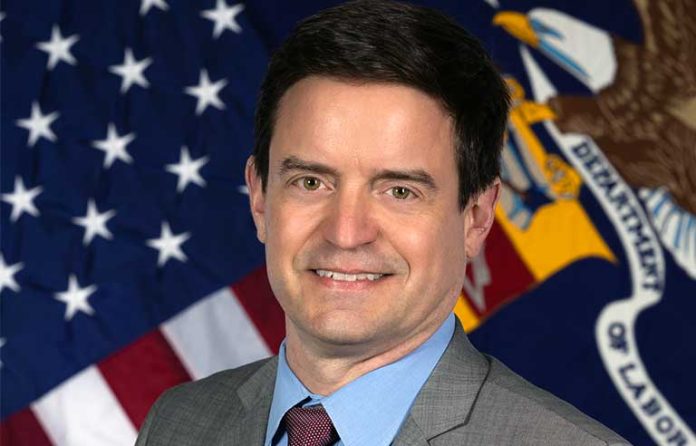
Washington — A permanent standard on COVID-19 for the health care industry could be finalized in the fall, OSHA administrator Doug Parker testified May 25 during a House Workforce Protections Subcommittee hearing.
Parker added that his agency, in collaboration with the Small Business Administration, intends to convene a Small Business Regulatory Enforcement Fairness Act panel to review a potential standard on preventing workplace violence in health care settings.
Although OSHA’s priority is to finish its rulemaking on the COVID-19 in health care rule and an infectious disease rule focused on health care workers, “it’s not keeping us from doing other work,” Parker said, adding that the agency is working “very diligently” on the workplace violence in health care standard.
When asked by Rep. Judy Chu (D-CA) whether OSHA could have a standard on heat injury and illness prevention finalized by spring 2024, Parker said that “could be challenging.”
He continued: “It just depends on the rate at which rulemaking goes. The COVID rulemaking and the prioritization of infectious disease … has taken some valuable time. It has set back some of our other important health-related rulemaking.”
OSHA challenges
The hearing also included Thomas Costa, director of education, workforce and income security in the Government Accountability Office. Because no specific standard on COVID-19 exists, Costa said, OSHA faces “challenges applying existing standards to COVID cases” and sometimes has to rely on the General Duty Clause.
“However, violations of the General Duty Clause require substantial time to collect the documentation to support a citation,” he said. “Moreover, OSHA must issue a citation within six months of any violation, and OSHA sometimes didn’t know about possible violations for months, which limit OSHA’s ability to cite General Duty Clause violations.”
Costa noted that of the roughly 1,000 COVID-19-related violations that OSHA issued, only 25 cited the General Duty Clause. He also said, from February 2020 through this past December, that OSHA received more than 22,000 COVID-19-related reports and conducted more than 3,000 inspections related to COVID-19.
Costa also spoke on the challenges OSHA faces in getting employers who are required to submit injury and illness data to do so. He said around half of establishments didn’t fulfill their requirement from 2016 to 2018, “although reporting has increased in recent years.”
OSHA issued 27,000 postcard reminders in 2019, but got a 20% response rate.
“Without good data, [OSHA] may not be inspecting the most dangerous establishments,” Costa said. “Without more action, OSHA might not be prepared for the next crisis.”