
Intro and Top 10 lists | Top 10 by OSHA region |
Penalty Box
Q&A with OSHA’s Patrick Kapust
| Citation Solutions
Fall Protection – General Requirements (1926.501) maintained its position as OSHA’s most frequently cited worker safety and health standard in fiscal year 2022, marking its 12th straight year atop the agency’s “Top 10” list.
Here, Safety+Health presents the Top 10 data for FY 2022 (which concluded Sept. 30), the “penalty box” of the year’s largest fines, an exclusive interview with Patrick Kapust, deputy director of OSHA’s Directorate of Enforcement Programs, and a listing of Safety+Health advertisers offering products and services to help you avoid OSHA’s Top 10 most cited violations.
Most cited violations, fiscal year 2022
FALL PROTECTION – GENERAL REQUIREMENTS
Standard: 1926.501
Total Violations: 5,980
Fiscal year 2021 ranking: 1
(5,271 violations)
This standard outlines where fall protection is required, which systems are appropriate for given situations, the proper construction and installation of safety systems, and the proper supervision of employees to prevent falls. It’s designed to protect employees on walking-working surfaces (horizontal or vertical) with an unprotected side or edge above 6 feet.
TOP 5 SECTIONS CITED:
- 1926.501(b)(13): Each employee engaged in residential construction activities 6 feet or more above lower levels shall be protected by guardrail systems, safety net systems or personal fall arrest system unless another provision in paragraph (b) of this section provides for an alternative fall protection measure. – 4,183 violations
- 1926.501(b)(1): Each employee on a walking-working surface (horizontal and vertical surface) with an unprotected side or edge that is 6 feet or more above a lower level shall be protected from falling by the use of guardrail systems, safety net systems or personal fall arrest systems. – 709
- 1926.501(b)(10): Except as otherwise provided in paragraph (b) of this section, each employee engaged in roofing activities on low-slope roofs with unprotected sides and edges 6 feet or more above lower levels shall be protected from falling by guardrail systems; safety net systems; personal fall arrest systems; or a combination of warning line system and guardrail system, warning line system and safety net system, or warning line system and personal fall arrest system, or warning line system and safety monitoring system. – 411
- 1926.501(b)(11): Each employee on a steep roof with unprotected sides and edges 6 feet or more above lower levels shall be protected from falling by guardrail systems with toeboards, safety net systems or personal fall arrest systems. – 273
- 1926.501(b)(4): “Holes.” – 192
HAZARD COMMUNICATION
Standard: 1910.1200
Total violations: 2,682
Fiscal year 2021 ranking: 5 (1,939 violations)
This standard addresses chemical hazards – both those chemicals produced in the workplace and those imported into the workplace. It also governs the communication of those hazards to workers.
TOP 5 SECTIONS CITED:
- 1910.1200(e)(1): Employers shall develop, implement and maintain at each workplace a written hazard communication program which at least describes how the criteria specified in paragraphs (f), (g) and (h) of this section for labels and other forms of warning, Safety Data Sheets, and employee information and training will be met. – 978 violations
- 1910.1200(h)(1): Employers shall provide employees with effective information and training on hazardous chemicals in their work area at the time of their initial assignment, and whenever a new chemical hazard the employees have not previously been trained about is introduced into their work area. Information and training may be designed to cover categories of hazards (e.g., flammability, carcinogenicity) or specific chemicals. Chemical-specific information must always be available through labels and Safety Data Sheets. – 713
- 1910.1200(g)(8): The employer shall maintain in the workplace copies of the required Safety Data Sheets for each hazardous chemical, and shall ensure they are readily accessible during each work shift to employees when they are in their work area(s). – 285
- 1910.1200(f)(6): Workplace labeling. Except as provided in paragraphs (f)(7) and (f)(8) of this section, the employer shall ensure each container of hazardous chemicals in the workplace is labeled, tagged or marked. – 252
- 1910.1200(g)(1): Chemical manufacturers and importers shall obtain or develop a Safety Data Sheet for each hazardous chemical they produce or import. Employers shall have a Safety Data Sheet in the workplace for each hazardous chemical which they use. – 199
LADDERS
Standard: 1926.1053
Total Violations: 2,471
Fiscal year 2021 ranking: 3 (2,018 violations)
This standard covers general requirements for all ladders.
TOP 5 SECTIONS CITED:
- 1926.1053(b)(1): When portable ladders are used for access to an upper landing surface, the ladder side rails shall extend at least 3 feet above the upper landing surface to which the ladder is used to gain access; or, when such an extension is not possible because of the ladder’s length, then the ladder shall be secured at its top to a rigid support that will not deflect, and a grasping device, such as a grab rail, shall be provided to assist employees in mounting and dismounting the ladder. In no case shall the extension be such that ladder deflection under a load would, by itself, cause the ladder to slip off its support. – 1,545 violations
- 1926.1053(b)(4): Ladders shall be used only for the purpose for which they were designed. – 295
- 1926.1053(b)(13): The top or top step of a stepladder shall not be used as a step. – 204
- 1926.1053(b)(16): Portable ladders with structural defects, such as, but not limited to, broken or missing rungs, cleats or steps; broken or split rails; corroded components; or other faulty or defective components, shall either be immediately marked in a manner that readily identifies them as defective, or be tagged with “Do Not Use” or similar language, and shall be withdrawn from service until repaired. – 79
- 1926.1053(b)(5): Non-self-supporting ladders shall be used at an angle such that the horizontal distance from the top support to the foot of the ladder is approximately one-quarter of the working length of the ladder (the distance along the ladder between the foot and the top support). – 65
RESPIRATORY PROTECTION
Standard: 1910.134
Total Violations: 2,430
Fiscal year 2021 ranking: 2 (2,521 violations)
This standard directs employers on establishing or maintaining a respiratory protection program. It lists requirements for program administration; worksite-specific procedures; respirator selection; employee training; fit testing; medical evaluation; respirator use; and respirator cleaning, maintenance and repair.
TOP 5 SECTIONS CITED:
- 1910.134(e)(1): The employer shall provide a medical evaluation to determine the employee’s ability to use a respirator, before the employee is fit-tested or required to use the respirator in the workplace. The employer may discontinue an employee’s medical evaluations when the employee is no longer required to use a respirator. – 497 violations
- 1910.134(f)(2): The employer shall ensure an employee using a tight-fitting facepiece respirator is fit-tested prior to initial use of the respirator, whenever a different respirator facepiece (size, style, model or make) is used, and at least annually thereafter. – 459
- 1910.134(c)(1): In any workplace where respirators are necessary to protect the health of the employee or whenever respirators are required by the employer, the employer shall establish and implement a written respiratory protection program with worksite-specific procedures. The program shall be updated as necessary to reflect those changes in workplace conditions that affect respirator use. – 323
- 1910.134(c)(2): Where respirator use is not required. – 168
- 1910.134(f)(1): The employer shall ensure employees using a tight-fitting facepiece respirator pass an appropriate qualitative fit test (QLFT) or quantitative fit test (QNFT) as stated in this paragraph. – 136
SCAFFOLDING
Standard: 1926.451
Total Violations: 2,285
Fiscal year 2021 ranking: 4 (1,943 violations)
This standard covers general safety requirements for scaffolding, which should be designed by a qualified person and constructed and loaded in accordance with that design. Employers are bound to protect construction workers from falls and falling objects while working on or near scaffolding at heights of 10 feet or higher.
TOP 5 SECTIONS CITED:
- 1926.451(g)(1): Each employee on a scaffold more than 10 feet above a lower level shall be protected from falling to that lower level. – 644 violations
- 1926.451(c)(2): Supported scaffold poles, legs, posts, frames and uprights shall bear on base plates and mud sills or other adequate firm foundation. – 306
- 1926.451(e)(1): When scaffold platforms are more than 2 feet above or below a point of access, portable ladders; hook-on ladders; attachable ladders; stair towers (scaffold stairways/towers); stairway-type ladders (such as ladder stands); ramps; walkways; integral prefabricated scaffold access; or direct access from another scaffold, structure, personnel hoist or similar surface shall be used. Cross braces shall not be used as a means of access. – 277
- 1926.451(b)(1): Each platform on all working levels of scaffolds shall be fully planked or decked between the front uprights and the guardrail supports. – 267
- 1926.451(g)(4): Guardrail systems installed to meet the requirements of this section shall comply with the following provisions (guardrail systems built in accordance with Appendix A to this subpart will be deemed to meet the requirements of paragraphs (g)(4)(vii), (viii) and (ix) of this section). – 152
LOCKOUT/TAGOUT
Standard: 1910.147
Total Violations: 2,175
Fiscal year 2021 ranking: 6 (1,670 violations)
This standard outlines minimum performance requirements for the control of hazardous energy during servicing and maintenance of machines and equipment.
TOP 5 SECTIONS CITED:
- 1910.147(c)(4): Energy control procedure. – 638 violations
- 1910.147(c)(7): Training and communication. – 434
- 1910.147(c)(6): Periodic inspection. – 338
- 1910.147(c)(1): The employer shall establish a program consisting of energy control procedures, employee training and periodic inspections to ensure before any employee performs any servicing or maintenance on a machine or equipment where the unexpected energizing, startup or release of stored energy could occur and cause injury, the machine or equipment shall be isolated from the energy source and rendered inoperative. – 199
- 1910.147(c)(5): Protective materials and hardware. – 63
POWERED INDUSTRIAL TRUCKS
Standard: 1910.178
Total Violations: 1,922
Fiscal year 2021 ranking: 9 (1,404 violations)
This standard covers the design, maintenance and operation of powered industrial trucks, including forklifts and motorized hand trucks. It also covers operator training requirements.
TOP 5 SECTIONS CITED:
- 1910.178(l)(1): Safe operation. – 500 violations
- 1910.178(l)(4): Refresher training and evaluation. – 254
- 1910.178(l)(6): The employer shall certify that each operator has been trained and evaluated as required by this paragraph (l). The certification shall include the name of the operator, the date of the training, the date of the evaluation and the identity of the person(s) performing the training or evaluation. – 223
- 1910.178(p)(1): If at any time a powered industrial truck is found to be in need of repair, defective or in any way unsafe, the truck shall be taken out of service until it has been restored to safe operating condition. – 132
- 1910.178(q)(7): Industrial trucks shall be examined before being placed in service, and shall not be placed in service if the examination shows any condition adversely affecting the safety of the vehicle. Such examination shall be made at least daily. Where industrial trucks are used on a round-the-clock basis, they shall be examined after each shift. Defects when found shall be immediately reported and corrected. – 120
FALL PROTECTION – TRAINING REQUIREMENTS
Standard: 1926.503
Total Violations: 1,778
Fiscal year 2021 ranking: 7
(1,660 violations)
This standard addresses training requirements for employers in regard to fall protection.
TOP 5 SECTIONS CITED:
- 1926.503(a)(1): The employer shall provide a training program for each employee who might be exposed to fall hazards. The program shall enable each employee to recognize the hazards of falling and shall train each employee in the procedures to be followed in order to minimize these hazards. – 1,235 violations
- 1926.503(b)(1): The employer shall verify compliance with paragraph (a) of this section by preparing a written certification record. The written certification record shall contain the name or other identity of the employee trained, the date(s) of the training, and the signature of the person who conducted the training or the signature of the employer. If the employer relies on training conducted by another employer or completed prior to the effective date of this section, the certification record shall indicate the date the employer determined the prior training was adequate rather than the date of actual training. – 356
- 1926.503(a)(2): The employer shall ensure each employee has been trained, as necessary, by a competent person. – 123
- 1926.503(c)(3): Inadequacies in an affected employee’s knowledge or use of fall protection systems or equipment indicate that the employee has not retained the requisite understanding or skill. – 42
- 1926.503(c): “Retraining.” When the employer has reason to believe that any affected employee who has already been trained does not have the understanding and skill required by paragraph (a) of this section, the employer shall retrain each such employee. – 19
PERSONAL PROTECTIVE AND LIFESAVING EQUIPMENT – EYE AND FACE PROTECTION
Standard: 1926.102
Total Violations: 1,582
Fiscal year 2021 ranking: 8 (1,451 violations)
This standard addresses appropriate personal protective equipment for workers exposed to eye or face hazards, such as flying particles and chemical gases or vapors.
TOP 4 SECTIONS CITED:
- 1926.102(a)(1): The employer shall ensure each affected employee uses appropriate eye or face protection when exposed to eye or face hazards from flying particles, molten metal, liquid chemicals, acids or caustic liquids, chemical gases or vapors, or potentially injurious light radiation. – 1,553 violations
- 1926.102(a)(2): The employer shall ensure each affected employee uses eye protection that provides side protection when there is a hazard from flying objects. Detachable side protectors (e.g., clip-on or slide-on side shields) meeting the pertinent requirements of this section are acceptable. – 25
- 1926.102(a)(3): The employer shall ensure each affected employee who wears prescription lenses while engaged in operations that involve eye hazards wears eye protection that incorporates the prescription in its design, or wears eye protection that can be worn over the prescription lenses without disturbing the proper position of the prescription lenses or the protective lenses. – 3
- 1926.102(c)(1): Selection of shade numbers for welding filter. – 1
MACHINE GUARDING
Standard: 1910.212
Total Violations: 1,488
Fiscal year 2021 ranking: 10 (1,105 violations)
This standard covers guarding of machinery to protect operators and other employees from hazards, including those created by point of operation, ingoing nip points, rotating parts, flying chips and sparks.
TOP 5 SECTIONS CITED:
- 1910.212(a)(1): Types of guarding. One or more methods of machine guarding shall be provided to protect the operator and other employees in the machine area from hazards such as those created by point of operation, ingoing nip points, rotating parts, flying chips and sparks. – 980 violations
- 1910.212(a)(3): Point of operation guarding. – 384
- 1910.212(b): Anchoring fixed machinery. Machines designed for a fixed location shall be securely anchored to prevent walking or moving. – 63
- 1910.212(a)(2): General requirements for machine guards. Guards shall be affixed to the machine where possible and secured elsewhere if for any reason attachment to the machine is not possible. The guard shall be such that it does not offer an accident hazard in itself. – 37
- 1910.212(a)(5): Exposure of blades. When the periphery of the blades of a fan is less than 7 feet above the floor or working level, the blades shall be guarded. The guard shall have openings no larger than one-half inch. – 17
*Tables based on OSHA Information System data from Oct. 1, 2021, to Sept. 30, 2022. Data was current as of Oct. 14.
Top 10 standards cited as “serious,” fiscal year 2022
As defined by OSHA: A “serious” violation is “one in which there is a substantial probability that death or serious physical harm could result, and the employer knew or should have known of the hazard.”
| STANDARD | TOTAL VIOLATIONS | |
| 1 | Fall Protection – General Requirements (1926.501 | 4,823 |
| 2 | Ladders (1926.1053) | 2,236 |
| 3 | Scaffolding (1926.451) | 2,155 |
| 4 | Hazard Communication (1910.1200) | 1,894 |
| 5 | Lockout/Tagout (1910.147) | 1,814 |
| 6 | Respiratory Protection (1910.134) | 1,751 |
| 7 | Powered Industrial Trucks (1910.178) | 1,420 |
| 8 | Personal Protective and Lifesaving Equipment – Eye and Face Protection (1926.102) | 1,368 |
| 9 | Machine Guarding (1910.212) | 1,286 |
| 10 | Fall Protection – Training Requirements (1926.503) | 1,228 |
Top 10 standards cited as “willful,” fiscal year 2022
Defined by OSHA: A “willful” violation is one “committed with an intentional disregard of or plain indifference to the requirements of the Occupational Safety and Health Act and requirements.”
| STANDARD | TOTAL VIOLATIONS | |
| 1 | Fall Protection – General Requirements (1926.501 | 201 |
| 2 | Requirements for Protective Systems (1926.652) | 26 |
| 3 | Personal Protective and Lifesaving Equipment – Eye and Face Protection (1926.102) | 25 |
| 4 | Lockout/Tagout (1910.147) | 24 |
| 5 | Machine Guarding (1910.212) | 14 |
| 6 | Ladders (1926.1053) Scaffolding (1926.451) |
11 11 |
| 7 | Excavations – Specific Excavation Requirements (1926.651) | 10 |
| 8 | Steel Erection – Fall Protection (1926.760) | 9 |
| 9 | Walking-Working Surfaces – General Requirements (1910.22) | 8 |
Citation Solutions
Safety+Health advertisers offer products and services to help you avoid OSHA’s Top 10 most cited standards
|
Sponsored by
|
Next: Top 10 by OSHA region > |

Intro and Top 10 listings |
Top 10 by OSHA region | Penalty Box
Q&A with OSHA’s Patrick Kapust |
Citation Solutions
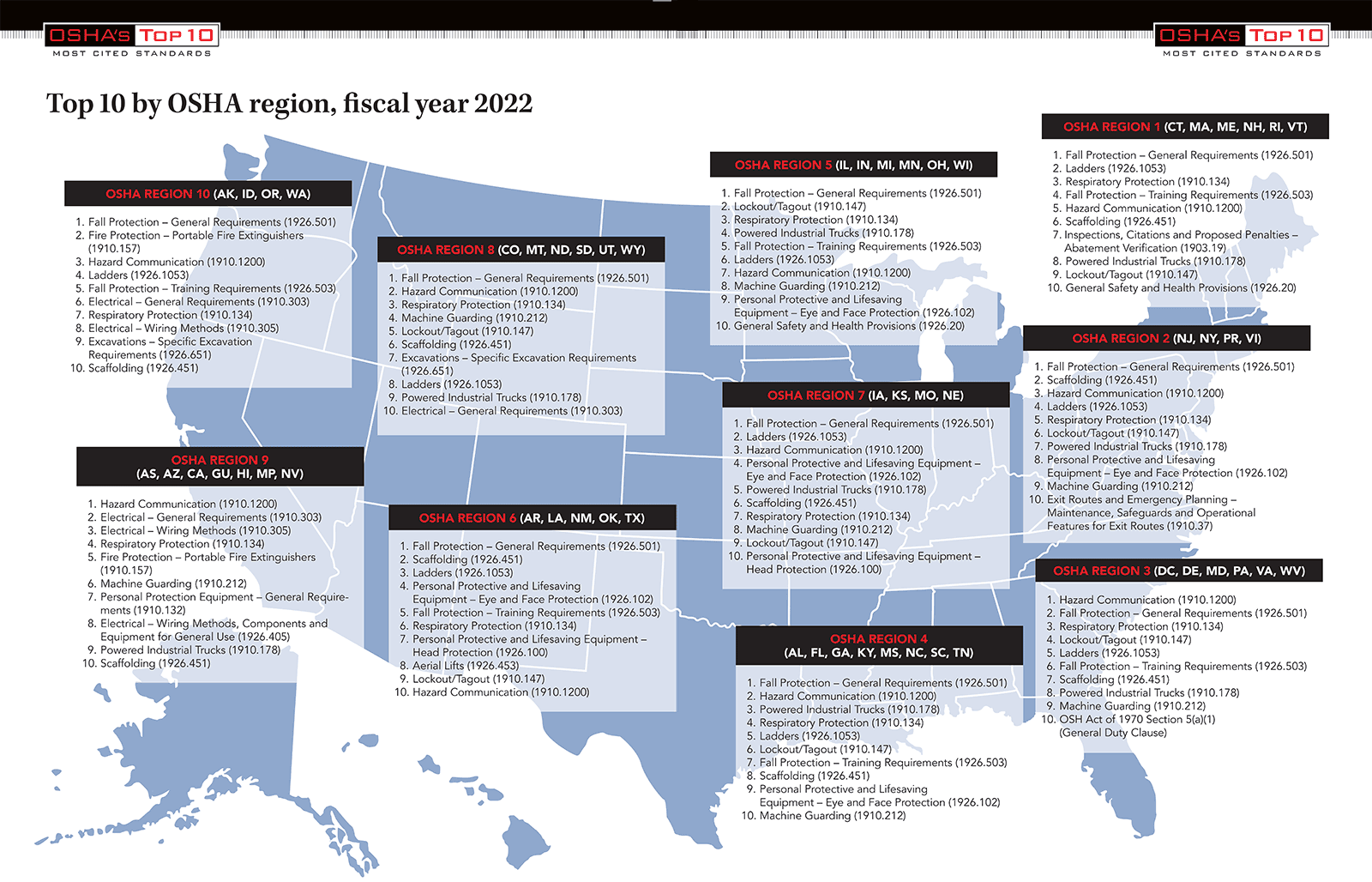
Top 10 by OSHA region
Citation Solutions
Safety+Health advertisers offer products and services to help you avoid OSHA’s Top 10 most cited standards
|
Sponsored by |
Next: Penalty Box > Top proposed monetary penalties |
Intro and Top 10 listings |
Top 10 by OSHA region | Penalty Box
Q&A with OSHA’s Patrick Kapust |
Citation Solutions
Penalty Box
The list of OSHA’s highest proposed monetary penalties in fiscal year 2022 comprises those stemming from a single in-cident or related incidents in which one or more employers are alleged to have failed to adhere to safe work practices. These failures put workers at risk – in some cases, fatally. The following information was gathered from press releases issued by federal OSHA between Oct. 1, 2021, and Sept. 30, 2022, as well as data provided by the agency’s communications team.
(Note: Dollar amounts may be reduced as part of a settlement agreement or litigation.)
$1,343,363
EMPLOYER: ALJ Home Improvement Inc.
LOCATION: Spring Valley, NY (OSHA Region 2)
BUSINESS TYPE: Roofing contractor
INSPECTION TRIGGER: Program related
EVENT: OSHA determined that the employer failed to provide fall protection training or ensure the use of effective fall protection safeguards after a worker’s fatal fall from the roof of a three-story residential construction project. The fatal fall marked the second by a company employee in three years.
MAJOR CITATIONS: ALJ Home Improvement was cited for three serious and nine willful violations. OSHA has investigated the company six times since 2019.
$1,245,773*
EMPLOYER: The Auto Store LLC/My Auto Store
LOCATION: Camden, NJ (OSHA Region 2)
BUSINESS TYPE: Auto parts seller
INSPECTION TRIGGER: Referral
EVENT:OSHA inspectors found that the employer failed to have proper safeguards to protect workers from an incidental machine startup after a vehicle lift crushed a worker’s hand. Other agency findings included the company’s willful failure to develop and implement lockout/tagout and machine guard-ing processes to prevent workers from being hit by the moving conveyor line.
MAJOR CITATIONS: The company was cited for 26 serious, six willful and one repeat violation.
$1,201,031
EMPLOYER: DME Construction Associates Inc.
LOCATION: Old Bethpage, NY (OSHA Region 2)
BUSINESS TYPE: Roofing contractor
INSPECTION TRIGGER: Fatality
EVENT: A worker fell 18 feet through an unprotected skylight and died. During its inspection, OSHA found that the employer exposed workers to falls of up to 22 feet from other unguarded roof openings and roof edges while neglecting to provide personal fall protection equipment. Before the inspection, OSHA had cited the employer for fall-related hazards seven times since 2011, making DME Construction Associates eligible for the agency’s Severe Violator Enforcement Program.
MAJOR CITATIONS: DME Construction Associates was cited for four serious and nine willful violations.
$1,191,292
EMPLOYER: JDC Demolition Co. Inc.
LOCATION: Boston, MA (OSHA Region 1)
BUSINESS TYPE: Poultry processing plant
INSPECTION TRIGGER: Fatality
EVENT: : A worker using a hydraulic excavator with a hammer attachment fell 80 feet and died when the concrete structural member the worker was jackham-mering collapsed. The floor collapse occurred on the worker’s first day of the job. Shortly beforehand, a fellow employee raised concerns about the floor’s safety to the foreman. The victim didn’t receive a safety briefing and wasn’t trained to adhere to the engineer’s demolition plan.
MAJOR CITATIONS: JDC Demolition Co. was cited for two serious, eight willful and one “other” violation related to recordkeeping forms. The willful violations were also classified as egregious.
$1,090,231*
EMPLOYER: Charm Builders Ltd.
LOCATION: Wheeling, WV (OSHA Region 3)
BUSINESS TYPE: Roofing contractor
INSPECTION TRIGGER: Complaint
EVENT: Roofing workers on a two-story office building complained after the company allowed workers to operate without required fall protection. Some were working at a height of up to 28 feet.
MAJOR CITATIONS: OSHA cited Charm Builders for six egregious-willful, four repeat and one serious violation for failure to ensure the use of fall protection, not providing training on fall hazards, allowing unsafe use of portable ladders and not ensuring workers used safety glasses.
$907,253
EMPLOYER: Phoenix Environmental Laboratories Inc.
LOCATION: Manchester, CT (OSHA Region 1)
BUSINESS TYPE: Environmental testing laboratory
INSPECTION TRIGGER: Complaint
EVENT: OSHA found that the employer failed to adequately address known, persistent worker complaints to the workplace carcinogen methylene chloride, which prompted worker dizziness, lightheadedness, headaches and unsteady walking. The agency reported that improper ventilation and recurring leaks from equipment in work areas also contributed to excessive exposure to methylene chloride.
MAJOR CITATIONS: OSHA cited Phoenix Environmental Laboratories for six willful violations, 10 serious and one other-than-serious violation.
$796,817
EMPLOYER: Arrow Plumbing LLC and Rick Smith
LOCATION: Grain Valley, MO (OSHA Region 7)
BUSINESS TYPE: Plumbing, heating and air-conditioning contractor
INSPECTION TRIGGER: Referral
EVENT: OSHA inspectors found Arrow Plumbing, among other violations, willfully permitted workers to enter a trench at a residential construction site without providing cave-in protection, and water had accumulated in the trench. Additionally, the organization allowed workers to walk under suspended loads and use ladders improperly, and didn’t provide workers with hard hats or training. The company’s negligence came after an Arrow Plumbing worker died in a trench collapse in 2016.
MAJOR CITATIONS: Arrow Plumbing and Rick Smith were cited for five serious, four willful and one repeat violation.
$709,960
EMPLOYER: The Yenkin-Majestic Paint Corp./OPC Polymers
LOCATION: Hugo, OK (OSHA Region 6)
BUSINESS TYPE: Paint resin and coating manufacturer
INSPECTION TRIGGER: Fatality
EVENT: The manway cover and gasket of a kettle reactor vessel failed, releasing a flammable vapor cloud that permeated the plant, igniting and triggering an explosion and fire. A press operator was killed and eight other workers were hospitalized. OSHA later found that the employer improperly altered the kettle reactor vessel and returned it to service despite previous failure.
MAJOR CITATIONS: OSHA cited Yenkin-Majestic for 32 serious and two willful violations, including those related to process safety management of highly hazardous chemicals. The company also was placed in OSHA’s Severe Violator Enforcement Program.
$685,777*
EMPLOYER: Family Dollar Stores Inc./Family Dollar Stores of Ohio LLC/Family Dollar Operations LLC/Dollar Tree Inc./Dollar Tree Management LLC/Dollar Tree Stores Inc.
LOCATION: Maple Heights, OH (OSHA Region 5)
BUSINESS TYPE: Discount retailer
INSPECTION TRIGGER: Complaint
EVENT: OSHA reported unsafe walking-working surfaces; unstable stacks of merchandise; and blocked or obstructed exit routes, fire extinguishers and elec-trical panels.
MAJOR CITATIONS: Family Dollar Stores was cited for four willful and one repeat violation.
$638,101*
EMPLOYER: Dollar General Corp./Dollar General Store No. 08808
LOCATION: Hogansville, GA (OSHA Region 4)
BUSINESS TYPE: Discount retailer
INSPECTION TRIGGER: Complaint
EVENT: OSHA inspectors saw materials stacked in an unsafe manner, as well as unclean receiving areas that exposed workers at Dollar General Store No. 08808 to slips, trips and struck-by hazards. The agency also found that the employer failed to keep exit routes and electrical panels unobstructed, ex-posing workers to fire and entrapment hazards.
MAJOR CITATIONS: OSHA cited Dollar General and the Hogansville store with four willful and one repeat violation.
*Note: These inspections haven’t been indicated as closed. The information listed may change. (For example, violations may be added or deleted).
Citation Solutions
Safety+Health advertisers offer products and services to help you avoid OSHA’s Top 10 most cited standards
|
Sponsored by
|
Next: Q & A with OSHA’s Patrick Kapust > |
Intro and Top 10 listings | Top 10 by OSHA region
Penalty Box
Q&A with OSHA’s Patrick Kapust |
Citation Solutions
Q & A with OSHA’s Patrick Kapust

Preliminary data for OSHA’s Top 10 most cited standards for fiscal year 2022 was announced Sept. 20 during the 2022 NSC Safety Congress & Expo in San Diego.
Later that day, Patrick Kapust, deputy director of OSHA’s Directorate of Enforcement Programs, sat down with Safety+Health Associate Editor Kevin Druley to discuss the list, along with actions safety pros can take to help mitigate workplace hazards.
The conversation below has been edited.
Safety+Health: Fall Protection – General Requirements is No. 1 for the 12th year in a row. Why does this continue to be such a problem? How is OSHA working to abate it?
Kapust: Fall hazard violations have remained on the top of the list because the hazard is present in most workplaces. Ladders, staircases, powered platforms, unprotected floor holes and any elevated work surfaces. OSHA continues to pursue several approaches to educate both workers and employers through outreach with our alliance partners, and has developed a webpage with useful, up-to-date information on fall protection. OSHA also discusses its efforts in this area through the Fall Prevention Campaign.
The agency believes ensuring safety and health as a core value in work is essential for stakeholders to help prevent these types of injuries and fatalities. Safety and health management systems are an excellent start in demonstrating that core value. As the agency addresses fall protection issues in construction, this continues to be our message. OSHA is helping companies by providing compliance assistance materials and training that emphasizes prevention of falls in construction with the regulated community through outreach. As an example, OSHA, along with our partners, CPWR – The Center for Construction Research and Training and NIOSH, work together through the National Campaign to Prevent Falls in Construction. Its banner annual event, the Fall Stand-Down, reaches over a quarter of a million employees annually on how to prevent falls in construction.
We also continue to enforce the regulatory provisions of the standards to prevent falls. In the first three quarters of FY 2022, OSHA conducted over 9,700 inspections in the construction industry, of which 47% identified fall hazards with over $34 million in penalties issued for serious and willful violations in fall protection.
S+H: Which trends or data in this year’s Top 10 list stand out to you?
Kapust: What stands out to me right away is that four out of the top six cited standards are specific to employees working at elevated heights in the construction industry. OSHA emphasizes three simple steps to prevent falls: plan, provide and train, as outlined on the Fall Prevention Campaign website.
S+H: A training component is part of many OSHA standards. Can you explain what compliance officers look for when examining training procedures and protocols?
Kapust: Before engaging in any potentially hazardous activities, workers must receive appropriate safety and health training from their employers, as required under numerous OSHA training standards. As part of the inspection process, OSHA compliance officers will determine whether training is required, whether the necessary training was provided and whether the training was effective. To do that, compliance officers review the employer training records and conduct employee and employer interviews to evaluate how well employees understand and can apply the training.
S+H: OSHA has a number of new standards in the works. What kind of impact do new standards carry once they’re promulgated and go into effect?
Kapust: Although the impact of any new standard is highly dependent on the nature of the hazards and industries affected, all rulemakings accomplish certain important objectives. OSHA standards create a level playing field – so that all employers know what is expected of them to protect their workers – and help prevent employers from cutting corners on workplace safety. OSHA standards also let workers know that they have certain basic rights to workplace safety that will help them return home to their loved ones, safe and sound, every day. OSHA’s whistleblower protections also let workers know that they have the right to speak up about hazards without fear of retaliation.
S+H: What are some common misconceptions you hear about enforcement or other matters?
Kapust: One common misconception is that OSHA just wants to issue citations and penalties. As stated in OSHA’s mission, the agency was created to ensure safe and healthful working conditions for workers by setting and enforcing standards and by providing training, outreach, education and assistance. As you can see, there are a number of tools in OSHA’s tool bag. Enforcement is just one. When OSHA does issue a citation, employers have the right to have an informal conference with the OSHA area director to discuss citations, penalties, abatement dates or any other information pertinent to the inspection. This is an excellent opportunity for the employer to work with OSHA to resolve the citations and eliminate hazards. The goal is to go beyond this inspection and begin working toward long-term safety and health improvements at that particular workplace.
S+H: How has the COVID-19 pandemic influenced enforcement activities?
Kapust: Although OSHA didn’t waive compliance with any of its requirements during the pandemic, because of certain business shutdowns and supply chain shortages, the agency set forth temporary enforcement discretion policies for compliance officers to consider when enforcing OSHA standards, such as annual fit testing of N95 respirators under the Respiratory Protection standard (1910.134) or equivalent provisions of other health standards.
OSHA also provided interim guidance advising compliance officers to evaluate an employer’s good faith efforts during the pandemic to comply with other standards related to training, auditing, equipment inspections and testing. These enforcement discretions were time-limited to the first year of the pandemic and administered on a case-by-case basis.
In addition, some of OSHA’s reporting requirements were not enforced during the beginning of the pandemic because in some situations it was very difficult for employers to determine if COVID-19 fatalities and hospitalizations were work-related where there was ongoing community transmission.
Despite these early enforcement discretions, OSHA’s most frequently cited standard during this pandemic was the Respiratory Protection standard, such as lack of fit testing, medical evaluations, written programs and training. Because of this, one can see from OSHA’s annual Top 10 rankings of violations, that the Respiratory Protection standard rose from No. 5 in FY 2019 to No. 2 in FY 2021. But now as the pandemic has been easing with increasing vaccinations, from our preliminary rankings for FY 2021, this standard has dropped down from the second most cited standard to the fourth most cited standard.
S+H: What updates can you provide on national enforcement initiatives or National Emphasis Programs that are in the works?
Kapust: OSHA’s National Emphasis Programs focus on high-hazard processes and industries, typically involving serious injury or death to employees. For example, OSHA’s NEP on amputations focuses on manufacturing industries, where there is a higher potential for amputations. Employers who implement proper lockout/tagout procedures and provide proper machine guarding on dangerous machinery can eliminate the amputations hazards and may take out the lockout/tagout violations and machine guarding violations from the Top 10 list. The agency is focusing on new NEPs, but they’re in the early stages at this time.
S+H: Where can employers turn for assistance?
Kapust: OSHA’s Safety and Health Topics webpages provide information on regulations and enforcement, hazard identification and controls, and best practices, as well as other resources to help employers, workers, and safety and health professionals ensure safer workplaces.
Additionally, our dedicated OSHA enforcement page provides employers a wide variety of enforcement-related information for all industries. And for small businesses, employers can use OSHA’s consultation services for assistance with abating workplace hazards.
S+H: What advice would you give to employers to help them avoid being a statistic in next year’s Top 10 list?
Kapust: Employers: Train your employees. Train them to recognize hazards, and engage them in looking for hazards – such as through workplace inspections – and fixing the hazards. I’d also strongly urge employers to be proactive, to call their local OSHA area office directly if they have questions or submit a question by email. They can also view OSHA’s letters of interpretation, which are formal explanations of OSHA’s requirements and how they apply to particular circumstances.
S+H: You’ve been thorough, as always, and most gracious with your time. What hasn’t been asked that you think S+H readers should know?
Kapust: During this past year, we’ve seen America continuing to return to work, some dealing with new challenges as their businesses evolve in the post-pandemic environment. As an agency, OSHA had to be flexible during the pandemic as well, but our mission continues to remain steadfast: working to ensure safe and healthful workplaces.
|
Sponsored by |
Next: Citation Solutions > Safety+Health advertisers offer products and services to help you avoid OSHA’s Top 10 most cited standards. |
Intro and Top 10 listing | Top 10 by OSHA region |
Penalty Box
Q&A with OSHA’s Patrick Kapust |
Citation Solutions
Citation Solutions
The following Safety+Health advertisers offer products and services to help you avoid being in violation of one of OSHA’s Top 10 most cited standards.

Board of Certified Safety Professionals
Safety begins with leadership at the top and permeates throughout every employee in the organization. Leaders must earn buy-in from their employees. But how do you do that? Where do you begin? Follow the link to being your safety journey!
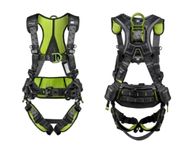
Honeywell Miller® H700 Harness – backed by scientifically based innovation to help ensure workers stay compliant, safe and productive. We conducted tests to examine breathability, pressure, compression, thermal conductivity and water vapor resistance. The H700 series leverages the medical science behind suspension trauma and incorporates patented One-Pull Trauma Relief Steps.

National Association of Safety Professionals
Considering the MSP or CSD certification? The MSP and CSD Preparation Courses are options to prepare for the Master Safety Professional (MSP) or Certified Safety Director (CSD) exams. These self-paced, interactive courses assist potential certificants to gain the required knowledge in sitting for the MSP or CSD exams.
Plan, provide and train is the standard advice given before working at height, but it doesn’t cover the execution nor consider the human factors involved while performing the work. Implement a robust fall protection strategy with our free guide.
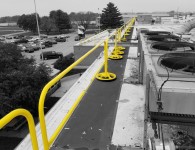
Safety Rail Company provides the industry’s most versatile fall protection solution with our SRC360 Mobile Rail – an OSHA-compliant system that acts as a permanent barrier between the worker and the fall hazard. Using weighted iron bases as a foundation, it installs with ease and requires no penetration into the building envelope.
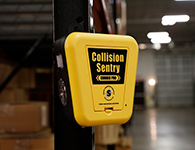
Constant motion, noise, narrow aisles, machinery, traffic and blind corners all factor into warehouses being dangerous places to work. Collision Sentry Corner Pro: For those “incidents waiting to happen” at blind-corner intersections. Designed to create a safer working environment in high-traffic areas.
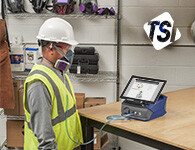
Are you looking to increase your staff’s safety and improve your respiratory protection program’s efficiency and productivity? Choose the industry’s most accurate, fastest and easiest fit tester – PortaCount® Respirator Fit Tester from TSI®. Fit-test in less than 2½ minutes. Provides a precise fit and training you can trust.

Safety training where and when you need it.
As North America’s largest provider of commercial and industrial rental equipment, United Rentals is also an industry leader in jobsite safety and compliance. We train thousands of workers each year in jobsite and operator safety, OSHA certifications and more.
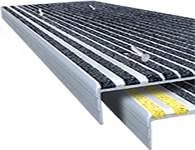
Stairmaster® provides a convenient, easy-to-install method of restoring and modernizing all types of stairs and walking surfaces. Heat-treated, corrosion-resistant aluminum with a diamond-hard aluminum oxide filler assures long tread life, even under heavy pedestrian traffic. Stairmaster® treads are appropriate for both indoor and outdoor use.
Fall Protection – General Requirements (1926.501)
Hazard Communication (1910.1200)
Ladders (1926.1053)
Respiratory Protection (1910.134)
Scaffolding (1926.451)
Lockout/Tagout (1910.147)
Powered Industrial Trucks (1910.178)
Fall Protection – Training Requirements (1926.503)
Board of Certified Safety Professionals
Personal Protective and Lifesaving Equipment – Eye and Face Protection (1926.102)
Machine Guarding (1910.212)
|
Sponsored by
|
<< Return to the beginning of the article |