

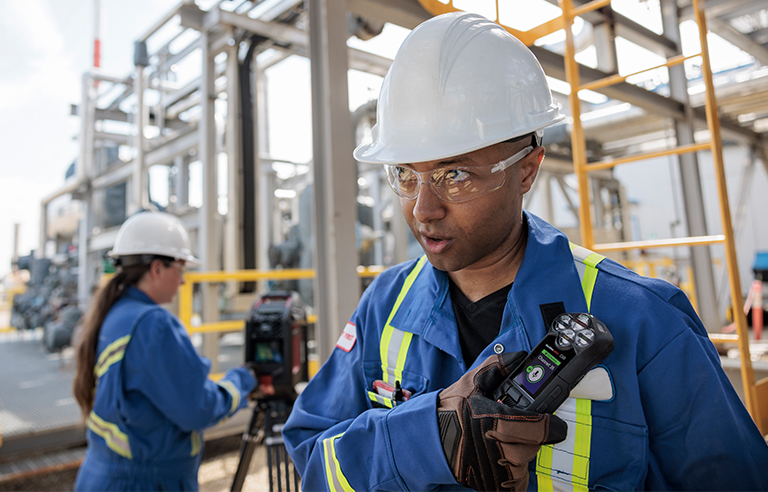
During an emergency, everyone involved wants the same thing: situational awareness. What’s happening, where it is, who’s involved and what’s the status of response? Most, if not all, of these questions can be answered with clear communication, which should be embedded in your safety system.
But most average phones aren’t intrinsically safe and, therefore, fit for all environments, and having to carry multiple devices, such as a gas detector, lone worker monitor and radio, can be cumbersome. That was something we considered when developing our newest connected safety wearable, G8, which combines all three into one tool – with improved audio quality to ensure consistent, reliable connection.
Workers in hazardous roles face safety risks stemming from both their physical environment and the nature of their tasks. An article published in the journal Frontiers in Public Health noted a significant relationship between safety culture and safety communication. Being able to stay in contact with people provides peace of mind and can be a differentiator in an emergency – having more than one way to make that connection creates a safety net that empowers your teams.
Multiple ways to communicate
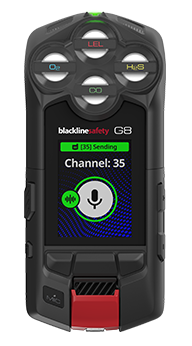 Being able to stay in contact in multiple ways means a greater chance to reach your teams when they need it most. Based on conversations with global safety leaders across industries, these are the capabilities that meet workers’ needs:
Push-to-talk. PTT provides quick, accessible communication at the touch of a button with all the utility of a two-way radio integrated into a gas detector or lone worker monitor, so workers can avoid wearing multiple devices. Because PTT is cellular-based, and not constrained by a radio network, teams in the field can more easily communicate using the all-call channel, or with expertise across the worksite – even if they’re in Calgary and headquarters is in Vancouver.
Emergency voice calls. This two-way open calling feature means, in a critical safety situation, device users are connected with a person designated to monitor and support. Like a phone, this feature doesn’t require a button press, which means fast access to help when it’s needed most.
Text messaging. Text messaging can also be a fast way to communicate mass notifications to the whole crew or between workers and monitoring personnel during an emergency, such as during evacuations, severe weather or other critical events. With features such as preprogrammed messages that device-users can send with one touch, it’s a fast, accessible way to get information out in real time.
Clear benefits
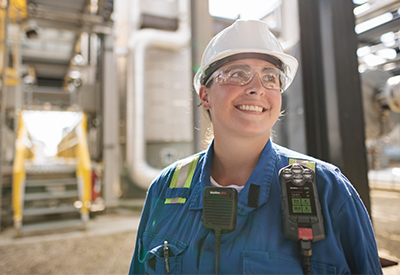 Having multiple ways to communicate built into an intrinsically safe connected safety wearable provides several benefits – first to the workers themselves, but also to an organization’s reputation and bottom line.
Balance safety and productivity. Safety and productivity aren’t mutually exclusive. In fact, if you’re doing fewer tasks and needing fewer tools to complete your work, you’re less likely to get hurt and slow production in the long run. And when devices include both safety and productivity aspects, operations and safety leaders can share in the investment.
Improve workflows. When tools and data work well together, jobs become more efficient – it’s easier to respond to an emergency when the GPS location and device calling are connected. Having capabilities converged into one device creates the same effect, both from an innovation perspective (when tech stacks are able to merge) to limiting the number of vendors an organization must deal with. Similarly, having fewer devices makes taking care of, charging and managing tools more efficient.
Offer peace of mind. For the workers in the field, knowing communication technology is readily available provides peace of mind that enables the confidence to get the job done. When you know that the person you’re talking to has the information you need to make better, safer decisions – and can give you feedback on what’s going on, and what’s going to happen next – you feel like your tools really have your back.
Keeping people involved and informed, especially in hazardous or remote environments, can be the difference between a safe and an unsafe worksite. Situational awareness is one of the keys to workplace safety, and the more context teams can offer their workers through clear communication, the safer their people will be and the more efficient their operation will be.
 Yves Carrier, business development director at Blackline Safety, is an industrial safety specialist and technology advisor who helps clients optimize their digital tools to enhance safety and operational performance.
