Washington — Chemical facility operators and workers should pay particular attention to hazards during startup, shutdown, standby and other transient operations in facilities covered under OSHA’s Process Safety Management standard.
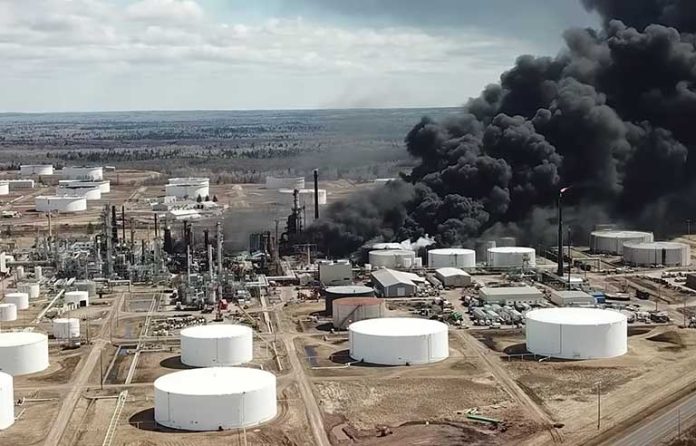
The recommendation comes from the Chemical Safety Board in a recently released video on the April 2018 explosion and fire at the Husky Energy refinery in Superior, WI.
The explosion occurred in the refinery’s fluid catalytic cracking unit while workers were on a break during a scheduled maintenance shutdown. Debris from the resulting blast flew about 200 feet and punctured an aboveground storage tank containing asphalt. This caused more than 15,000 barrels of hot asphalt to spill into the refinery. The asphalt ignited about two hours later, resulting in a large fire.
In its final report on the incident, CSB made 16 recommendations – to OSHA, the Environmental Protection Agency, the American Petroleum Institute, two energy companies and the Husky refinery.
In the video, CSB lead investigator Melike Yersiz says the deficiencies CSB found within Husky’s PSM systems “directly contributed” to the explosion.
“During transient operations for any process involving flammable materials, operators need to understand the potential for air to enter and accumulate inside equipment,” Yersiz continues. “Written procedures should be in place that outline safeguards meant to prevent air and hydrocarbon mixtures, and operators should be trained to understand why those safeguards are critical.
“To prevent catastrophic incidents, companies should ensure that their PSM systems are effective at identifying, evaluating and controlling process hazards – not just during normal operations, but during transient operations, as well.”