Frontline workers make organizations go. And safety and health professionals make sure those people stay safe on the job – but safety pros can’t have eyes everywhere. That’s where “selling” safety to the front line comes in.
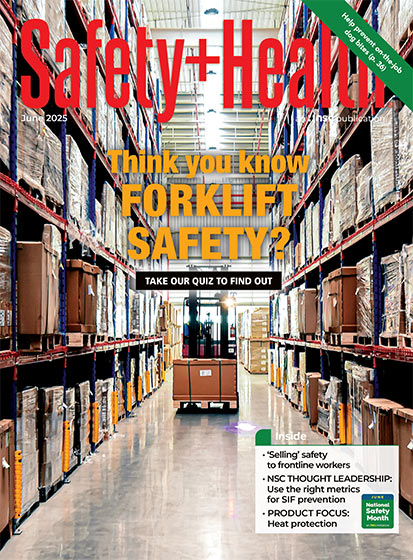
Think you know forklift safety? To mark the 12th annual National Forklift Safety Day, which takes place June 10, we’ve put together a quiz to test your knowledge. Good luck!
Big or small, young or old, “any dog can bite,” the American Veterinary Medical Association cautions. “Even the cuddliest, fuzziest, sweetest dog can bite if provoked.”
Just ask the 4.5 million people nationwide who are bitten by dogs each year.
Now in its 29th year, this National Safety Council initiative raises awareness of injury and illness prevention. Go to nsc.org/nsm to find activities, tips and other resources you can use to engage workers and reinforce your commitment to keeping all employees safe and healthy.
Drivers and passengers account for most fatalities in work zone crashes. This means everyone needs to work together to slow down, stay focused and give road users plenty of space, NSC says.
What are the proper procedures and safety protocols for cleaning combustible dust, flammable liquids and reactive powders in industrial facilities to prevent fires, explosions or chemical reactions?
Safety professionals spend a great deal of time and effort thinking about keeping people safe in the workplace. They run training sessions, conduct investigations, review data and carry out countless other tasks in an effort to prevent injuries.
A new foot safety hazards checklist from Red Wing covers specific sources of foot injuries – with some more obvious than others. From slippery floors and automatic closing doors to uneven surfaces and puncture hazards, the list takes a proactive approach to avoiding foot-related injuries and keeping your business running safely.