
Responding is Chris Cabrera, CEO, Lytx, San Diego.
For decades, transportation safety programs have rightly focused on what happens while the driver is behind the wheel. Driver behavior, road conditions, vehicle maintenance and incident response remain essential to any strong safety culture. But for many organizations, the vehicle is no longer just a vehicle. It’s the center of a mobile worksite.
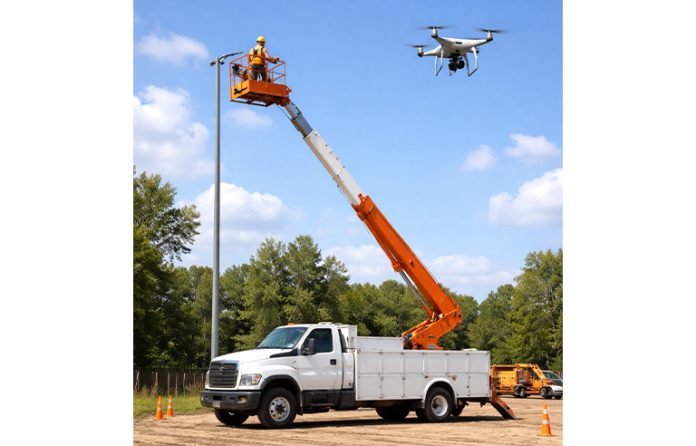
That distinction matters. A worker’s exposure to risk doesn’t end when the engine is turned off or when the driver steps out of the cab. In utilities, construction, distribution, aviation, public works and countless other sectors, the work often begins around the vehicle: near forklifts, tugs, carts, loading docks, booms, equipment yards and active jobsites.
The challenge is visibility. When a worker exits the cab to inspect equipment, climb a boom, unload cargo or move through a busy yard, organizations can lose sight of the conditions surrounding that person. Are hazards emerging? Is protective equipment being used correctly? Is a process being followed consistently?
In distribution, for example, a challenge can arise when a driver leaves the vehicle to unload at a congested dock, work around forklifts or move through a customer site with limited sightlines. If a pallet tips, a worker slips or a near miss occurs, the supervisor may be left piecing together the sequence of events from damage, paperwork or secondhand accounts. Too often, supervisors are left relying on after-the-fact inspections because they don’t have a better way to understand what happened in the moment.
These questions aren’t about surveillance for surveillance’s sake. They’re about prevention. Safety leaders know risk often hides in the gaps between policies, training and real-world behavior. The more complex the worksite, the more important it becomes to identify those gaps before someone is hurt.
Technology will play a role, but a cultural shift is needed as well. Organizations must expand their definition of fleet safety to include the full operating environment around the vehicle. That means asking where work actually takes place, which tasks happen outside the cab, which non-road vehicles or equipment introduce risk, and where teams still depend on manual observation or delayed reporting.
In the years ahead, tools such as drones, body cameras and other connected forms of visual intelligence may help safety teams better understand what’s happening around workers in real time. But the purpose should remain prevention: helping teams see patterns, prioritize risk, coach effectively and redesign processes before incidents occur.
The National Safety Council community has long understood that progress comes from looking beyond compliance and toward prevention. The next frontier of fleet and workplace safety will require that same mindset. We must look beyond the cab, beyond the road and beyond traditional assumptions about where risk begins and ends.
If we can bring the same rigor to the entire mobile worksite that we have brought to driving, we can help create safer operations for drivers, field workers, supervisors, customers and the communities around them. Safety doesn’t stop at the cab door. Our thinking shouldn’t stop there either.
Editor’s note: This article represents the independent views of the author and should not be considered a National Safety Council endorsement.