
Responding is Scott Margolin, vice president of technical, Tyndale Co., Pipersville, PA.
As warmer weather arrives, workers facing arc flash and flash fire hazards – as well as employers and safety professionals – must manage heat safety alongside required arc-rated and flame-resistant personal protective equipment. Fortunately, staying safe from heat stress and thermal hazards isn’t an either-or situation.
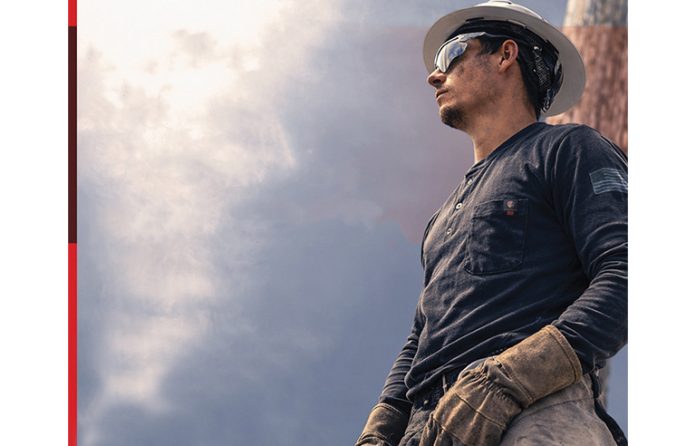
According to OSHA, the Centers for Disease Control and Prevention, NIOSH, and other safety and health organizations, “single-layer, breathable apparel does not contribute to heat stress – whether non-FR, AR/FR, short sleeve, or long sleeve.” In fact, long sleeves are actually safer for heat stress because they protect skin from direct exposure to the sun’s radiant heat load.
“Single-layer, breathable apparel” includes nearly all PPE Category (CAT) 1 and CAT 2 arc-rated clothing and NFPA 2112-compliant shirts, pants and coveralls. This type of clothing allows radiant heat to escape via evaporating sweat, keeping the body functioning normally.
Certain PPE – such as rainwear and 40-cal arc flash suits – can contribute to heat stress when it’s nonbreathable or multilayer.
Dress for success in hot conditions
To ensure workers stay cool, employers should keep these protective clothing strategies in mind:
Outfit workers in a single-layer breathable AR/FR clothing dailywear system instead of multilayer task-based protection, such as coveralls over clothing.
When additional layers are needed to meet the hazard’s incident energy level or for adverse weather defense, qualified service providers can assist in ensuring workers use the right combination of layers in the right order – building from an AR/FR base layer that’s lightweight, breathable and moisture-wicking to keep skin dry.
Choose loose-fitting, breathable clothing that’s light in color, as dark colors absorb and trap heat from the sun.
Partner with a qualified service provider to leverage the latest advances in AR/FR performance technology and offer your workers a range of fibers, fabrics, weights, garment styles and brands to maximize comfort, satisfaction and compliance.
Reduce heat risk while protecting workers from arc flash and/or flash fire
AR/FR clothing is the last line of defense in the face of a catastrophic hazard, so compromising or removing it isn’t an option. Instead, organizations should focus on comprehensive heat-stress management strategies that address the main causes of heat stress – particularly when rainwear or multilayer AR/FR PPE is needed:
- Dehydration: Workers should drink plenty of water – before, during and after work.
- Lack of rest: Periodic breaks are critical for shedding excess heat and maintaining a safe core temperature.
- Lack of shade: Provide frequent breaks from the sun’s radiant heat load – and ensure workers rehydrate with clear liquids.
- Existing illness and medication: Certain illnesses and medications can cause or exacerbate heat stress. Fitness and awareness are key.
Secondary prevention: Spot the symptoms
When heat stress occurs, proper identification can prevent it from progressing to heat exhaustion or heatstroke. Look for disorientation, illness, loss of desire to hydrate, fainting, light-headedness, heat rash and heat cramps.
Heat safety and AR/FR protection: You can have both
Ultimately, AR/FR clothing should be viewed as one element of an overall safety system. When protective apparel is thoughtfully selected and combined with effective heat stress management practices, organizations can protect workers from both thermal hazards and heat-related illness.
Editor’s note: This article represents the independent views of the author and should not be considered a National Safety Council endorsement.