
“Bad systems will beat good people every time.”
– W. Edwards Deming, a pioneer in quality management
If you’ve been in the safety field for any amount of time, you’ve heard the term Human and Organizational Performance. HOP isn’t a new initiative or culture project with finite start and end dates – it’s an operating philosophy that focuses on the interaction of work systems and the worker.
Contrary to Deming’s idea, we see countless situations where good people can beat a bad system, at least for a while … until something goes wrong. In the end, bad systems usually win.
There are five generally accepted principles that serve as the foundation for a culture that values learning and improving:
- Error is normal. Everyone makes mistakes. Error isn’t a choice – employees don’t “choose” to make mistakes. No one comes to work each day with the intent of getting hurt or trying to create an unwanted outcome. The reality is that mistakes are made, often more times than we hear about them. Most go unnoticed and don’t result in an injury or unwanted outcome. We need to design and implement systems that can tolerate mistakes without catastrophic failure, especially in high-risk activities.
- Context drives behavior. We all act based on what we know, what’s expected of us and the situation we’re in. No one thinks, in the moment, that the action they’re about to take will get them hurt or result in an unwanted outcome. Otherwise, they wouldn’t take it. The interactions between humans and systems, and between other humans, are complex. So, when something unexpected occurs, people react in the best way they know how. Understanding the context and complexity of work is key to learning.
- Blame fixes nothing. It’s a barrier to learning. Blame is easy – it can feel like you’ve solved the problem. All blame does, though, is stifle communication. Who’s going to report a near miss or an event if they know it’s just going to result in blame and punishment? If you’re not hearing about unwanted events, you can’t act on them or learn from them. Todd Conklin, a thought leader in HOP, said it best: “You can either blame and punish or you can learn and improve, but you cannot do both!”
- Learning is key. This goes beyond training or learning from incidents. It’s engaging with those who do the work. They know the work – what works and what doesn’t – and how success is achieved better than anyone in the organization. Open conversations, whether after an event or during routine leadership visits to where work happens, are needed to understand how work is done and potential barriers to successful outcomes. Improvement comes through change driven by learning.
- How leaders react matters – to both failure and success. Without this principle, the other four HOP principles are meaningless. Leaders drive an organization’s culture. If leaders react negatively to bad news, they won’t hear any news, and if they don’t hear what’s happening, how can the organization learn and improve? How do you fix a secret? For leaders, this means listening, supporting and driving system changes that are necessary to improve.
HOP is about building capacity and resilience into systems to avoid unwanted outcomes rather than expecting humans to perform perfectly every time. HOP isn’t applicable only to environmental, health and safety; organizations that have embedded HOP into their culture and ways of working see improvements in quality, cost reduction and supply chain resilience.
We all know that unwanted outcomes will happen at some point if we rely on people being perfect every time, so – keeping with Deming’s spirit – let’s create systems that allow for mistakes and unexpected events to happen safely.
The National Safety Council has great resources available, whether you want to learn more about HOP, are early in your journey in integrating HOP as a culture shift, or are further along on your journey and want to continue to improve.
The HOP Summit – part of the 2026 NSC Safety Summit – is a great way to network with and learn from those who have embedded HOP into their organizational culture.
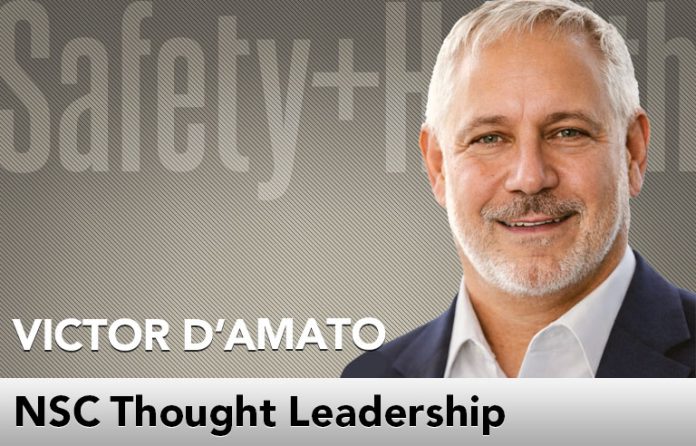
Vic D’Amato is senior leader for NSC Networks at the National Safety Council. He has nearly 40 years of experience in the EHS field, most recently leading the safety, health and environment program for AstraZeneca’s global operations.