
Workplace Exposures

OSHA seeks to revise rules on workplace lead exposure

Washington — OSHA is requesting public comment on a proposed rule that would revise the agency’s standards on occupational exposure to lead in general industry and construction.

SIF prevention: A discussion

How much recent progress – if any – has been made in the prevention of serious injuries and fatalities?

Prevent heat-related illness

What do safety professionals need to know about heatstroke and how to prepare for these emergencies?

Study reveals high COVID-19 mortality rates among labor, retail and service workers

Tampa, FL — COVID-19 mortality rates among adults with lower levels of education who worked in the labor, service and retail industries were nearly five times higher than other groups in 2020, results of a new study by the University of South Florida show.
- Digital Partners -

‘Health Effects of 9/11’: Online exhibit focuses on responders

Washington — The ongoing health problems of workers who responded during and after the Sept. 11 terrorist attacks are the focus of an online exhibit recently unveiled by NIOSH and the Department of Health and Human Services.

COVID-19 and health care workers: Walsh reiterates that permanent rule likely before year’s end

Washington — Echoing comments made by OSHA administrator Doug Parker during a hearing three weeks earlier, Labor Secretary Marty Walsh said a permanent standard on COVID-19 for the health care industry may be published sometime in the fall.

MSHA enforcement effort focused on protecting workers from silica

Arlington, VA — As the Mine Safety and Health Administration works to develop a standard on worker exposure to respirable crystalline silica, the agency has launched an enforcement initiative aimed at boosting protections against the hazardous material.

Survey shows more nurses facing staffing concerns, workplace violence and moral distress

Silver Spring, MD — Around 7 out of 10 recently surveyed nurses say staffing has gotten slightly or much worse recently, while nearly half of hospital nurses report an increase in workplace violence.
- Digital Partners -

Silica dust a driving force behind rising rates of black lung, study suggests

Chicago — The lung tissue of contemporary coal miners contains higher levels of respirable crystalline silica dust than was found in miners of past generations – which may explain an ongoing surge in cases of the most severe form of black lung disease, researchers at University of Illinois Chicago say.

Engineers aim for early detection of concerning chemical changes at worksites

West Lafayette, IN — Engineers from Purdue University say they have developed new technologies that enhance methods of detecting, identifying and quantifying chemicals in various work environments that might traditionally require lab analysis, and could protect workers from potential incidents.

Next Webinar

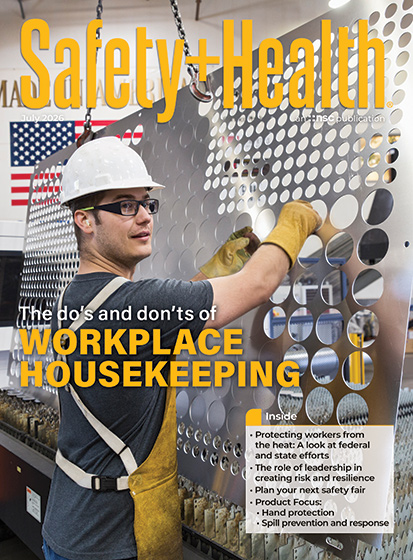
Current Issue
What's Trending

From our Partners

Earn recertification points

Board of Certified Safety Professionals

Take a quiz about this issue of the magazine and earn recertification points from the Board of Certified Safety Professionals.
