

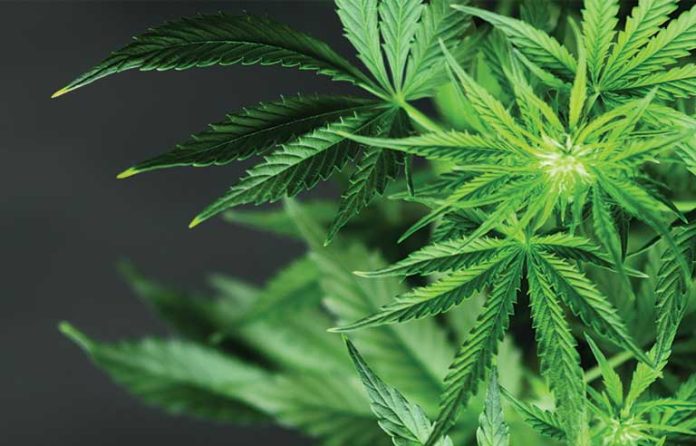
Twenty-five years ago, marijuana was illegal throughout the United States. Today, the drug – made from dried leaves and flowers of the cannabis plant – is legal for medicinal use in 33 states and for recreational use in 10 states, plus the District of Columbia, Guam and Puerto Rico. This trend toward legalization shows no sign of stopping.
“The process started slowly, with California as the first state to legalize in 1996,” said Christine Clearwater, president of the consulting firm Drug-Free Solutions Group LLC. “Right now, it’s like a tsunami nationwide.”
Public attitudes toward marijuana are changing, too. A Pew Research Center survey published in October shows that 62 percent of Americans are in favor of marijuana legalization, double the percentage in 2000 (31 percent). Unsurprisingly, marijuana use is on the rise nationwide: A 2016 Gallup poll found that 13 percent of U.S. adults said they use marijuana – up from 7 percent in 2013.
Meanwhile, marijuana (cannabis) still is illegal under federal law, listed as a Schedule I substance under the Controlled Substances Act.
Rapid legalization, increasing use and conflicting laws are a confusing blend for employers and safety professionals attempting to set workplace drug policies and protect workers. It also doesn’t help that marijuana itself presents some unusual complexities.
The problem of impairment
Data on the dangers of marijuana impairment is inconclusive. For example, “The Health Effects of Cannabis and Cannabinoids,” a comprehensive review of current research published in 2017 by the National Academies of Sciences, Engineering, and Medicine, found “substantial evidence of a statistical association between cannabis use and increased risk of motor vehicle crashes,” citing one meta-analysis that linked driving under the influence to a 20 percent to 30 percent higher risk of being involved in a crash. However, the same review found “insufficient evidence to support or refute” a connection between marijuana use and occupational incidents or injuries.
Download The Health Effects of Cannabis and Cannabinoids
Still, experts say the cognitive and physical effects of marijuana present safety hazards both on and off the job.
“Acute marijuana impairment affects short-term memory as well as the ability to process and analyze information, to concentrate, and to make reasoned decisions,” said Robert Goldsmith, an occupational health professional in the pharmaceutical industry and co-author of “Medical Marijuana in the Workplace,” a 2015 article published in the Journal of Occupational and Environmental Medicine. “It can also lead to physical impairment, including delayed reaction time and altered sensory perception.”
Unlike alcohol, which is water-soluble, the lipid-soluble psychoactive substances in marijuana can be stored in fatty tissue in the body and be released over an extended period of time. Impairment may last anywhere from hours to weeks, depending on a variety of factors (as well as which studies you read).
“Individuals who are mildly impaired may perceive that they are completely unimpaired or that they are capable to continue to work safely when they are not,” Goldsmith said. “You can’t assume that evening or off-shift use is not associated with residual impairment during the next shift.”
Add to this the fact that users often harbor dangerous beliefs about their ability to function under the influence. A November 2016 survey conducted by the Colorado Department of Transportation found that 55 percent of marijuana users said it was safe to drive while under the influence.
One challenge in rooting out marijuana impairment among workers is that most tests (urine, hair, saliva) are useful for establishing marijuana use – for purposes of pre-employment screening, for example – but not impairment. Blood testing correlates best with impairment; joint guidelines published by the American Association of Occupational Health Nurses and the American College of Occupational and Environmental Medicine in 2015 proposed a tetrahydrocannabinol (or THC, the primary psychoactive component of marijuana) level of 5 nanograms per milliliter, citing it as roughly equivalent to the 0.04 percent blood-alcohol cutoff used to establish impairment for workers in safety-sensitive positions under federal testing laws. However, even those groups caution that blood testing alone is not enough.
“Blood levels of THC do not predictably or consistently measure impairment,” Goldsmith said. “Neurocognitive or functional testing is necessary to be certain that an employee is not impaired and to determine their fitness for duty.”
Employers have options
The growing prevalence of marijuana legality and use means that even if employers and safety professionals are not confronting the issue now, chances are they will be soon. All of the complexity and confusion swirling around marijuana points to the need for employers to set (and consistently enforce) clear, detailed and well-thought-out policies.
Basic approaches employers can take include:
Following federal law. “Employers can say, ‘We follow in compliance with federal law and therefore we do not allow anyone to be in possession of, cultivate, distribute or be under the influence of marijuana,’” Clearwater said. “There’s a lot of case law supporting that approach.”
The risk here is that employers may be required to make accommodations for employees’ medical use. This would not happen at a federal level under the Americans with Disabilities Act for a simple reason. “The Controlled Substances Act is federal law,” said Chris Ottele, an employment law partner with Husch Blackwell, a law firm with offices in 18 U.S. cities. “And the notion that one federal law would permit employees to use a substance that is prohibited by another federal law is pretty much untenable.”
State laws are another matter, however. “States that were early adopters of medical marijuana, such as Washington and California, handed down a number of state Supreme Court decisions making clear that employers were not required to accommodate the use of even medical marijuana,” Ottele said.
That said, recent cases in Connecticut, Massachusetts and Rhode Island have upheld state medical marijuana laws prohibiting discrimination over federal laws prohibiting marijuana use. In response, the American Bar Association cautioned employers to account for this “emerging trend” as they consider their policies.
Even for federal contractors required to maintain drug-free workplaces under the Drug-Free Workplace Act, Ottele pointed out that some uncertainty exists as to whether these requirements cover off-duty use. In one recent case in Connecticut, the judge ruled against a federal contractor for discriminating against a prospective employee based on legal use of medical marijuana outside of work hours.
It should be noted that workers who fall under Department of Transportation guidelines are subject to strict federal drug testing requirements and therefore fall outside of these state concerns, Ottele said.
Singling out safety-sensitive positions. Depending on state laws, an employer might take the approach of prohibiting marijuana use for employees in positions designated as safety-sensitive. “Designation of an employee, either informally or formally, as safety-sensitive certainly would bolster an employer’s case,” Ottele said, “because there is a legitimate business reason for a zero-tolerance drug-use policy for any employee who is operating around heavy machinery and the like to ensure both the safety and accountability of all employees. Many employers are moving in that direction.”
Accommodating where necessary. In theory, employers with multistate operations might require multiple drug policies. Many avoid this by building flexibility into their policy.
“They usually say something to the effect of, ‘But in the event of a conflict with state or local law, the state or local law will apply,’” Ottele said.
NANA Management Services, based in Anchorage, AK, provides support services in nine other states. Its policy reflects a commitment to a drug-free workplace, which did not change when Alaska legalized recreational marijuana in 2014.
“Protocol remains clear and consistent across the entire company,” said Craig Clemens, vice president of health, safety, security and environment at NMS. “Our legal department sent a memo to all employees notifying them that our policy still prohibits the use of marijuana.”
However, Clemens also noted that the policy does make room for accommodation of medical marijuana if required by state or local law.
Taking refuge in ignorance. Clearwater acknowledged that some employers choose to simply ignore marijuana, but she doesn’t recommend that strategy.
“They can pretend it doesn’t exist and say, ‘I’m not going to test for it, and therefore I won’t know if a worker is under the influence, so I won’t discipline for it,’” she said. “It’s a high-risk position, but some companies are considering it because there’s such low unemployment right now that they’re having a challenging time finding people.”
Whichever way an employer chooses to handle the issue, Goldsmith argued that safety professionals should be involved on the front end of policy decisions. “They should have input into whether or not medical marijuana can be safely used in company operations,” he said, “instead of being told to ‘make it safe’ once the decision has been made.”
Page 2 of 2 | Return to page 1
Not just another drug
From the standpoint of workplace safety, marijuana is different from legal intoxicants such as alcohol or prescription narcotics – partly because of the unpredictability of impairment. Robert Goldsmith, an occupational health professional in the pharmaceutical industry and co-author of “Medical Marijuana in the Workplace,” a 2015 article published in the Journal of Occupational and Environmental Medicine, noted that the degree and duration of marijuana impairment is highly individual, based on a number of factors, including:
- Route of administration (smoking, consuming edibles, vaping or applying a skin patch)
- Individual metabolism
- History of use (first time vs. habitual use)
- Concurrent medication use
- Dosage
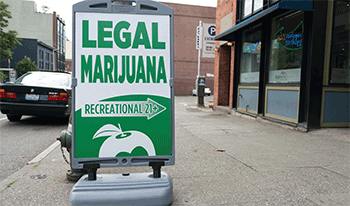
Photo: 400tmax/iStockphoto
Some of these factors apply in the cases of other substances as well, but marijuana dosage is uniquely variable. “It’s very difficult to standardize a medical marijuana dose, especially if the marijuana is smoked,” Goldsmith said. “There are inhalation factors – how deeply the marijuana is inhaled, how long it’s held. Is one puff equivalent to another puff?”
Further complicating dose predictability is the variation in potency of different marijuana strains, which have been bred for higher levels of tetrahydrocannabinol (or THC, the primary psychoactive component of marijuana). “Marijuana can be up to 30 times stronger than it was 20 years ago, and one cultivator versus another could be hugely different in the strength of the marijuana,” said Christine Clearwater, president of the consulting firm Drug-Free Solutions Group LLC. “The reason is, there are no set controls or standards. It’s like the Wild West right now.”
Contrast this with the standardization of commercial alcohol products or prescription drugs. “Alcoholic drinks are premeasured for sale, so each ounce contains a pre-approved, designated amount of alcohol,” Clearwater said. “That means one bottle of a particular brand of whiskey is the same as the next.”
Similarly, Food and Drug Administration-approved prescription drugs are subject to rigorous testing and strict manufacturing practices, she added, “so you have well-defined, measurable ingredients that are consistent unit to unit.”
FDA recently approved a drug with the active ingredient cannabidiol (CBD), which is derived from marijuana but lacks its psychoactive properties. However, because this medication has been approved only for rare forms of epilepsy, employers are unlikely to come across it in the workplace.
Additionally, although other marijuana-derived products purport to be non-impairing, Goldsmith views these claims as theoretical, at best. “Without federal regulation, it’s difficult to be confident that products that claim to be entirely CBD-containing or non-impairing are in fact not impairing,” he said.
Accommodation means documentation
For employers who tolerate medical use of the drug, experts recommend requiring workers to provide documentation supporting their use of marijuana, similar to how they would report a potentially impairing prescription medication.
However, because of the variability of dosing and other factors, “the assessment of impairment and the oversight required for the safe use of medical marijuana exceeds that for other potentially psychoactive drugs,” Goldsmith cautioned. “It’s critical that the health and safety group establish guidelines for the assessment of neurocognitive function among employees who have been permitted to use medical marijuana.”
In “Medical Marijuana in the Workplace,” Goldsmith and his colleagues recommend that employers require baseline neurocognitive testing, as well as the following documentation from the authorizing medical provider (plus prompt updates and re-evaluation whenever there’s a change):
- The diagnosis or condition
- The medical rationale for treatment with marijuana
- The dosage, frequency, timing of use and route of administration
- How long the drug is expected to be used
- Any recommended work restrictions or accommodations
Communication is crucial
The changing legal landscape regarding marijuana can be just as confusing for workers as it is for employers. If managers and workers don’t know what their company’s policy is, they’ll operate on assumptions.
“A policy is just a policy,” Clearwater said. “It’s a piece of paper. You breathe life into it by training managers and educating employees.”
Clemens recommends advising workers of company drug policies frequently, especially when changing laws raise the likelihood of confusion.
“When recreational marijuana was legalized in Alaska, we required each employee to sign a new drug test policy form that clearly stated the company’s position,” he said.
Communicating a tough stance toward marijuana doesn’t mean employers can’t show compassion for employees who are struggling with substance abuse.
“I think any safety professional would agree that any use of drugs or alcohol that would lead to impairment in the workplace is completely at odds with a culture of safety and cannot be tolerated,” said Brian Hendrix, a partner in Husch Blackwell’s Energy and Natural Resources Group. “But I will say that a lot of our clients – large and small – don’t take a one-strike approach to drug and alcohol use. If you do self-report or test positive in certain situations, and agree to go through a rehabilitation program and then submit to post-program testing, you can be returned to work – even for positions that are safety-sensitive.”

