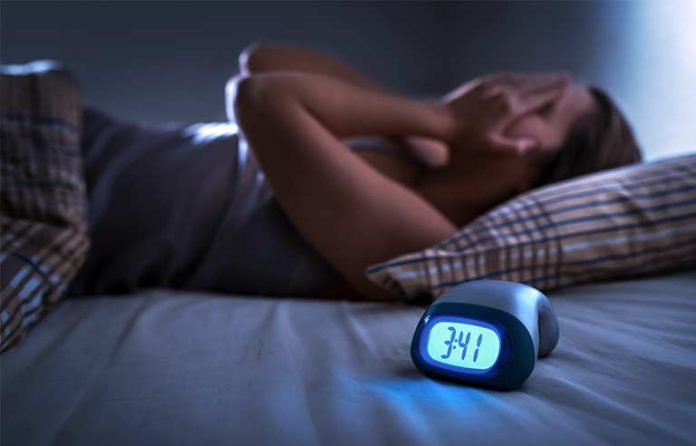
Tampa, FL — Just one night of inadequate sleep can negatively affect your mental and physical well-being, a researcher from the University of South Florida says.
Soomi Lee, an assistant professor at the USF School of Aging Studies, used diary data from nearly 2,000 “relatively healthy” adults who participated in the Midlife in the United States Study. Each participant recorded their mental and physical behaviors for eight consecutive days, allowing Lee to review how sleep loss affects the body.
She found that the “biggest jump in symptoms” occurred after one night of less than six hours of sleep, according to a university press release. The number of mental and physical symptoms peaked after three consecutive nights of less than six hours of sleep, at which point the participants’ bodies became relatively accustomed to repeated sleep loss.
The severity of physical symptoms – which included aches, upper respiratory problems and gastrointestinal issues – peaked on the sixth day. Among the mental symptoms reported were feelings of anger, frustration, irritability, nervousness and loneliness. All of these symptoms remained at elevated levels throughout the period of consecutive sleep loss days and didn’t return to baseline levels until the participants got a night of sleep of more than six hours.
“Many of us think that we can pay our sleep debt on weekends and be more productive on weekdays,” Lee said. “However, results from this study show that having just one night of sleep loss can significantly impair your daily functioning.”
The National Sleep Foundation recommends working-age adults get seven to nine hours of sleep a night, while older adults should get seven to eight hours.
The study was published online July 5 in the Annals of Behavioral Medicine.