
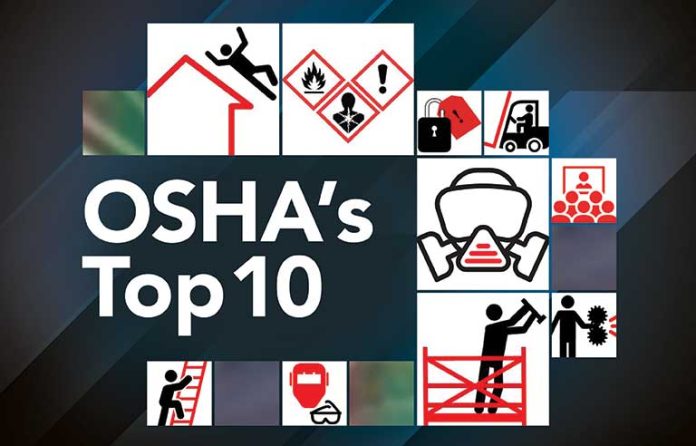
Fall Protection – General Requirements (1926.501) was OSHA’s most frequently cited standard in fiscal year 2023. If that sounds familiar, it’s because this is the 13th consecutive year the standard has topped the list.
OSHA announced its latest “Top 10” during a session, hosted by Safety+Health, at the 2023 NSC Safety Congress & Expo in New Orleans. Eric Harbin, administrator for OSHA Region 6, took the stage to walk attendees through the preliminary data and offered his insights.
Later, he sat down for an exclusive interview with S+H Associate Editor Kevin Druley to discuss the agency’s efforts to prevent worker injuries.
Here, S+H expands on Harbin’s presentation with additional preliminary data from OSHA (the agency’s fiscal year concluded Sept. 30), a list of the year’s largest employer fines, the Q&A with Harbin and a listing of Safety+Health advertisers offering products and services to help you avoid OSHA’s Top 10 most cited violations.
Most cited violations, fiscal year 2023
Total violations: 7,271
Fiscal Year 2022 ranking: 1 (5,980 violations)
This standard outlines where fall protection is required, which systems are appropriate for given situations, the proper construction and installation of safety systems, and the proper supervision of employees to prevent falls. It’s designed to protect employees on walking-working surfaces (horizontal or vertical) with an unprotected side or edge above 6 feet.
Top 5 sections cited:
- 1926.501(b)(13): Each employee engaged in residential construction activities 6 feet or more above lower levels shall be protected by guardrail systems, safety net systems or personal fall arrest systems unless another provision in paragraph (b) of this section provides for an alternative fall protection measure.– 5,087 violations
- 1926.501(b)(1): Each employee on a walking-working surface (horizontal and vertical surface) with an unprotected side or edge that is 6 feet or more above a lower level shall be protected from falling by the use of guardrail systems, safety net systems or personal fall arrest systems. – 931
- 1926.501(b)(10): Except as otherwise provided in paragraph (b) of this section, each employee engaged in roofing activities on low-slope roofs with unprotected sides and edges 6 feet or more above lower levels shall be protected from falling by guardrail systems; safety net systems; personal fall arrest systems; or a combination of warning line system and guardrail system, warning line system and safety net system, warning line system and personal fall arrest system, or warning line system and safety monitoring system. – 543
- 1926.501(b)(11): Each employee on a steep roof with unprotected sides and edges 6 feet or more above lower levels shall be protected from falling by guardrail systems with toeboards, safety net systems or personal fall arrest systems. – 318
- 1926.501(b)(4): “Holes.” – 169
Total violations: 3,213
Fiscal Year 2022 ranking: 2 (2,682 violations)
This standard addresses chemical hazards – both for chemicals produced in the workplace and those imported into the workplace. It also governs the communication of those hazards to workers.
Top 5 sections cited:
- 1910.1200(e)(1): Employers shall develop, implement and maintain at each workplace a written hazard communication program that at least describes how the criteria specified in paragraphs (f), (g) and (h) of this section for labels and other forms of warning, Safety Data Sheets, and employee information and training will be met. – 1,136 violations
- 1910.1200(h)(1): Employers shall provide employees with effective information and training on hazardous chemicals in their work area at the time of their initial assignment, and whenever a new chemical hazard the employees have not previously been trained about is introduced into their work area. Information and training may be designed to cover categories of hazards (e.g., flammability, carcinogenicity) or specific chemicals. Chemical-specific information must always be available through labels and Safety Data Sheets. – 843
- 1910.1200(g)(8): The employer shall maintain in the workplace copies of the required Safety Data Sheets for each hazardous chemical, and shall ensure they are readily accessible during each work shift to employees when they are in their work area(s). – 363
- 1910.1200(f)(6): Workplace labeling. Except as provided in paragraphs (f)(7) and (f)(8) of this section, the employer shall ensure each container of hazardous chemicals in the workplace is labeled, tagged or marked. – 315
- 1910.1200(g)(1): Chemical manufacturers and importers shall obtain or develop a Safety Data Sheet for each hazardous chemical they produce or import. Employers shall have a Safety Data Sheet in the workplace for each hazardous chemical which they use. – 252

Total violations: 2,978
Fiscal year 2022 ranking: 3 (2,471 violations)
This standard covers general requirements for all ladders.
Top 5 sections cited:
- 1926.1053(b)(1): When portable ladders are used for access to an upper landing surface, the ladder side rails shall extend at least 3 feet above the upper landing surface to which the ladder is used to gain access; or, when such an extension is not possible because of the ladder’s length, then the ladder shall be secured at its top to a rigid support that will not deflect, and a grasping device, such as a grab rail, shall be provided to assist employees in mounting and dismounting the ladder. In no case shall the extension be such that ladder deflection under a load would, by itself, cause the ladder to slip off its support. – 1,852 violations
- 1926.1053(b)(4): Ladders shall be used only for the purpose for which they were designed. – 310
- 1926.1053(b)(13): The top or top step of a stepladder shall not be used as a step. – 286
- 1926.1053(b)(22): An employee shall not carry any object or load that could cause the employee to lose balance and fall. – 92
- 926.1053(b)(16): Portable ladders with structural defects, such as, but not limited to, broken or missing rungs, cleats or steps; broken or split rails; corroded components; or other faulty or defective components, shall either be immediately marked in a manner that readily identifies them as defective, or be tagged with “Do Not Use” or similar language, and shall be withdrawn from service until repaired. – 86
Total violations: 2,859
Fiscal year 2022 ranking: 5 (2,285 violations)
This standard covers general safety requirements for scaffolding, which should be designed by a qualified person and constructed and loaded in accordance with that design. Employers are bound to protect construction workers from falls and falling objects while working on or near scaffolding at heights of 10 feet or higher.
Top 5 sections cited:
- 1926.451(g)(1): Each employee on a scaffold more than 10 feet above a lower level shall be protected from falling to that lower level. – 813 violations
- 1926.451(e)(1): When scaffold platforms are more than 2 feet above or below a point of access, portable ladders; hook-on ladders; attachable ladders; stair towers (scaffold stairways/towers); stairway-type ladders (such as ladder stands); ramps; walkways; integral prefabricated scaffold access; or direct access from another scaffold, structure, personnel hoist or similar surface shall be used. Cross braces shall not be used as a means of access. – 372
- 1926.451(b)(1): Each platform on all working levels of scaffolds shall be fully planked or decked between the front uprights and the guardrail supports. – 357
- 1926.451(c)(2): Supported scaffold poles, legs, posts, frames, and uprights shall bear on base plates and mud sills or other adequate firm foundation. – 324
- 1926.451(g)(4): Guardrail systems installed to meet the requirements of this section shall comply with the following provisions (guardrail systems built in accordance with Appendix A to this subpart will be deemed to meet the requirements of paragraphs (g)(4)(vii), (viii) and (ix) of this section). – 190
Total violations: 2,561
Fiscal year 2022 ranking: 7 (1,922 violations)
This standard covers the design, maintenance and operation of powered industrial trucks, including forklifts and motorized hand trucks. It also covers operator training requirements.
Top 5 sections cited:
- 1910.178(l)(1): Safe operation. – 606 violations
- 1910.178(l)(4): Refresher training and evaluation. – 336
- 1910.178(l)(6): The employer shall certify that each operator has been trained and evaluated as required by this paragraph (l). The certification shall include the name of the operator, the date of the training, the date of the evaluation and the identity of the person(s) performing the training or evaluation. – 309
- 1910.178(q)(7): Industrial trucks shall be examined before being placed in service, and shall not be placed in service if the examination shows any condition adversely affecting the safety of the vehicle. Such examination shall be made at least daily. Where industrial trucks are used on a round-the-clock basis, they shall be examined after each shift. Defects when found shall be immediately reported and corrected. – 178
- 1910.178(p)(1): If at any time a powered industrial truck is found to be in need of repair, defective or in any way unsafe, the truck shall be taken out of service until it has been restored to safe operating condition. – 173
Total violations: 2,554
Fiscal year 2022 ranking: 6 (2,175 violations)
This standard outlines minimum performance requirements for the control of hazardous energy during servicing and maintenance of machines and equipment.
Top 5 sections cited:
- 1910.147(c)(4): Energy control procedure. – 730 violations
- 1910.147(c)(7): Training and communication. – 491
- 1910.147(c)(6): Periodic inspection. – 362
- 1910.147(c)(1): The employer shall establish a program consisting of energy control procedures, employee training and periodic inspections to ensure before any employee performs any servicing or maintenance on a machine or equipment where the unexpected energizing, startup or release of stored energy could occur and cause injury, the machine or equipment shall be isolated from the energy source and rendered inoperative. – 265
- 1910.147(d): Application of control. The established procedures for the application of energy control (the lockout or tagout procedures) shall cover the following elements and actions and shall be done in the following sequence: – 231
Total violations: 2,481
Fiscal year 2022 ranking: 4 (2,430 violations)
This standard directs employers on establishing or maintaining a respiratory protection program. It lists requirements for program administration; worksite-specific procedures; respirator selection; employee training; fit testing; medical evaluation; respirator use; and respirator cleaning, maintenance and repair.
Top 5 sections cited:
- 1910.134(e)(1): The employer shall provide a medical evaluation to determine the employee’s ability to use a respirator, before the employee is fit-tested or required to use the respirator in the workplace. The employer may discontinue an employee’s medical evaluations when the employee is no longer required to use a respirator. – 505 violations
- 1910.134(f)(2): The employer shall ensure an employee using a tight-fitting facepiece respirator is fit-tested prior to initial use of the respirator, whenever a different respirator facepiece (size, style, model or make) is used and at least annually thereafter. – 359
- 1910.134(c)(1): In any workplace where respirators are necessary to protect the health of the employee or whenever respirators are required by the employer, the employer shall establish and implement a written respiratory protection program with worksite-specific procedures. The program shall be updated as necessary to reflect those changes in workplace conditions that affect respirator use. – 358
- 1910.134(c)(2): Where respirator use is not required. – 244
- 1910.134(g)(1): Facepiece seal protection. – 132
Total violations: 2,112
Fiscal year 2022 ranking: 8 (1,778 violations)
This standard addresses training requirements for employers in regard to fall protection.
Top 5 sections cited:
- 1926.503(a)(1): The employer shall provide a training program for each employee who might be exposed to fall hazards. The program shall enable each employee to recognize the hazards of falling and shall train each employee in the procedures to be followed in order to minimize these hazards. – 1,458 violations
- 1926.503(b)(1): The employer shall verify compliance with paragraph (a) of this section by preparing a written certification record. The written certification record shall contain the name or other identity of the employee trained, the date(s) of the training, and the signature of the person who conducted the training or the signature of the employer. If the employer relies on training conducted by another employer or completed prior to the effective date of this section, the certification record shall indicate the date the employer determined the prior training was adequate rather than the date of actual training. – 406
- 1926.503(a)(2): The employer shall ensure each employee has been trained, as necessary, by a competent person.– 145
- 1926.503(c)(3): Inadequacies in an affected employee’s knowledge or use of fall protection systems or equipment indicate that the employee has not retained the requisite understanding or skill. – 89
- 1926.503(c): “Retraining.” When the employer has reason to believe that any affected employee who has already been trained does not have the understanding and skill required by paragraph (a) of this section, the employer shall retrain each such employee. – 12
Total violations: 2,074
Fiscal year 2022 ranking: 9 (1,582 violations)
This standard addresses appropriate personal protective equipment for workers exposed to eye or face hazards, such as flying particles and chemical gases or vapors.
Sections cited:
- 1926.102(a)(1): The employer shall ensure each affected employee uses appropriate eye or face protection when exposed to eye or face hazards from flying particles, molten metal, liquid chemicals, acids or caustic liquids, chemical gases or vapors, or potentially injurious light radiation. – 2,034 violations
- 1926.102(a)(2): The employer shall ensure each affected employee uses eye protection that provides side protection when there is a hazard from flying objects. Detachable side protectors (e.g., clip-on or slide-on side shields) meeting the pertinent requirements of this section are acceptable. – 32
- 1926.102(b)(1): Protective eye and face protection devices must comply with any of the following consensus standards: – 6
- 1926.102(a)(3): The employer shall ensure each affected employee who wears prescription lenses while engaged in operations that involve eye hazards wears eye protection that incorporates the prescription in its design, or wears eye protection that can be worn over the prescription lenses without disturbing the proper position of the prescription lenses or the protective lenses. – 2
Total violations: 1,644
Fiscal year 2022 ranking: 10 (1,488 violations)
This standard covers guarding of machinery to protect operators and other employees from hazards, including those created by point of operation, ingoing nip points, rotating parts, flying chips and sparks.
Top 5 sections cited:
- 1910.212(a)(1): Types of guarding. One or more methods of machine guarding shall be provided to protect the operator and other employees in the machine area from hazards such as those created by point of operation, ingoing nip points, rotating parts, flying chips and sparks. – 1,089 violations
- 1910.212(a)(3): Point of operation guarding. – 402
- 1910.212(a)(2): General requirements for machine guards. Guards shall be affixed to the machine where possible and secured elsewhere if for any reason attachment to the machine is not possible. The guard shall be such that it does not offer an accident hazard in itself. – 60
- 1910.212(b): Anchoring fixed machinery. Machines designed for a fixed location shall be securely anchored to prevent walking or moving. – 57
- 1910.212(a)(4): Barrels, containers and drums. Revolving drums, barrels and containers shall be guarded by an enclosure that is interlocked with the drive mechanism, so that the barrel, drum or container cannot revolve unless the guard enclosure is in place. – 13
*Tables based on OSHA Information System data from Oct. 1, 2021, to Sept. 30, 2022. Data was current as of Oct. 14.
Top 10 standards cited as “serious,” fiscal year 2023
OSHA defines a “serious” violation as “one in which there
is a substantial probability that death or serious physical harm could result, and the employer knew or should have known of the hazard.”
| STANDARD | TOTAL VIOLATIONS | |
| 1 | Fall Protection – General Requirements (1926.501 | 5,747 |
| 2 | Scaffolding (1926.451) | 2,637 |
| 3 | Ladders (1926.1053) | 2,585 |
| 4 | Hazard Communication (1910.1200) | 2,261 |
| 5 | Lockout/Tagout (1910.147) | 2,104 |
| 6 | Powered Industrial Trucks (1910.178) | 1,805 |
| 7 | Respiratory Protection (1910.134) | 1,797 |
| 8 | Personal Protective and Lifesaving Equipment – Eye and Face Protection (1926.102) | 1,785 |
| 9 | Fall Protection – Training Requirements (1926.503) | 1,434 |
| 10 | Machine Guarding (1910.212) | 1,431 |
Top 10 standards cited as “willful,” fiscal year 2023
OSHA defines a “willful” violation as one “committed with
an intentional disregard of or plain indifference to the
requirements of the Occupational Safety and Health Act
and requirements.”
| STANDARD | TOTAL VIOLATIONS | |
| 1 | Fall Protection – General Requirements (1926.501 | 236 |
| 2 | Lockout/Tagout (1910.147) | 54 |
| 3 | Excavations – Requirements for Protective Systems (1926.652) | 36 |
| 4 | Personal Protective and Lifesaving Equipment – Eye and Face Protection (1926.102) | 31 |
| 5 | Scaffolding (1926.451) | 17 |
| 6 | Fall Protection – Training Requirements (1926.503) | 15 |
| 7 | Excavations – Specific Excavation Requirements (1926.651) Machine Guarding (1910.212) Ladders (1926.1053) 14 |
14 14 14 |
| 10 | Exit Routes and Emergency Planning – Maintenance, Safeguards and Operational Features for Exit Routes (1910.37) | 10 |
Citation Solutions
Safety+Health advertisers offer products and services to help you avoid OSHA’s Top 10 most cited standards
| Next: Top 10 by OSHA region > |
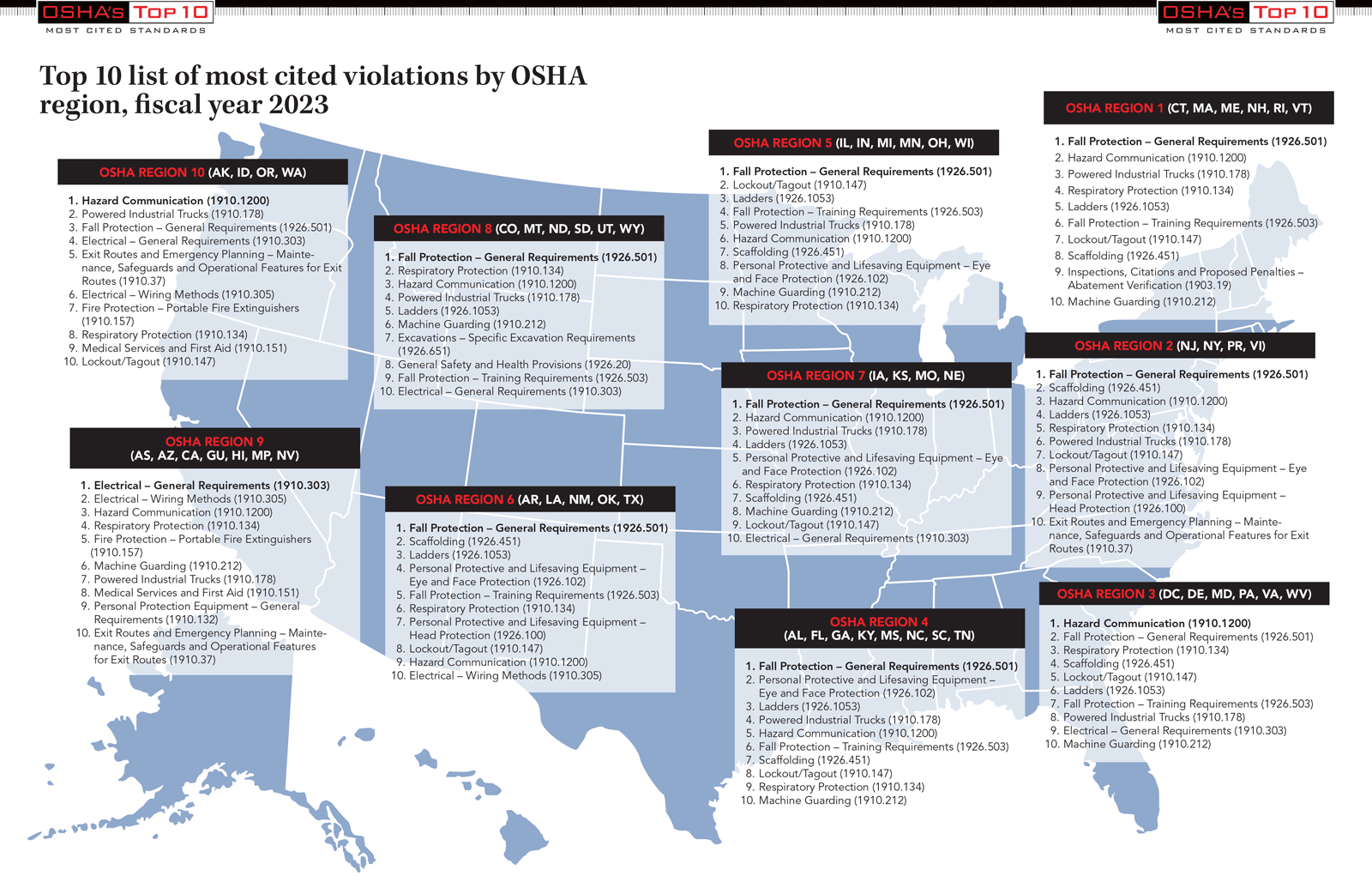
Top 10 by OSHA region
|
Guess which industries had the most citations |
Guess which industries had the most citations
|
Next: Top 10 penalties > Top proposed monetary penalties |
Top 10 penalties
The list of OSHA’s highest proposed monetary penalties in fiscal year 2023 comprises those stemming from a single incident or related incidents in which one or more employers are alleged to have failed to adhere to safe work practices. These failures put workers at risk – in some cases, fatally. The following information was gathered from press releases issued by federal OSHA between Oct. 1, 2022, and Sept. 30, 2023, as well as data provided by the agency’s communications team.
(Note: Dollar amounts may be reduced as part of a settlement agreement or litigation.)
$2.8 million
EMPLOYER: Miracapo Pizza Co. LLC (dba Little Lady Foods)
LOCATION: Gurnee, IL (OSHA Region 5)
BUSINESS TYPE: Frozen food manufacturer
INSPECTION TRIGGER: Fatality
EVENT: A 29-year-old female sanitation worker, who was placed at the facility by a staffing agency, was found decapitated after using compressed air to clean a spiral conveyor as it moved to cool pizza. OSHA inspectors determined that temporary workers were neither trained nor given authority to stop moving equipment before cleaning.
MAJOR CITATIONS: Miracapo Pizza was cited for 16 willful egregious violations, 12 serious violations and one willful violation. The company also was placed in OSHA’s Severe Violator Enforcement Program.
“This tragedy took the life of a young woman and forever changes the lives of her family, friends and co-workers. Safety standards are put in place to prevent these kinds of tragedies. Employers have a responsibility to train workers in the language
they understand so they know how to perform their work
safely.” – OSHA administrator Doug Parker
$1.9 million
EMPLOYER: Zwanenberg Food Group (USA) Inc.
LOCATION: Cincinnati (OSHA Region 5)
BUSINESS TYPE: Food processing plant
INSPECTION TRIGGER: Referral
EVENT:A 29-year-old temporary worker became caught in rotating paddle augers after falling into an industrial blender he was cleaning. He suffered critical injuries that necessitated a leg amputation. OSHA found that the company did not train sanitation workers to lock out equipment before cleaning and neglected to verify changes to its lockout/tagout procedures or retrain workers when changes occurred.
MAJOR CITATIONS: OSHA cited Zwanenberg for 11 willful, four serious, one repeat and one other-than-serious violation.
“This young man suffered a preventable debilitating injury because his employer failed to train him and the majority of its third-shift sanitation workers adequately to lock out equipment to ensure their own safety. This tragedy is compounded by the fact that OSHA cited Zwanenberg for similar violations two weeks prior, and they continued to ignore their responsibility to protect workers.” – Bill Donovan, OSHA regional administrator in Chicago
$1.2 million
EMPLOYER: NOX US LLC
LOCATION: Fostoria, OH (OSHA Region 5)
BUSINESS TYPE: Vinyl tile manufacturer
INSPECTION TRIGGER: Referral
EVENT: A worker suffered numerous serious injuries that required surgery after being caught in a machine. An OSHA inspection found that the worker’s body was pulled around the machine’s spindle after the worker’s finger got caught in a rotating spindle on a plastic winding machine.
MAJOR CITATIONS: OSHA cited NOX for eight willful, six serious, one repeat and one other-than-serious violation. It was the company’s seventh incident related to failing to follow required machine safety protocol since February 2017.
“NOX US LLC’s continued failure to correct previously identified hazards has led to another worker suffering severe and potentially life-altering injuries. When an employer fails to ensure dangerous machines are guarded or deenergized properly, they show an indifference to worker safety, and the risk of serious injuries multiplies.” – Bill Donovan, OSHA regional administrator in Chicago
$687,536
EMPLOYER: ALJ Home Improvement Inc.
LOCATION: Ho-Ho-Kus, NJ (OSHA Region 2)
BUSINESS TYPE: Roofing contractor
INSPECTION TRIGGER: Planned
EVENT: During an inspection conducted under an OSHA Local Emphasis Program on falls in construction, an agency inspector observed three workers on a roof 18 feet above the ground without required fall protection.
MAJOR CITATIONS: ALJ was cited with four serious and four willful violations for lack of fall and head protection and violating multiple standards.
“Since 2019, two employees of ALJ Home Improvement have suffered fatal falls, and ALJ continues to callously ignore the law and blatantly jeopardize the safety of its workers. The company repeatedly refuses to comply with OSHA standards and make worker safety a priority, choosing instead to put profit over the lives of its employees. The reality is that a safe workplace is actually a more profitable workplace.” – Lisa Levy, OSHA area director in Hasbrouck Heights, NJ
$629,946
EMPLOYER: Topflight Grain Cooperative Inc.
LOCATION: Atlanta, IL (OSHA Region 5)
BUSINESS TYPE: Farm product warehousing and storage
INSPECTION TRIGGER: Referral
EVENT: A 27-year-old worker cleaning a soybean bin suffered a partial amputation of his right leg. OSHA found that the company neglected to place a guard or cover over holes leading to a paddle conveyor in operation as three workers entered the bin. Topflight also failed to use guardrails or travel restraint systems to prevent workers from falling into the equipment.
MAJOR CITATIONS: Topflight was cited for four willful and one repeat violation.
“Topflight Grain Cooperative Inc. could have prevented this terrible incident and had been warned about the potential hazards of grain bins when OSHA cited the employer for similar hazards at another facility.” – Bill Donovan, OSHA regional administrator in Chicago
$584,633
EMPLOYER: Guelsin Lima (dba Extreme Roofing and Siding LLC)
LOCATION: Upper Saddle River, NJ (OSHA Region 2)
BUSINESS TYPE: Roofing contractor
INSPECTION TRIGGER: Planned
EVENT: As part of an inspection under an OSHA Local Emphasis Program on falls in construction, inspectors saw four workers without fall protection on a roof exposed to a 30-foot fall hazard. The agency also found violations on a residential construction site.
MAJOR CITATIONS: Guelsin Lima was cited for nine willful and three serious violations for exposing workers to fall hazards, improper ladder use, and failure to provide head and eye protection.
“Guelsin Lima has a significant OSHA history and is fully aware of what OSHA standards require. This latest inspection offers further proof that the operator of Extreme Roofing and Siding LLC simply refuses to comply with the law.” – Lisa Levy, OSHA area director in Hasbrouck Heights, NJ
$575,745
EMPLOYER: Dollar General Corp./Dolgencorp LLC
LOCATION: Town Creek, AL (OSHA Region 4)
BUSINESS TYPE: Discount retailer
INSPECTION TRIGGER: Complaint
EVENT: OSHA inspectors found this Dollar General location put worker safety at risk via a series of violations and omissions.
MAJOR CITATIONS:The location was cited for four willful, two repeat and one serious violation. Citations involved failure to keep walking-working surfaces free of hazards, keep exit routes free and unobstructed, and ensure stacked material was secure.
“The violations cited in these investigations are preventable, and OSHA will make every effort to hold Dollar General accountable for their failures.” – Kurt Petermeyer, OSHA regional administrator in Atlanta
$549,147
EMPLOYER: Dollar General Corp./DG Retail LLC/Dollar General
LOCATION: Killdeer, ND (OSHA Region 8)
BUSINESS TYPE: Discount retailer
INSPECTION TRIGGER: Referral
EVENT: During a spate of OSHA inspections at multiple North Dakota Dollar General stores in late 2022, the agency found blocked exit routes, doors, fire extinguishers and electrical panels, as well as unsafely stacked merchandise.
MAJOR CITATIONS: OSHA cited this Dollar General location for five repeat violations.
“As one of the nation’s largest retailers, the company must focus its attention on resolving these issues and making corporatewide changes to protect the safety and well-being of the people they employ.” – Doug Parker, OSHA administrator
$549,030
EMPLOYER: Dollar General Corp./Dolgencorp LLC
LOCATION: Tampa, FL (OSHA Region 4)
BUSINESS TYPE: Discount retailer
INSPECTION TRIGGER: Complaint
EVENT: Ongoing federal inspections of the discount chain found this location had blocked exit routes, doors, fire extinguishers and electrical panels.
MAJOR CITATIONS: The Dollar General location was cited for five repeat violations.
“Dollar General must make changes to correct these recurring violations before a worker is needlessly injured or worse.” – Danielle Jindra, OSHA area director in Tampa
$534,802
EMPLOYER: Paramount Builders Ltd./Paramount Builders Inc.
LOCATION: Pago Pago, American Samoa (OSHA Region 9)
BUSINESS TYPE: Commercial and institutional building construction
INSPECTION TRIGGER: Planned
EVENT: OSHA found that Paramount Builders violated a number of rules and standards, including failure to use required guardrail and personal fall arrest systems; ensure workers use appropriate eye or face protection related to hazards from flying particles, liquid chemicals and chemical gases; and install equipment safely as instructed by the manufacturer.
MAJOR CITATIONS: OSHA cited Paramount Builders for four serious, four repeat and three willful violations.
“Paramount Builders has historically shown its willingness to ignore federal laws that protect its employees from being exposed to serious injuries and potentially fatal hazards.” – Roger Forstner, OSHA area director in Honolulu
*Note: Inspection information listed may change for inspections not listed as closed. (For example, violations may be added or deleted).
|
A conversation with OSHA’s Eric Harbin |
A conversation with OSHA’s Eric Harbin
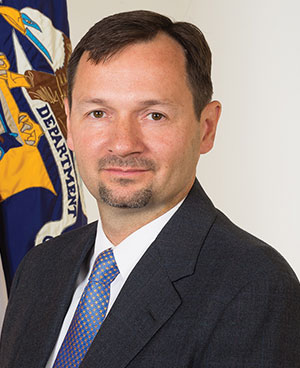
OSHA and Safety+Health announced preliminary data for OSHA’s Top 10 most cited standards for fiscal year 2023 on Oct. 24 during the 2023 NSC Safety Congress & Expo in New Orleans.
Later that day, Eric Harbin, administrator for OSHA Region 6, sat down with S+H Associate Editor Kevin Druley to talk about the list, his background and actions safety professionals can take to help mitigate workplace hazards.
Here’s what he had to say. (The conversation has been edited.)
Safety+Health: Fall Protection – General Requirements is No. 1 for the 13th year in a row, while Fall Protection – Training Requirements has been in the Top 10 for seven straight years. Why do falls continue to be such a problem for employers? What steps is OSHA taking?
Harbin: You know, it’s interesting. Fall hazard violations remain at the top of the list because the hazard is present in most construction worksites. That’s pretty visible. And according to the Bureau of Labor Statistics, year after year, it’s the leading cause of death for workers in the construction industry. In May, OSHA issued its National Emphasis Program for falls. Although most of the regions had their own different approach to addressing falls in the workplace, this kind of nationalized it and put a unified approach on how we target fall exposures in the industry. But as long as falls remain the leading cause of fatalities and serious injuries in all industries, the agency is determined that an increase in enforcement and outreach activity is warranted. So, the NEP really supports enforcement and establishing guidance for locating and inspecting fall hazards. It allows our compliance officers to open inspections whenever they observe someone working at height. It focuses on educating employers about effective ways to keep their workers safe. If a compliance officer determines an inspection is not necessary after entering a worksite and observing work activities, they will provide outreach on fall protection and leave the site. This year was also the 10th anniversary of our Fall Protection Stand-Down. Honestly, it’s one of OSHA’s most successful safety awareness campaigns, and it reaches far, far beyond just construction sites.
S+H: The total number of violations appears to have increased from FY 2022 to FY 2023. What does it represent to OSHA when violations are on the rise?
Harbin: So, it’s interesting you bring that up, that you noticed that. There’s really a couple of different reasons why you see that. The violations per inspection have been pretty consistent. The change in it is pretty minor. But what has increased is the number of inspections that were done in FY 2023 compared with FY 2022. More than 2,000 additional inspections were conducted. That can be tied to the number of compliance officers we hired during the year, kind of beefing up our enforcement staff. During the year, OSHA added 227 compliance officers. Some of those offset natural attrition, retirement or people moving on to different opportunities, but that’s a considerable amount of staff for an agency our size, a small agency, to onboard. We also took time to train our folks. We use our OSHA Training Institute to help them be able to conduct inspections, so the more training that they have, the faster they’re fully functional, fully able to get out and do inspections. So, you have the increase in inspections and the increase in the number of CSHOs. I think both of those are indicators of why you see more violations in 2023 as opposed to 2022. And the agency is working very hard to make sure that those new people we hired were given all the training they needed – that we could reasonably be able to do during the course of the year – to get them fully functional.
S+H: What are some other notable trends or takeaways from the Top 10?
Harbin: Construction remains about 51% of the inspection activity that federal OSHA does during the course of the year. So, the notable thing about that is it has actually decreased ever so slightly – from the mid-50s to the low-50 percent of our inspections. Also, with the number of violations cited, far and away, Fall Protection was the No. 1 most frequently cited – not only overall, but as serious and as willful. And it’s actually complicated to develop a willful violation, but we do see how that happens. It’s also interesting that Hazard Communication consistently ranks in the top five most frequently cited standards, both nationally and in all 10 regions. Serious violations are about 70% of the cited cases, with employers not focusing on developing or implementing a written hazcom program to ensure workers handling chemicals are provided effective information and training. OSHA’s Powered Industrial Trucks standard consistently, year in and year out, ranks among the top 10 most frequently cited standards and has been by far the most commonly cited standard in the warehousing and storage industry over the past three years. Machine Guarding was cited 87% of the time as serious. That’s a pretty high percentage of serious violations for a particular standard. And really, it’s cited based on inadequate guarding.
S+H: As a regional administrator, you lead OSHA policy implementation in five states. How often do you talk with the agency’s nine other regional administrators? How do the regions work together with federal OSHA to ensure employers provide safe workplaces?
Harbin: That’s a good question. I’m quite honored to say that we have a very close relationship. The regional administrators, we try to talk as a group roughly once a week. We also work well with our national office. We have calls about the same frequency with our national office in D.C. to stay abreast of what the important issues are that the national office is working on. These are always very interactive, productive conversations and give all of us the knowledge we need to make sure that we’re making informed decisions to support initiatives across the country that optimistically will improve workplace safety and health.
S+H: Which experiences or observations from early in your occupational safety career continue to influence you today?
Harbin: It’s interesting. I’ve often thought about this: What early in my OSHA career really was formative and has left an impression on me since the start? And I keep thinking back to one of my early inspections. I was inspecting a worksite and I came to a person who was operating a box-crushing machine, and I didn’t necessarily see issues with it, but during the course of the investigation, I wanted to speak to the employee to make sure the person understood who I was, why I was there and what was of interest. And it was just absolutely amazing that the person told me that she’d been working there for 10 years and no one ever asked her about her job and how she could do her job better, safer, more efficiently. The person just really lit up at having the ability to interact. And the person was very insightful into what was going on in her workplace. And for that reason, I always think back to that. Because it’s important for me as a regional administrator to make sure that we’re talking to the workers and listening to the workers. And that always circles back when I’m interacting with my own staff, to hear what workers have to say. They are the eyes and ears of the employer throughout the work location, and they can oftentimes point the employer in the right direction to find and fix hazards that might exist.
S+H: OSHA expanded its Severe Violator Enforcement Program in September 2022 to include violations of all hazards and agency standards. What drove that decision?
Harbin: The SVEP was expanded to support OSHA’s objective to focus additional enforcement efforts on all significant hazards and violations by concentrating inspection resources on employers who have demonstrated a recalcitrance or indifference to their OSHA obligations by committing willful, repeated or failure-to-abate violations of OSHA requirements. Severe violator cases result in additional enforcement actions, including mandatory follow-up inspections and, where appropriate, increased awareness of the enforcement actions at the corporate level, corporatewide settlement agreements, enhanced settlement provisions, and federal court enforcement under Section 11B of the Occupational Safety and Health Act of 1970.
S+H: What SVEP trends has the agency observed over the past year?
Harbin: The number of inspections qualifying for SVEP increased after the expanded criteria. So, in 2023, we had 266 inspections that qualified for SVEP. During the previous five years, OSHA averaged 80 SVEP-qualifying inspections per year.
S+H: What kind of impact can National Emphasis Programs have on the Top 10?
Harbin: When you look at the common safety hazards that these emphasis programs address, obviously, we have the emphasis program for falls, which can be in construction and outside. Whenever we put National Emphasis Programs in place, I think it is impactful on the worksites we go to and the standards we cite when we go to those workplaces. Optimistically and in a perfect world, the employers who are aware that they are covered by a NEP, really what we would prefer that they do is reach out to OSHA and ask for help. If they have it in-house, if they have a safety professional who they like to work with, that’s great. We have consultation programs in all states, a free service for all employers. They are always welcome to call their local OSHA office to find out if there are any additional resources they might be able to use.
S+H: Although OSHA doesn’t have a standard on ergonomics, it can issue citations for ergonomic violations through the General Duty Clause. As musculoskeletal disorders remain prominent, what should employers know about MSDs?
Harbin: MSDs are the most frequently reported causes of lost or restricted work time for workers. This is across the country. With overexertion, you can have sprains and strains, and it could be in the shoulder, the lower back. It covers a whole range of things. The high-risk industries include construction, food processing, office work with intensive keying, health care, transportation and warehousing, among others. Implementing an ergonomic process using the principles of a safety and health program and medical management is an effective way to reduce the risk of developing MSDs in these high-risk industries.
What employers really should focus on to reduce the chance of injury is designing work tasks to limit exposures to ergonomic risk factors. Look at implementing engineering controls, where feasible. That’s the most desirable, to implement a physical change in the workplace. An example of this could be a device to assist with lifting or repositioning heavy objects. Next, they might look at administrative or work practice controls that might be appropriate in cases when engineering controls cannot be implemented. This could be something as simple as requiring a sticker to be on heavy loads or warning employees that the load is heavy or to seek help before lifting. The last thing that employers can do is look at personal protection solutions. That’s the least effective control, and it’s limited when dealing with ergonomic hazards. But an example of this is using padding to reduce direct contact with hard, sharp or vibrating objects.
OSHA always looks at the evidence in each case before issuing any citation alleging ergonomic hazards. The basic criteria used in deciding whether a citation is issued are those posed by the General Duty Clause itself. First, does the hazard exist? Is the hazard recognized? Whether the hazard is causing or likely to cause serious physical harm to the worker, and lastly, is there a feasible means of abatement to reduce the hazard?
S+H: What is OSHA doing to help lower MSD injuries?
Harbin: OSHA is not just an enforcement agency. We take a multifaceted approach. In addition to enforcement, we do training and work with outreach, education and assistance. Our National Emphasis Program on warehousing and distribution center operations combines outreach, education and enforcement to improve worker health outcomes by providing resources for employers to reduce exposure to ergonomic hazards.
On Oct. 13, OSHA began initiating comprehensive safety inspections in this industry, to include providing worksites with training on ergonomic hazards and addressing any issues identified. OSHA will continue our commitment to devote enforcement resources to industries employing historically high numbers of temporary workers.
In 2024, the agency plans to continue to expand its Temporary Worker Initiative bulletin series, with new topics to include ergonomics, and to translate existing bulletins into other languages.
OSHA’s website hosts a safety and health topics page on ergonomics that provides additional informational resources on MSDs and guidance for high-risk industries including nursing homes, shipyards, retail grocery stores, foundries, and poultry and other types of meat processing plants.
S+H: What can employers do to avoid being a statistic in the FY 2024 Top 10 list?
Harbin: Our vision at OSHA is to see safety and health established as a core value in every workplace in America. Safety is a fundamental right for every worker. Everyone deserves equal access to the highest safety standards. Safety must be an enterprise-wide value and effort in every business and organization. In practice, this means developing effective safety and health management systems, listening and learning through worker participation, and striving to be a leader in your industry. We want businesses to align their operational values and best practices with this core personal value and go beyond compliance to ensure workers are safe and protected.
S+H: Where can employers turn for assistance?
Harbin: OSHA understands that although enforcement is a critical part of its mission, we cannot solely enforce our way to safe and healthful workplaces. We also provide businesses with the assistance they need to develop health and safety management programs. OSHA’s On-Site Consultation Program offers small-business employers confidential occupational safety and health services. The consultants work with employers to find and fix workplace hazards, give advice for complying with OSHA standards, help establish and improve safety and health programs, and train workers. Keep in mind that onsite consultations do not result in penalties or citations. We also have compliance assistance specialists in OSHA’s regional and area offices across the country who can help small businesses comply with OSHA standards and understand their responsibilities and workers’ rights. You can visit our website and search “compliance assistance specialists” to find the one nearest you.
S+H: What might you like to add that you think readers should know?
Harbin: I would encourage employers to listen to their workers. Understand and make sure they know that their workers have the right to a safe and healthy workplace. I would encourage employers and workers to read about this on OSHA’s website and know what rights workers have and be respectful of those rights.
|
Next: Citation Solutions > Safety+Health advertisers offer products and services to help you avoid OSHA’s Top 10 most cited standards |
Citation Solutions
The following Safety+Health advertisers offer products and services to help you avoid OSHA’s Top 10 most cited standards.
Board of Certified Safety Professionals
It may be more obvious in some industries, but the need for safety is universal. Listen as BCSP CEO Christy Uden visits inspiring safety professionals to learn why they do what they do, how they build their safety cultures and what that looks like in their unique settings.
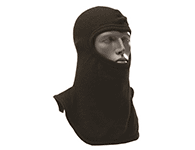
CarbonX® nonflammable hoods and balaclavas deliver ultimate protection to critical face and neck areas in a lightweight, flexible and breathable knit fabric. Made from a patented OPAN fiber blend, CarbonX products will not burn, melt or ignite, and they maintain their integrity and continue to protect over time.

National Association of Safety Professionals
Specialist courses at NASP are standard-specific training on a wide range of safety topics and industry regulations. These courses provide the learner with the kind of training that enhances their knowledge in the environmental, health and safety field. Try one of our specialist courses today!
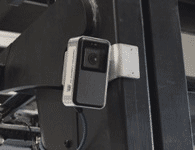
OmniPro Vision AI Collision Avoidance System by Matrix
New OmniPro Vision AI is a powerful and accurate collision avoidance system that detects people/vehicles/objects within the path of mobile equipment and alerts operators. OmniPro logs zone breaches with time-stamped photos, and its cloud application analyzes the data 24/7. No wearable devices are required. Ask for a trial!
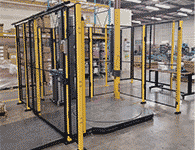
Discover PowerSafe Automation’s game-changing warehouse solutions, featuring state-of-the-art pallet-wrapping machine guarding. Safeguard assets and personnel with advanced solutions that ensure safe and efficient processes. With intelligent sensors and automated controls, our solutions minimize risk while optimizing productivity. Get a secure, compliant and seamless warehouse environment. Let PowerSafe Automation engineer your safety.
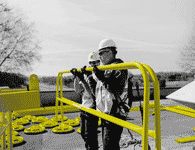
The SRC360 Mobile Rail is the heart and soul of Safety Rail Company – and OSHA compliance doesn’t get any easier. The SRC360 Mobile Rail’s nonpenetrating base spares membrane roofs and provides the highest level of versatility and installation flexibility. We’re not the safe choice for rooftop safety – we’re the safest.
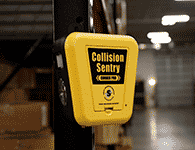
Constant motion, noise, narrow aisles, machinery, traffic and blind corners all factor into warehouses being dangerous places to work. Collision Sentry Corner Pro: For those “incidents waiting to happen” at blind-corner intersections. Designed to create a safer working environment in high-traffic areas.
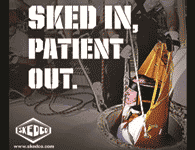
The Sked Stretcher system offers greater versatility than any other system. It can be used to perform confined space, water, vertical-rope, military, helicopter and virtually any other types of rescues. It floats nearly vertically and will accommodate nearly any size patient. It’s compact, lightweight and backpackable.
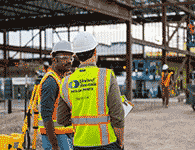
We’re not only the largest provider of commercial and industrial equipment in the industry – we’re also the largest safety-training provider. United Academy offers safety and operator training courses from certified trainers who are experts in the industry. We offer multiple class formats to best fit your schedule.
Fall Protection – General Requirements (1926.501)
Board of Certified Safety Professionals
National Association of Safety Professionals
Hazard Communication (1910.1200)
Board of Certified Safety Professionals
Ladders (1926.1053)
Board of Certified Safety Professionals
National Association of Safety Professionals
Scaffolding (1926.451)
Board of Certified Safety Professionals
National Association of Safety Professionals
Powered Industrial Trucks (1910.178)
Board of Certified Safety Professionals
National Association of Safety Professionals
OmniPro Vision AI Collision Avoidance System by Matrix
Lockout/Tagout (1910.147)
Board of Certified Safety Professionals
National Association of Safety Professionals
Respiratory Protection (1910.134)
Board of Certified Safety Professionals
National Association of Safety Professionals
Fall Protection – Training Requirements (1926.503)
Board of Certified Safety Professionals
National Association of Safety Professionals
Personal Protective and Lifesaving Equipment – Eye and Face Protection (1926.102)
Board of Certified Safety Professionals
National Association of Safety Professionals
Machine Guarding (1910.212)
Board of Certified Safety Professionals
National Association of Safety Professionals
| << Return to the beginning of the article |