
Responding is Christine Robinson, Ph.D., professor, Columbia Southern University, San Diego.
Census data shows that an estimated 68 million people in the United States speak a language other than English at home, with nearly 30 million identifying as having limited English proficiency.
The nation’s non-English-speaking workforce is made up of both foreign-born and domestic-born employees. In 2022, foreign-born workers represented more than 18% of the U.S. civilian labor force – up from 17.4% in 2021. The Bureau of Labor Statistics defines foreign-born workers as anyone residing in the United States but not a citizen by birth.
On April 28, 2010, OSHA issued a policy statement reiterating the agency’s commitment to training and instruction in a manner that workers can understand. This policy applies to agriculture, construction, general industry and maritime training requirements.
Whether the employee is non-English speaking or is a native English speaker with limited reading and writing skills, OSHA’s commitment to safety and health for all employees is emphasized by this memorandum.
According to a 2016 BLS report, non-English-speaking and LEP workers are often employed in the service sector, natural resources, construction and maintenance, and agriculture. These industries report a much higher injury rate than other industries, the report notes.
When information is presented in a language workers understand, they’re more likely to learn and retain that knowledge. That’s a critical consideration for employers and employees alike. Displaying safety information in multiple languages, especially those spoken by the community-dominant culture, can influence safety.
According to BLS, the number of work-related fatalities among foreign-born Hispanic or Latino workers rose to 727 in 2021 – a 5.1% increase from 2020 and the highest count since the series began in 2011. Fourteen percent of all work-related fatalities in 2021 involved foreign-born Hispanic or Latino workers. This was the second highest share since 2011.
The highest share (14.5%) was recorded in 2020, when COVID-19 pandemic-related employment changes contributed to a decline of 10.7% in total workplace fatalities overall, compared with a decline of 3.8% for foreign-born Hispanic or Latino workers.
OSHA has resources to help bridge the communication gap in safety training, which include:
- Compliance specialists
- Onsite consultation programs for small and medium-sized businesses
- A multilingual website
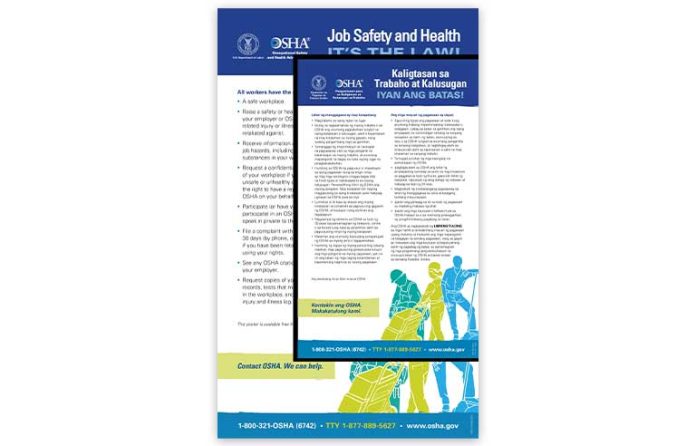
- Literature, posters and training in numerous languages
The effort to focus on breaking down language barriers demonstrates that an organization values and respects diversity and inclusivity, potentially attracting individuals from different cultures and backgrounds. It shows that the organization is committed to ensuring worker safety and well-being, and respects diversity by communicating in a language many in the community understand to keep everyone safe.
Editor’s note: This article represents the independent views of the author and should not be considered a National Safety Council endorsement.

