

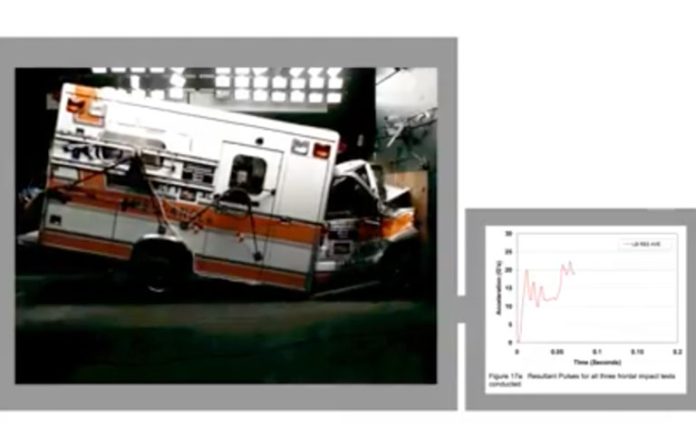
Washington – A seven-part video series from NIOSH highlights new crash test methods intended to improve safety for emergency medical services workers and patients riding in ambulances.
The series focuses on 10 recently published crash test methods published by the Society of Automotive Engineers, and includes demonstrations of crash-tested products. Also featured are improvements to the design of ambulance patient compartments, the body of an ambulance and the contents housed in an ambulance.
The seven videos are:
- Ambulance History, Injury Statistics & Standards
- Crash Testing an Ambulance
- Patient Compartment Seating & Restraint
- Patient Cot, Cot Mount & Patient Restraint
- Equipment Mount & Storage Device Testing
- Building a Stronger Patient Compartment
- Using the Ambulance Patient Compartment Human Factors Design Guidebook
A 10-year review of serious ambulance crashes showed that an average of 1,500 ambulance-related crashes and 2,600 injuries occurred each year between 1992 and 2011. In addition, the National Highway Traffic Safety Administration found that 84 percent of EMS workers in the patient compartment were not wearing seat belts.
NIOSH claims the new crash test methods decrease the risk of flying object-related injuries in patient compartments, and ensure EMS workers can fulfill “seamless patient care” while buckled up.
“Given the evolution of ambulance design, our research sought to make improvements in seating, patient cots, equipment mounts, storage cabinets and the overall patient compartment body, leading to the development of new test methods,” James Green, NIOSH lead project officer and safety engineer, said in a press release. “Working alongside other agencies and industry partners has improved the structural integrity and crash survivability of both the vehicle and the occupant, improving worker safety and security while still allowing them to do their jobs.”
The video series was released to coincide with National EMS Week (May 21-27).

