
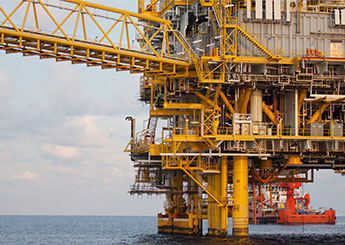
Washington – The Bureau of Safety and Environmental Enforcement has issued a safety alert in response to two offshore incidents involving the use of a hydraulic pulling unit, or hydraulic casing jack.
In December 2015, a crew was using a hydraulic pulling unit to pull drill collars out of a hole during platform abandonment well operations. The work string got stuck, so the crew applied an increased pulling force, which suddenly released the bind on the work string, causing it to rebound and dislodge the traveling slips of the casing jack. When the work string fell back into the hole, the weight and force of this loaded the crane because no slips were in place to take on the weight of the drill collars, the safety alert states. This resulted in the boom collapsing.
A similar incident took place in 2007, which resulted in the death of one worker and the temporary loss of control of a live well.
In the alert, released July 25, BSEE lists four recommendations for hydraulic pulling unit operators:
- Review hydraulic pulling units before use to determine the potential for traveling slip dislodge.
- Consider procedures other than straight over-pull when using a hydraulic pulling unit to free a pipe.
- Always determine if the load is free before operating a crane to lift a work string during a well abandonment.
- Review BSEE Safety Alert No. 250 and Panel Investigation MMS 2007-037.
BSEE uses safety alerts to warn about the circumstances of incidents or near-misses and make recommendations for future incident prevention.