

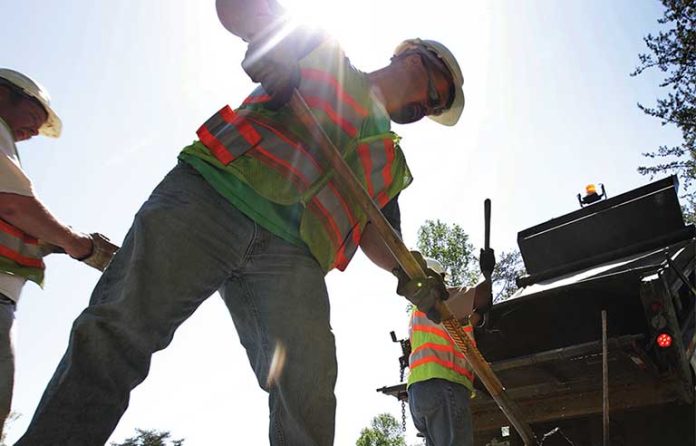
Waltham, MA — California’s heat regulations have led to fewer work-related injuries on hot days, according to the results of a recent study conducted by the Workers Compensation Research Institute.
WCRI says its previous research has found that excessive heat “not only causes heat-related illnesses such as heat exhaustion but also impairs judgment and perception, increasing the risk of accidents such as being struck by machinery.” For the new study, researchers analyzed 2002-2022 data to gauge the effects of California’s heat rules, which went into effect in 2005.
“The number of work-related injuries in California declined substantially after 2005 in all four industries, including clerical and professional, which we do not expect to be impacted by the heat,” the study states. “This is in line with multiple findings and observations from other studies and is likely attributable to a series of reforms California adopted in the early 2000s.”
Specifically, the number of work-related injuries on hot days declined 24%-27% in agriculture, 19%-25% in transportation and 15%-17% in construction. That effect was the strongest for temperatures above 95° F.
The heat standard also had a more significant impact for younger workers. “The decrease in the frequency of work-related injuries on hot days for workers age 35 and below was 18% in construction and 27% in agriculture,” the study states.
In a press release, WCRI President and CEO Ramona Tanabe said that as heat safety standards are debated at federal, state and local levels, “these findings offer measurable evidence of how California’s policy reduced injury rates during extreme heat and offer relevant data to inform the national conversation about worker protection.”

