

Responding is Rachel Krubsack, editor, J. J. Keller & Associates Inc., Neenah, WI.
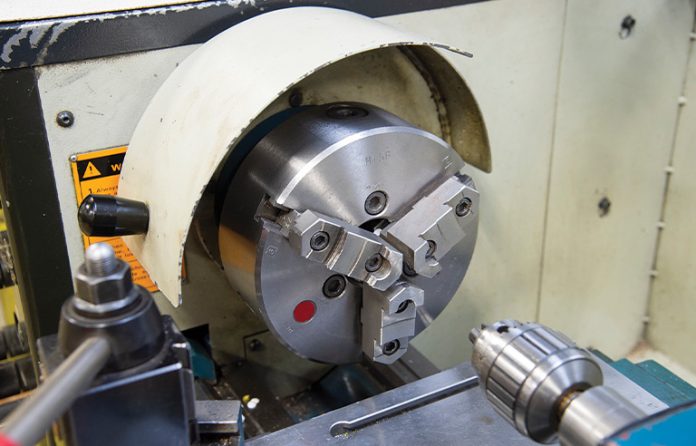
Moving machine parts have the potential to cause severe workplace injuries, such as crushed fingers or hands, amputations, burns, or blindness. When machine operation or incidental contact with mechanical parts could injure the operator or others in the vicinity, the hazards must be eliminated or controlled. This may include the use of fixed, interlocked or adjustable guards. These are engineering controls, which are the preferred method of protecting employees, as they can eliminate the hazard.
Fixed guard: A fixed guard is a permanent barrier attached to a machine that encloses the point of operation or hazard area. It allows for stock feeding but doesn’t permit the operator to reach the danger area. Fixed guards may be constructed of sheet metal, screen, wire cloth, bars, plastic or any other material that’s substantial enough to withstand whatever impact they receive and to endure prolonged use. They’re best suited for simple rotating or moving parts where the hazard doesn’t change, when there’s no need for routine access during normal operation and when maintenance is infrequent. Examples include covers for drive shafts and blade guards on saws.
Interlocked guard: Interlocked guards prevent machine start-ups or shut off or disengage power when the guard is opened or removed. The machine can’t cycle or be started until the guard is replaced. Interlocked guards should allow for inching of the machine. They may use electrical, mechanical, hydraulic or pneumatic power, or a combination of these. Interlocked guards provide access without fully removing the guard and reduce risk of workers defeating the guard to do their job. They’re best for hazards that require regular access, such as cleaning, changeovers or clearing jams, and for machines in which exposure occurs only when accessing the point of operation. Examples include light curtains and factory safety gates.
Adjustable guard: As the name suggests, these guards can be adjusted for different machine setups and production operations. They can be constructed to suit many applications and adjusted to admit varying stock sizes. Adjustable guards may be made of plastic, metal or other substantial material. They’re best for machines that handle different sizes of workpieces and jobs that require manual feeding. Examples include adjustable blade guards or barriers on table saws and band saws.
Choosing the right type of guard depends on the machine’s design, how often workers need access and the nature of the hazard. When guards are properly installed, maintained and used, they eliminate many of the most common causes of injuries.

