
Washington — The House Transportation and Infrastructure Committee has advanced legislation aimed at ensuring commercial driver’s license holders maintain English language proficiency and requiring states to confirm truckers’ legal immigration status.
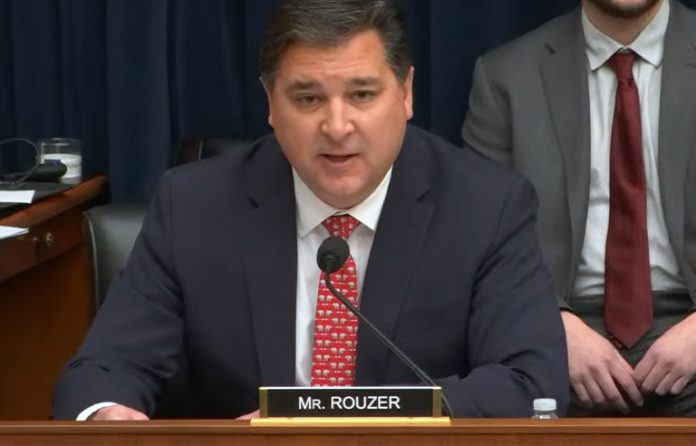
Dalilah’s Law (H.R. 5688) was sent to the full House after a 35-26 committee vote on March 18. Rep. David Rouzer (R-NC), chair of the committee’s Highways and Transit Subcommittee, sponsored the bill.
The bill would reinforce some CDL changes already on the books.
The Consolidated Appropriations Act of 2026 (H.R. 7148), signed Feb. 3 by President Donald Trump, codifies an Executive Order issued by Trump in April mandating that truck drivers be placed out of service for failing an English proficiency test. The test includes a driver interview and an assessment of highway traffic sign recognition.
In addition to placing drivers out of service for failing such tests, the bill would add restrictions on certain foreign-based freight brokers and dispatch services. It would prohibit the transportation secretary from registering an entity as a freight broker if its principal place of business isn’t located in a U.S. state or territory or is improperly licensed in Canada or Mexico.
During the hearing, Rep. Mike Collins (R-GA), a CDL holder, offered his support for the bill.
“We should only have the best people driving these trucks across this country, period,” Collins said. “I’m second-generation in the trucking industry. I’ve got my commercial driver’s license in my pocket. I’ve had it for 40 years now, so I not only know what it takes to get these licenses and what you have to go through, but I also know how important it is to have a commercial driver’s license and to be able to drive a truck.
“For the life of me, I can’t understand how these licenses have been issued to people who can’t speak or read English.”
Rep. Rick Larsen (D-WA), ranking member of the committee, opposed the bill, contending during the hearing that “ELP violations are inherently subjective, and the administration has not demonstrated a safety risk of the magnitude” of violations such as driving while intoxicated or fleeing the scene of an incident.
Larsen added in a press release: “It is our responsibility on the Transportation and Infrastructure Committee to work to make our roads safer, but there is no indication this bill does that. Instead, it lays the entirety of the roadway safety epidemic at the feet of women and men who are safe drivers trying to make a living in a new home.
“In fact, the Trump administration’s own analysis cannot find the safety benefits of this policy. If this legislation is enacted, up to 200,000 drivers – who took the same credentialing and safety tests as U.S. citizens – will have their CDLs forcibly revoked and lose their job.”
Bill namesake Dalilah Coleman – a 5-year-old California girl who was critically injured during a June 2024 traffic incident involving a trucker with undocumented immigration status – was present during the vote.

