

Responding is Catriona McNally, design and technical team manager, Portwest UC, Westport, CO.
Developing protective clothing for workers who operate close to moving vehicular traffic, such as road maintenance crews, emergency responders and construction workers, requires careful evaluation of technical, environmental and regulatory factors to ensure maximum safety and performance.
High visibility and conspicuity
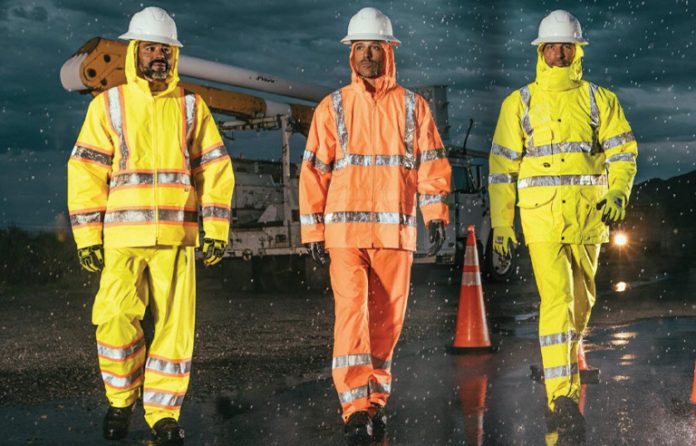
Workers must be easily seen by drivers at distance, when moving and in all light conditions, so garments should provide visibility in daylight, low light and nighttime using both fluorescent and reflective components.
Fluorescent yellow, orange or red should be selected based on which color provides the strongest contrast with the surrounding work environment. Placement of retroreflective tape is critical; it must help drivers recognize the human form, so reflective elements should appear on the torso, arms and legs to support motion visibility.
Legal and regulatory compliance
All protective garments must comply with relevant standards and legal requirements, most notably the ANSI/ISEA 107 standard for high-visibility safety apparel. Additional obligations may arise from national standards bodies, occupational safety authorities, roadworks or traffic management guidelines, and corporate safety policies. Manufacturers must ensure certified visibility types and classes, design features, and performance characteristics are met and documented.
Risk assessment based on working conditions
The hi-vis garment types are designated for the work environment in which the wearer is performing a task. There are three types: O for off-road, R for roadway and P for public safety.
The required protective clothing class is determined by the risk level. There are three classes: 1, 2 and 3. Class 3 is the highest class, worn in more complex working environments (road workers operating near moving traffic, for example).
Conditions that determine what class is required include traffic speed, traffic density, lighting and weather conditions, worker proximity to traffic, and emergency scenarios.
Durability and material performance
Hi-vis protective clothing must survive harsh field conditions. Fabrics must meet minimum abrasion and tear resistance levels. Fluorescent fabrics must use colorfast dyes. Fabrics must withstand all weather conditions and provide protection from wind, rain and sun. In some operations, garments must also provide heat and flame resistance. Reflective tape performance must remain compliant for the lifetime of the garment and after washing and wear.
Environmental and sustainability considerations are becoming increasingly important. Recyclability, reduced microplastic shedding and garment longevity, as well as environmentally responsible waterproofing treatments, are some key design factors.
Ergonomic design with fit
Workers must be able to perform tasks safely and comfortably. Designs must allow for a range of movements by including stretch panels, articulated sleeves and ergonomic cuts.
Thermal comfort is paramount, using breathable fabric for warm weather and insulation fabrics for cold conditions. Layering allows the worker to adapt across all seasons. Gender-specific fits improve comfort and safety. Logos, ID panels, badges and organizational markings need to be allowed for and must not compromise visibility requirements.
Compatibility with other PPE
Protective clothing must be compatible with other equipment without reducing effectiveness (harness compatible design for working at height, for example). Gloves, hard hat, hearing protection or masks are other PPE to consider. Reflective areas should remain visible even when other gear is worn.
Maintenance, cleaning and lifecycle management
Clothing performance reduces significantly without proper care.
User documentation must accompany all items of hi-vis apparel, stating the number of wash cycles before visibility performance degrades. Workers must be trained in correct use and storage. Regular inspections must be carried out, and substandard garments must be replaced in a timely manner.
Developing protective clothing for workers near moving traffic requires a multidisciplinary evaluation across visibility, ergonomics, durability, environmental conditions and regulatory standards. The goal is to ensure workers are highly visible, safe, comfortable and protected in the dynamic, high-risk environments created by moving vehicles.
Editor’s note: This article represents the independent views of the author and should not be considered a National Safety Council endorsement.

