Birmingham, England — A workforce with growing skills gaps can make an organization less safe and healthy, according to a recently published report from a British safety agency.
The Royal Society for the Prevention of Accidents’ eight-member expert Occupational Safety and Health Skills Commission panel met in February and March to explore the role of “whole workforce competence” and its impacts.
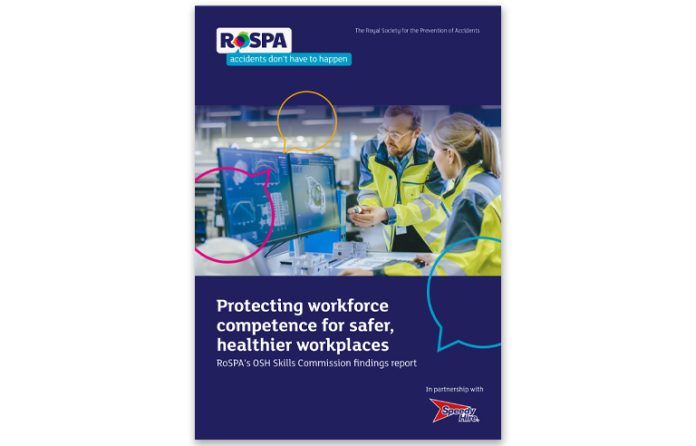
The Protecting Workforce Competence for Safer, Healthier Workplaces report, prepared in conjunction with British specialist equipment hiring firm Speedy Hire, highlights growing skills gaps, changing work patterns and challenges related to artificial intelligence adoption.
It focuses on five key areas:
- Job readiness and early career learning
- Flexibility, life-course fit and workforce sustainability
- Leadership, management and trust
- Honest work design and role clarity
- Human capability with technology and AI
The report includes three key recommendations for safety and health professionals and organizational leaders:
- Offer in-person work experience placements and improve engagement with young workers and those early in their careers to help raise realistic expectations of work and good work design.
- Adopt the ISO 45003 guidelines for managing psychosocial risks and reserve resources for competence development by proactively collaborating with occupational safety and health, human resources, and other operational functions.
- Introduce succession planning, phased retirement and proactive internal workforce mobility focused on skills that workers have rather than qualifications they lack.
Leaders, the report says, should drive a shift to employer-led competence development that embeds learning into work, sets aside time for skills development and improves training quality.
Organizational leadership should understand that rapid technology changes and ways of working are reshaping skill maintenance and development. Therefore, leaders should ensure that any skills policy supports lifelong learning, promotes safe and effective tech adoption, and preserves informal and experiential learning to strengthen workforce competence.
“However daunting challenges such as widening skill gaps and increasing workloads may seem, the innovative ideas presented in this report means I am confident OSH professionals can not only overcome them but transform them into opportunities for improving health and safety in the future,” RoSPA Vice President Christine Crawley said in a press release.