

Responding is Aaron Conway, president, Mezzanine Safeti-Gates Inc., Essex, MA.
Many manufacturing facilities operate in hostile environments. For this reason, some food and pharmaceutical companies may have areas that are temperature controlled, while companies that manufacture chemicals or powdered substances may need to frequently wash areas throughout the day.
Regardless of the product being made or the environment in which it’s made, employee safety is always important. Most manufacturing facilities have elevated work areas, and employees working in those areas must be protected from falls. OSHA’s walking-working surfaces regulations and ANSI standards require that fall protection be in place for employees working at a height of 4 feet or higher.
Although it’s important to ensure proper fall protection systems are in place, extreme environments require safety equipment that will not only keep employees away from ledges but also prevent corrosion or breaking down during daily operation.
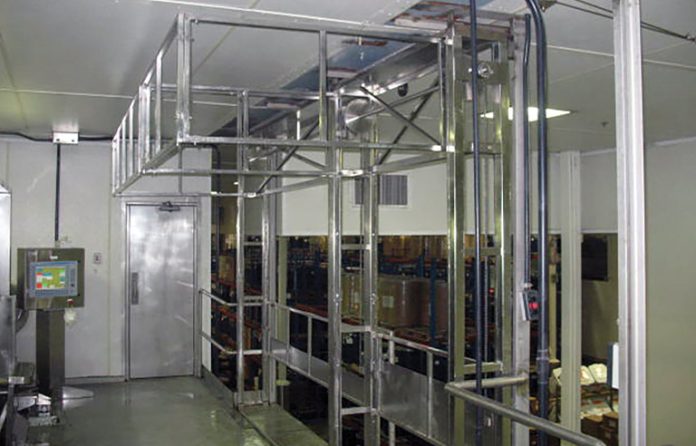
If the elevated work area is in an extremely cold or hot environment, any fall protection system must be constructed of proper material to withstand the environment. Often, safety structures are made with a powder-coated finish – you see the yellow paint used on safety equipment in many facilities – but extreme cold can cause paint cracking and flaking, as well as premature wear. Stainless steel can handle freezing or heated environments as well as drastic temperature fluctuations, so it’s a good choice for fall protection devices in facilities with temperature-dependent operations.
If stainless steel isn’t an option, you can use galvanized steel or specialty finishing paint. Aluminum may be an option, but you must verify it has the properties needed to withstand the working environment.
Fall protection devices with few moving parts also work well in extreme hot or cold environments. Any connections and hardware incorporated in the design needs to be able to withstand the environment, or the safety device may be compromised.
Many manufacturing facilities – especially those required to maintain sanitary environments, including pharmaceutical, chemical or food manufacturing facilities – frequently wash or rinse down areas to keep them clean. To avoid corrosion, fall protection safety devices must be constructed from stainless steel.
When wash-down areas are elevated, the risk for slips and falls increases. Using proper flooring material in conjunction with fall protection equipment is imperative. Floor plating can be found for a wide range of environments; options range from sticky and anti-slip to grooved or patterned steel plates.
Sanitary manufacturing environments also often require no-touch fall protection. If the safety device is power operated to satisfy this requirement, motors must be optimized for the climate. Waterproof motors should be used when the area is frequently rinsed, while specialty motors must be considered for areas in which temperature is extreme.
Fall protection is only effective if it fits within the environment and can be easily used by employees working at height. Take the time to ensure you have the right equipment for your facility’s environment to create the best working conditions for your employees.
Editor’s note: This article represents the independent views of the author and should not be considered a National Safety Council endorsement.

