

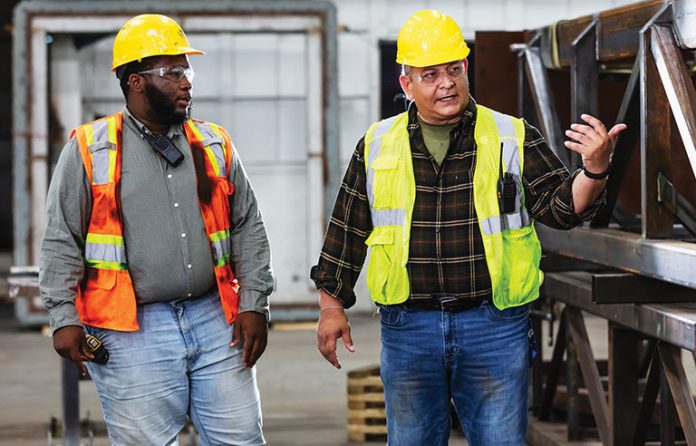
Frontline workers make organizations go. And safety and health professionals make sure those people stay safe on the job – but safety pros can’t have eyes everywhere. That’s where “selling” safety to the front line comes in.
How can safety pros get the support they need?
Last year, we asked four experts to weigh in about “selling” safety to leadership. (Check it out in the December 2024 issue of Safety+Health.) We recently asked them back for advice about how to earn the trust of frontline workers and gain buy-in for safety.
Here’s what they said.
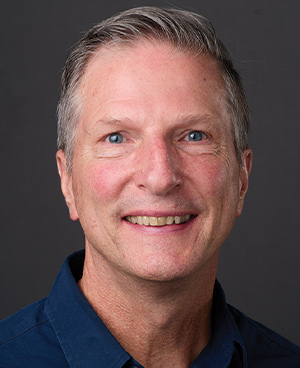
Patrick Karol
Karol Safety Consulting
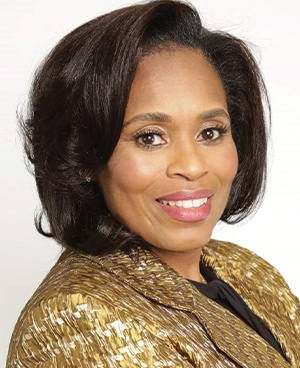
Sharli Adair
City of Memphis (TN)
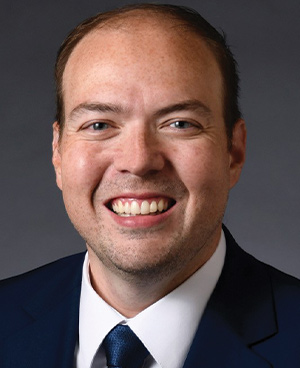
Brian Bailey
Tradepoint Atlantic
Nathan Benson
Chatham County (GA)
Patrick Karol: How you define “support” is important. If you’re defining support in the context of, “Hey, you’re part of the solution, not part of the problem, and we need you to help create a safe work environment,” then when you view them in that way and they feel valued, they’re more likely to say, “Hey Pat, there’s a hazard here and this is what I think we need to do.” That’s the value.
Sharli Adair: They actually see the potential hazards. They also possibly have the opportunity to put a measure in place or proactively put something in place that would prevent incidents.
Brian Bailey: They’re with each other more than we are with them. And we need those special people who are willing to sell safety to their colleagues. It’s sort of like an ant mound or a beehive. You’re looking for those people who are embedded in that group because even though we’re supervisors or directors or executive leaders, we can’t be there all the time. They probably had some experience or turning point in their career where they were injured or saw someone get injured. That probably turned on a light bulb for them and changed their outlook of how to make things safer.
Nathan Benson: Obviously, injury prevention is top of mind. The big benefit is engagement. If they’re engaged in safety, they’re most likely – in my experience – to be engaged in other aspects that make the business or, in our case, the government function.
What are the challenges of selling safety to the front line?
Benson: Trust is one of the big challenges. We have this “no wrong door” policy when an employee comes to us, or a citizen. We all know how frustrating it is to get passed around in an organization. “No wrong door” is about knowing your organization and knowing who the players and the connectors are so you can get that person to where they need to be. We say, “It’s not a cold handoff. It’s a hot handoff.”
Adair: I believe that communication is the major challenge. If you don’t have communication, you really don’t have anything. If you don’t know how to communicate with another generation, you’re not getting the information to the place where it needs to be for safety.
Karol: One of the challenges is that safety can have a more negative perception at the frontline level, especially if we’ve been out doing audits and inspections and enforcement and pushing mandatory training. That can be a big hurdle. Now you’re out trying to build relationships, but all they’re going to see is enforcement.
Sharli Adair
Senior manager, workplace safety compliance and infection control
City of Memphis (TN)
Any strategies you’ve had success with or are particularly proud of?
Bailey: We’ve structured the way our morning shift changes happen. When you come in at 6:30 in the morning, we’re having some sort of safety moment. We’re asking different employees to lead the safety moment. Just because you’re not a supervisor or a manager doesn’t mean that we’re not going to call on you. We’ve also tried to rewrite our standard operating procedures to take out corporate jargon. It doesn’t work for the everyday employee when you’ve got a 23-page SOP that’s full of legalese and Rhodes scholar language. We’ve taken a lot of those SOPs and made CliffsNotes. It’s got to feel personal – not procedural, not corporate.
Benson: Buy-in is won and lost with communication. With our “no wrong door” policy, when an employee brings up an issue and they see action, they’re going to bring you more issues in the future. If they bring you an issue and don’t see anything happening – maybe something was done and they just don’t realize it – you’re not going to get that buy-in. It’s the whole communication feedback loop. We had an employee who worked really hard independently. In our safety newsletter that we send out to all employees, we recognized that this employee took the training, went to night classes, got their commercial driver’s license all on their own. It was to advance their career, but that also makes them a safer employee.
Adair: I took the liberty to step out of the norm. If you have a passion for safety, you want to learn and you don’t have the experience, I’ll teach you. I found it to be so rewarding. The people on my team, we took them because they had a passion and they learned from scratch and they’re doing it right. They’re not 10 years, 11 years, 12 years (in safety). They’re four or five years. Get someone who will love to make sure safety is a priority, and you’ll see a winner.
Karol: I always got dragged into that disciplinary action conversation. I learned to challenge the operations manager, and even human resources, by asking five questions:
- Before we get to disciplinary action, was there a procedure that covers this situation?
- Did we train to that procedure?
- Did we communicate that procedure?
- ow well did we reinforce that procedure, that training, those training techniques?
- Did you measure compliance with that procedure or behavior?
If you can answer “yes” to all those questions, then you don’t have a safety issue. You have a management issue, and maybe that’s when you hand it off to HR. But if you’ve answered “no” or hesitated, then the problem is ours. We own the problem, and we’ve got to fix it.
What are some types of resistance or pushback safety pros might encounter?
Karol: Think about it like this: You’ve got a new employee, and maybe that employee has been in the workforce at another job somewhere for several years. Well, they bring their experience with them. If they’ve had a poor experience somewhere else, that’s coming with them, and that can manifest itself in a lot of different ways. You’ve got to crack that code and figure out what kind of perception they bring. We can reinforce that negative perception by how we present ourselves and how we talk about safety.
Bailey: Some guys will say, “That’s why you’re here. That’s why the safety team exists. That’s what the safety guy is for.” We’re not God. We’re not looking at every single person at every single moment. I need you to be thinking about all 10 fingers and all 10 toes that you need to go home with to your spouse and your kids.
Younger employees may not feel heard in the process. We’re really making a sincere effort if we ask you a question about how to do your job better or how to do your job safer. We really want to know.
Benson: I classify those as passive and active. Saying, “I’m not going to wear my personal protective equipment” or “I’m only going to wear it when the safety guy is around.” That’s an active one.
You also have the passive ones, who kind of concern me more. Those are the people who show up late to safety meetings or they may not show up at all. They’re more dismissive of safety. The passive distractors are the people you’ve got to really communicate and connect with so they’re not distracting from what we’re trying to do.
Who are some potential allies within the organization who can help sell safety?
Adair: Our frontline workers need to know they have team players not just on their level but in mid-level management and leadership. If our frontliners are secure in the fact that “I have somebody to support me when I do what’s right,” then they don’t mind doing what’s right or stopping their peer from doing something wrong.
Bailey: We’ve started having quarterly executive safety meetings where we’re sharing things they may not otherwise hear. We want them to know that we had a guy who got hurt, and here’s how we managed that case. Here’s what we fixed internally so it doesn’t happen again.
Karol: There are those informal leaders – and they exist everywhere – at every level of the organization, especially on the front line. If you’re not spending time out on the front line with the employees, you’ll never know who those informal leaders are. When you can tap into them and share your message and your vision with them, those are the allies you want to build.
What advice do you have for selling safety to a worker who’s negatively influencing others?
Bailey: Everybody’s got problem kids, right? You’re trying to redirect their mindset and behavior without creating defensiveness or losing the trust of the people whose confidence they’ve gained. I would say, “You’ve got a lot of experience here. People look up to you. That’s why I wanted to talk to you. Here’s what we’re trying to do at this company and here’s how you could play a role in it.” I think that sets the tone where you’re not lecturing them, but you’re leaning into their experience. Maybe they just want to be heard. We’re not asking them to be a rah-rah cheerleader for safety. It’s really about a shared ownership.
Benson: I became a safety professional because of my passion for safety. Not everybody shares that same passion. That’s what makes us unique.
On the flip side, people generally don’t want to get hurt at work. So, there’s usually a reason for them being a distractor. Maybe somebody has a sick family member or they’re having financial issues.
There’s always something else that causes people to distract. If you’ve got somebody who’s actively disrupting the program, you’ve got to pull them aside and talk to them like a person.
One time, I had an employee who I couldn’t figure out why they were struggling with training. Come to find out, they couldn’t read. It’s simple things that we overlook, and we don’t think about.
Adair: I’ve had people tell me, “I’ve been doing this for 30 years and I’ve never, ever gotten hurt.” I always tell them: “You’ve never gotten hurt. But if you get hurt, it’s too late.”
If you have that incident and you don’t have a seat belt on and you’re thrown through the window, it’s too late. If you fall down into a confined space and you’re without oxygen, it’s too late. So, let’s make sure that never happens.

