
Columns

What’s on your ‘most wanted’ list?

The Chemical Safety Board recently approved the launch of its Most Wanted Chemical Safety Improvements Program, with promulgation of a combustible dust standard as its first “most wanted” item. So what’s next?

OSHA Roundup for July 22, 2013

The Department of Labor gets a new secretary and releases its semiannual regulatory agenda. Read about these stories and more in this week’s OSHA Roundup.

A summer of new regulations

This summer is shaping up to be a busy one for OSHA, which has gone public with its intention to move forward on several proposed and final rules.

Dangers of the night shift

I’m grateful to work the day shift. I never gave my work schedule much thought until I started working at Safety+Health and reading study after study about possible health risks associated with shift work.
- Digital Partners -

Expanded worker protections in the Massachusetts?

One of the larger omissions in the Occupational Safety and Health Act is that the law doesn’t extend to state or local governments, meaning public employees don’t have the same protection guarantees as those in private industry.

OSHA Roundup for July 15, 2013

OSHA is urged to withdraw a recent letter of interpretation concerning non-union workplace inspections in this week’s OSHA Roundup, and more.

The role of workers’ comp

It’s a simple question, but unfortunately it may not have a simple answer: What is the role of workers’ compensation?

Data has its limits

If you think about it, research is only as good as the data behind it. And a recent study from NIOSH raises questions about the accuracy of occupational injury and illness data based on emergency department records.
- Digital Partners -

OSHA Roundup for July 8, 2013

In this week’s OSHA Roundup, OSHA and the U.S. Postal Service come to an agreement while the agency clamps down on auto shop hazards in Pacific islands.

Sen. Boxer knocks EPA’s actions on CSB recommendations

CSB is an independent agency. That makes it, to a degree, answerable to no one. It’s free to investigate an incident without fear (in theory) of an oversight agency such as OSHA telling it what to do or what type of findings to release. This is good, obviously, but it goes both ways – CSB can’t force an agency to change.

Next Webinar

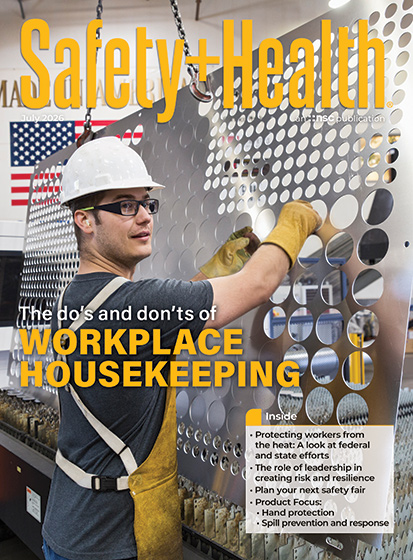
Current Issue
What's Trending

From our Partners

Earn recertification points

Board of Certified Safety Professionals

Take a quiz about this issue of the magazine and earn recertification points from the Board of Certified Safety Professionals.
