Responding is Tim Turney, global marketing manager, Casella, Sterling, MA.
Noise is often treated as part of the background in busy industrial environments, overlooked for more visible and imminent physical dangers. In manufacturing plants, construction sites, recycling facilities and logistics operations, excessive noise from machinery can be mistaken for productivity. However, the transition from loud to hazardous is measured in decibels and, without accurate monitoring, employers may not recognize the risk until permanent damage already has occurred.
According to the most recent data from NIOSH, around 27 million people in the United States were exposed to potentially damaging noise at work in the past year. Noise-induced hearing loss is one of the most common occupational illnesses, yet it’s entirely preventable. Once hearing is damaged, there’s no cure and the impact can extend beyond the ear, affecting communication, situational awareness and long-term well-being. NIOSH has also highlighted wider health concerns linked to excessive noise exposure, including stress and increased risk of cardiovascular effects.
For U.S. employers, the regulatory framework is clear. OSHA’s standard on occupational noise exposure (1910.95) requires a noise monitoring program to be implemented when employee exposure equals or exceeds an 8-hour time-weighted average of 85 dBA. OSHA’s permissible exposure limit is 90 dBA over an 8-hour TWA, with a 5 dB exchange rate. In construction, 1926.52 sets requirements for occupational noise exposure. Although OSHA establishes enforceable limits, NIOSH recommends a more protective exposure limit of 85 dBA as an 8-hour TWA using a 3 dB exchange rate, reflecting best-practice thinking around prevention.
An initial step in managing risk is understanding exposure, which often proceeds employer’s decisions around implementing the Hierarchy of Controls. If, however, a workplace has a known noise problem, it’s best to implement obvious controls. A noise survey should identify the major sources of sound, determine their contribution to area levels and assess which employees are exposed during typical work activities. Those conducting assessments must be competent and equipped with suitable instrumentation that meets relevant standards. If this requirement doesn’t exist internally, industry experts recommend consulting qualified external providers.
Sound level meters and noise dosimeters can each play an important role. A sound level meter is a handheld instrument used to take spot measurements, identifying noise from a single point, such as at the ear in the direction of the noise source. A noise dosimeter, by contrast, is worn by the worker and measures personal exposure across a shift, accounting for movement between tasks, locations and break periods. Using both can provide a more complete picture of workplace noise risk, with a sound level meter also being used to check any anomalous results found with a noise dosimeter.
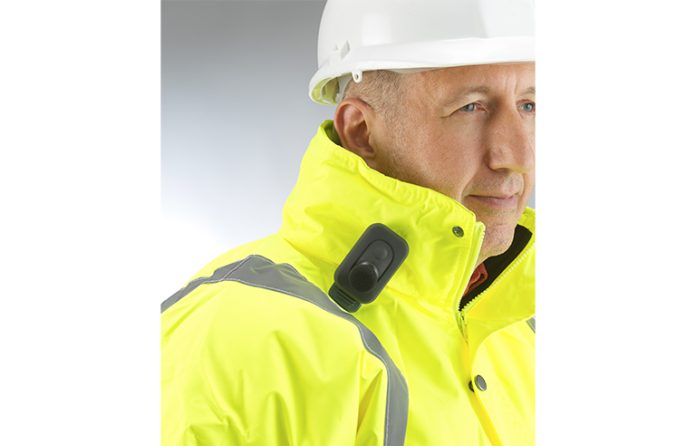
Modern noise dosimeters make this process more practical, as compact, body-worn devices can be positioned with the microphone close to the ear (in the hearing zone) and used to gather real-time noise exposure data throughout the day. Bluetooth-enabled systems can allow readings to be checked remotely from a phone or tablet without interrupting the worker, while stored results help support compliance records and future control decisions.
Once exposure is known, employers should then apply the Hierarchy of Controls. OSHA advises that elimination of the noise source is the first port of call. If that’s unpractical, feasible engineering or administrative controls should be used to reduce exposure before relying on personal protective equipment. This may include quieter equipment, improved maintenance, sound barriers, vibration dampening, task rotation or scheduling noisy work when fewer employees are present. Hearing protection remains essential where residual risk exists, but it must be properly selected, fitted, worn consistently and maintained. Overprotection should also be avoided, as workers still need to hear audible dangers and be able to communicate with colleagues.
Ultimately, effective noise management isn’t about assuming a workplace is safe because it’s always been loud. Collecting robust data of noise sources and respective levels is the only way to identify ongoing risk to employees and the likelihood of permanent hearing damage. With accurate monitoring and practical controls, employers can protect workers from irreversible hearing loss, meet their regulatory duties and ensure hazardous noise never becomes accepted as normal.
Editor’s note: This article represents the independent views of the author and should not be considered a National Safety Council endorsement.