Top 10 most cited violations |
Top serious and willful violations
Penalty Box | Q & A with OSHA’s Patrick Kapust
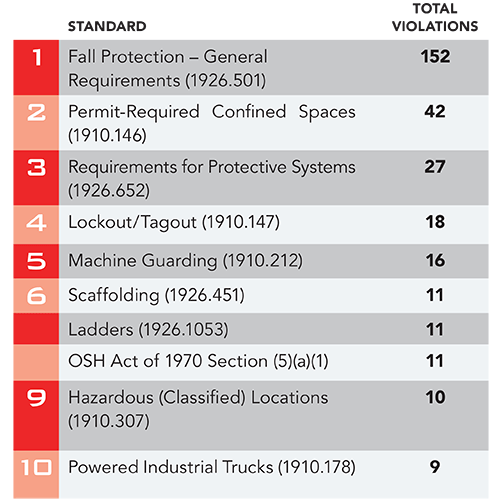
Fall Protection – General Requirements is OSHA’s most frequently cited standard for the 10th successive fiscal year.
During an exclusive Safety+Health webinar, which took place Feb. 26, Patrick Kapust, deputy director of OSHA’s Directorate of Enforcement Programs, presented preliminary data for OSHA’s Top 10 for FY 2020.
“Use the Top 10 as a guide for your workplace,” Kapust says. “It’s a good place to start if you don’t know where to start. Look at what OSHA is finding. Look at the things that are applicable to your particular industry as well.” (Watch the webinar below.)
Although multiple standards swapped positions, including one making its way into the Top 5, those that make up the Top 10 remained unchanged fromFY 2019. Presented
here are the numbers, as well as the penalty box of the of the year’s largest fines and an exclusive interview with Kapust.
Most cited violations, fiscal year 2020
Click images to enlarge
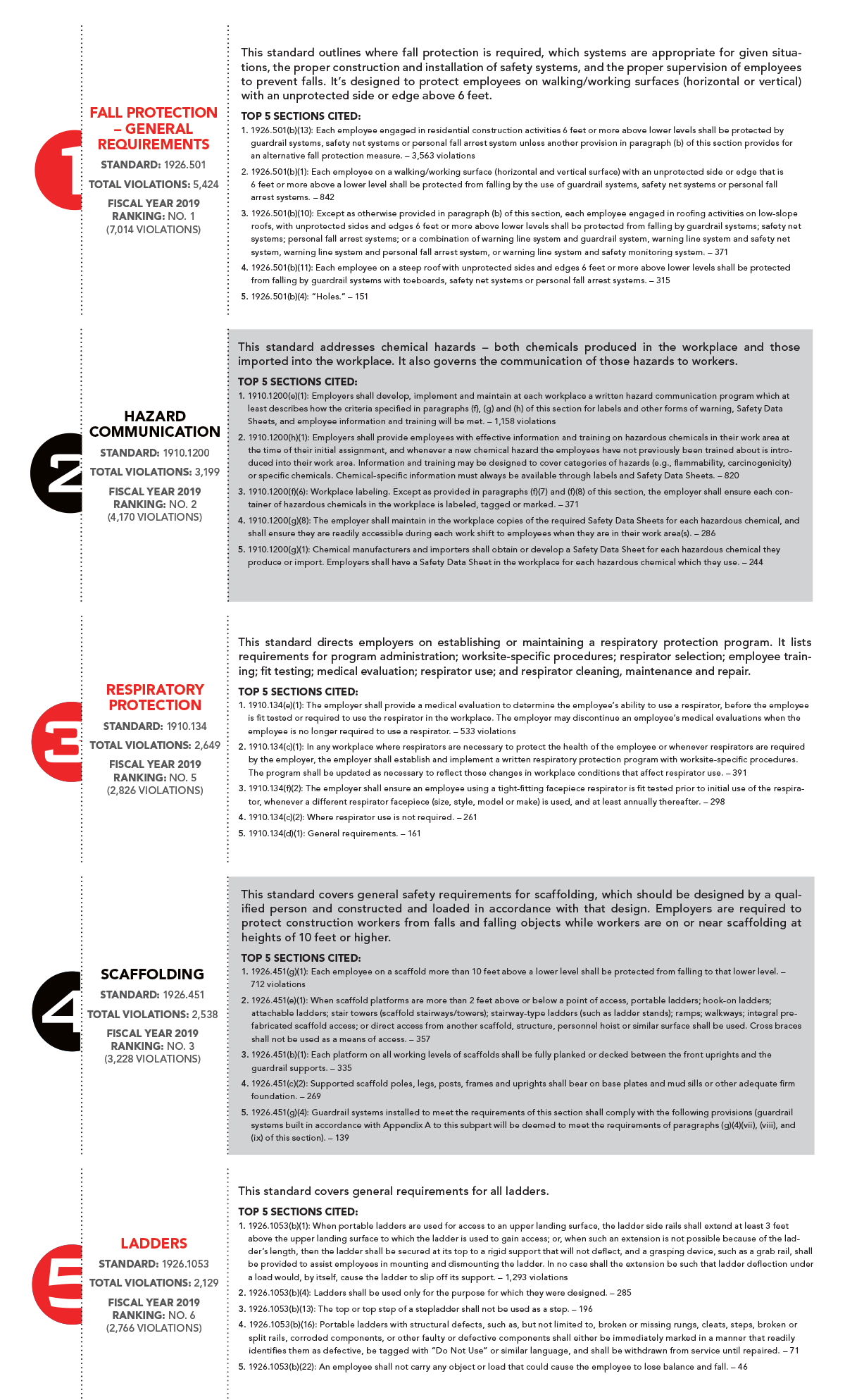

*Based on OSHA Information data from Oct. 1, 2019, to Sept. 30, 2020. Data current as of Jan. 29.
Sponsored by Accuform
|
Next: Top “serious” and “willful” violations | > |

Top 10 most cited violations |
Top serious and willful violations
Penalty Box |
Q & A with OSHA’s Patrick Kapust
Top 10 “serious” violations, fiscal year 2020
OSHA defines a “serious” violation as “one in which there is a substantial probability that death or serious physical harm could result, and the employer knew or should have known of the hazard.”
Top 10 “willful” violations, fiscal year 2020
OSHA defines a “willful” violation as one “committed with an intentional disregard of or plain indifference to the requirements of the Occupational Safety and Health Act and requirements.”
*The COVID-19 pandemic caused by the novel coronavirus SARS-CoV-2 occurred during this time.
Tables are based on OSHA Information System data from Oct. 1, 2019, to Sept. 30, 2020. Data is preliminary and current as of Jan. 29.
Join the Safety+Health editorial team as it takes a “deep dive” into OSHA’s Top 10 as part of the next episode of On the Safe Side, our monthly podcast. Watch for Episode 14 by April 15 or sign up to be notified about new episodes by email. Find podcast subscription options and listen to previous episodes now.
|
Sponsored by Accuform
|
Next: Penalty Box | > |
Top 10 most cited violations | Top serious and willful violations
Penalty Box |
Q & A with OSHA’s Patrick Kapust
Penalty Box
This list of OSHA’s highest proposed monetary penalties in fiscal year 2020 comprises those stemming from a single incident or related incidents in which one or more employers are alleged to have failed to adhere to safe work practices. These failures put workers at risk – in some cases fatally. The following information was gathered from press releases issued by federal OSHA between Oct. 1, 2019, and Sept. 30, 2020.
(Note: Dollar amounts may be reduced as part of a settlement agreement or litigation.)
$1.997 million
EMPLOYER: BB Frame LLC (operating as Frame Q and as Juan Quevedo)
LOCATIONS: Cliffside Park, Fort Lee and Palisades Park, NJ (OSHA Region 2)
BUSINESS TYPE: Framing contractor
INSPECTION TRIGGERS: Complaint (Cliffside Park I and Palisades Park), planned inspection (Fort Lee) and local emphasis program for fall hazards (Cliffside Park II and Palisades Park)
EVENT: OSHA conducted five investigations at four jobsites in Bergen County, NJ, and determined the employer exposed workers to numerous safety hazards, including those related to a lack of fall protection and ladder safety. In February, the Department of Justice filed a lawsuit contending that Frame Q had failed to pay the Department of the Treasury more than $678,000 in civil penalties and delinquency fees for violations incurred from 2013 to 2017. Although Quevedo, the owner and principal, dissolved Frame Q on the heels of the lawsuit, according to a June 10 agency press release, he continued operating as Frame Q under the BB Frame corporate entity. A series of inspections conducted from December 2019 to February 2020 revealed multiple additional violations.
MAJOR CITATIONS: BB Frame was cited for 13 serious, 12 repeat and eight willful violations.
QUOTE: “This employer’s extensive history of egregious disregard for the safety of workers will not be tolerated. Employers are required by law to provide workers with safe and healthful workplaces.” – Richard Mendelson, OSHA regional administrator in New York
$1.591 million
EMPLOYER: AB Specialty Silicones LLC
LOCATION: Waukegan, IL (OSHA Region 5)
BUSINESS TYPE: Silicon chemical products manufacturer
INSPECTION TRIGGER: Fatalities
EVENT: After an explosion and fire at an AB Specialty Silicones plant killed four workers, OSHA inspectors found that the employer failed to ensure electrical equipment and installations within the production area were compliant with the agency’s electrical standards and approved for hazardous
locations. OSHA also reported that the employer created a potential for ignition by operating liquid propane-powered forklifts to transport volatile flammable liquids in areas in which workers handled and processed volatile flammable liquids and gases.
MAJOR CITATIONS: The company was cited for 12 willful violations and placed in OSHA’s Severe Violator Enforcement Program.
QUOTE: “An employer’s adherence to safety and health standards, including the proper use of electrical equipment and forklifts when handling flammable liquids, is critical to preventing fire, explosions and other incidents that can seriously or fatally injure workers.” – Nancy Hauter, acting OSHA regional administrator in Chicago
Read coverage of OSHA’s Top 10 from previous years.
$1.007 million
EMPLOYER: Florida Roofing Experts Inc.
LOCATIONS: Fleming Island and Middleburg, FL (OSHA Region 4)
BUSINESS TYPE: Roofing contractor
INSPECTION TRIGGER: Complaint
EVENT: OSHA responded to complaints that workers at three jobsites – two in Fleming Island and one in Middleburg – were engaged in residential reroofing activities without using fall protection. According to a Jan. 14, 2020, agency press release, OSHA had inspected the employer and its predecessor 19 times in the past seven years.
MAJOR CITATIONS: OSHA cited the employer with eight willful violations involving failure to protect workers from fall hazards. OSHA also placed the company in its Severe Violator Enforcement Program.
QUOTE: “This employer has an extensive OSHA history with willful, serious and repeat violations that has demonstrated an egregious disregard for the safety of their workers. The employer continues to allow employees to work without fall protection, and has made no reasonable effort to eliminate the risk.” – Kurt Petermeyer, OSHA regional administrator in Atlanta
$605,371
EMPLOYER: Webb Contractor Corp.
LOCATIONS: Bethlehem, Emmaus and Macungie, PA (OSHA Region 3)
BUSINESS TYPE: Roofing contractor
INSPECTION TRIGGERS: Complaint (Macungie and Bethlehem) and referral (Emmaus)
EVENT: After a compliance officer witnessed workers at a jobsite in Macungie performing residential roofing operations without fall protection, the employer voluntarily agreed to remove workers from the hazard. Less than a month later, however, the agency responded to complaints of fall hazards at a worksite in Emmaus before being referred to a hazardous jobsite in Bethlehem.
MAJOR CITATIONS: The employer was cited for eight willful, two repeat and three serious violations involving failure to provide fall protection and exposing workers to safety hazards.
QUOTE: “Employers must ensure that employees working from heights are provided and wear proper fall protection. OSHA has educational resources readily available to help employers understand how to comply with the law.” – Loren Sweatt, then-acting OSHA administrator
$551,226
EMPLOYER: Dana Railcare
LOCATION: Pittston, PA (OSHA Region 3)
BUSINESS TYPE: Rail car service provider
INSPECTION TRIGGER: Fatality
EVENT: In May 2019, a worker was asphyxiated while servicing a rail car containing crude oil sludge. Inspectors found that the employer failed to protect workers from confined space hazards and did not provide adequate respiratory protection.
MAJOR CITATIONS: Dana Railcare was cited for four willful and three serious violations and placed in OSHA’s Severe Violator Enforcement Program.
QUOTE: “This tragedy could have been prevented if the employer had followed proper safety procedures for entering and cleaning rail cars. Employers that fail to comply with the law will continue to see full and fair enforcement.” – Sweatt
$523,745
EMPLOYER: Dollar Tree Inc.
LOCATION: Boston (OSHA Region 1)
BUSINESS TYPE: Discount retailer
INSPECTION TRIGGER: Complaint
EVENT: The location was found to have obstructed exit routes and electrical hazards related to blocked working space around electrical panels. Additionally, unstable stacks of merchandise and overstocked materials created the risk of struck-by hazards.
MAJOR CITATIONS: Dollar Tree was cited for three repeat and two willful violations involving exit, storage and fire hazards.
QUOTE: “OSHA continues to receive complaints about unsafe working conditions at Dollar Tree stores across the nation. Workers should not be subjected to the same hazards previously identified and cited.” – Sweatt
$514,692
EMPLOYER: TPC Group LLC
LOCATION: Port Neches, TX (OSHA Region 6)
BUSINESS TYPE: Chemical manufacturer
INSPECTION TRIGGER: Referral
EVENT: After a plant fire and explosion in November 2019, OSHA investigators found TPC Group exposed workers to various hazards. The incident occurred after vapor that had formed at the base of a butadiene finishing tower ignited. The employer failed to create and implement emergency shutdown procedures and did not inspect and test process vessel and piping components.
MAJOR CITATIONS: TPC Group was cited for nine serious and three willful violations.
QUOTE: “Employers are required to conduct regular inspections and address potential hazardous conditions associated with chemical processes to prevent catastrophic events from occurring. OSHA has extensive resources available to help employers and workers understand requirements for process safety management.” – Sweatt
$497,920
EMPLOYER: Alpha Technical Services (operating as Quala Rail and Specialty)
LOCATION: Pasadena, TX (OSHA Region 6)
BUSINESS TYPE: Tank, container and rail car service provider
INSPECTION TRIGGER: Fatalities
EVENT: Two workers were fatally overcome by hazardous fumes after an incident involving tank trailer cleaning operations. OSHA investigators found that one worker became unresponsive after entering the trailer’s confined space. When a non-entry retrieval system used in a rescue attempt was ineffective, multiple workers entered the tank to try another rescue, and another became unresponsive.
MAJOR CITATIONS: ATS was cited for seven serious, two repeat and one willful violation. Violations were related to exposing workers to confined space hazards, including failure to test for safe atmospheric conditions upon entry.
QUOTE: “This tragedy could have been prevented if the employer had complied with the law and tested and monitored the oxygen level within the tank before permitting workers to enter.” – Mark Briggs, Houston South area director
$477,089
EMPLOYER: Dollar Tree Inc.
LOCATION: Marinette, WI (OSHA Region 5)
BUSINESS TYPE: Discount retailer
INSPECTION TRIGGER: Complaint
EVENT: An inspection uncovered various exit, storage and fire hazards as Dollar Tree registered its third “Penalty Box” listing in the past two fiscal years. Agency inspectors found the employer exposed workers to fire hazards from blocked and unmarked exit routes. They also found obstructed and unmaintained fire extinguishers. Additionally, unstable stacks of stored merchandise and blocked electrical panels created struck-by and fire and electrical hazards, respectively.
MAJOR CITATIONS: Dollar Tree was cited with three willful, two repeat and one other-than-serious violations involving the presence and risk of fire hazards, electrical hazards and struck-by hazards.
QUOTE: “OSHA continues to receive complaints about unsafe working conditions at Dollar Tree stores across the nation. This employer is required to follow the law and comply with regulations that protect workers from injuries and fatalities.” – Sweatt
$460,316
EMPLOYER: Frazer and Jones Company Inc.
LOCATION: Solvay, NY (OSHA Region 2)
BUSINESS TYPE: Iron foundry
INSPECTION TRIGGER: Complaint
EVENT: Inspectors determined that the employer exposed workers to struck-by and caught-between hazards, as well as crystalline silica, iron oxide, combustible dust, falls, and unsafe walking/working surfaces. Other safety hazards identified were inadequate respiratory protection, deficient safeguards for entering confined spaces, inaccessible and unavailable fire extinguishers, and an impeded exit route. Additionally, the company failed to provide an effective pest removal program.
MAJOR CITATIONS: Frazer and Jones was cited for 11 serious, one willful and one other-than-serious violations.
QUOTE: “These hazards expose workers to injuries and long-term health effects. Employers must recognize the safety and health risks inherent to their work operations and environment, and take necessary precautions to protect employees who perform those operations.” – Jeffrey Prebish, OSHA area director in Syracuse
|
Sponsored by Accuform
|
Next: Q & A with OSHA's Patrick Kapust | > |
Top 10 most cited violations |
Top serious and willful violations
Penalty Box | Q & A with OSHA’s Patrick Kapust
Q & A with OSHA’s Patrick Kapust
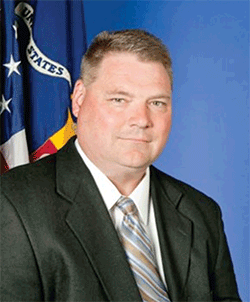
Preliminary data for OSHA’s Top 10 most cited violations for fiscal year 2020 was announced Feb. 26 during an exclusive webinar hosted by Safety+Health. One week later, Patrick Kapust, deputy director of OSHA’s Directorate of Enforcement Programs, talked with S+H Associate Editor Kevin Druley to discuss the list, as well as what occupational safety and health professionals can do to help correct hazards in their workplaces.
Safety+Health: Why do you think the Top 10 generally stays the same from year to year? How do you interpret that? Is it frustrating?
Patrick Kapust: Well, although there has been a little variation over the years, the OSHA Top 10 remains fairly consistent, mainly because standards such as controlled hazardous energy, hazard communication, machine guarding, fall protection and powered industrial trucks are things that involve controlling hazards across many industrial sectors in millions of workplaces. It’s not surprising, given the breadth of OSHA’s regulated community and limited resources, that we continue to see violations of these standards, even though compliance isn’t difficult and often represents the core of many safety and health management systems. While we’d like to see more consistent compliance, we continue to look for opportunities to educate employers and better protect workers.
S+H: What is it about the standard on fall protection that yields so many violations? How does OSHA advise employers to fix recurring mistakes?
Kapust: Fall hazards are fairly universal across industries. OSHA classifies fall hazards into three categories: falls on the same level, falls to lower levels, and slips and trips. Workplace fall incidents frequently involve slippery, cluttered or unstable walking and working surfaces; unprotected edges; floor holes and wall openings; unsafely positioned ladders; damaged guardrails; or misused fall protection equipment. When dealing with falls to lower levels, use of guardrail systems, fall arrest systems, safety nets, covers and restraining position devices can prevent many deaths and injuries. And we’ve found that falls at the same level, as well as slips or trips, often result from unsafe work practices, poorly maintained equipment, poor housekeeping and a lack of effective training.
Associate Editor Kevin Druley discusses the Top 10 and this Q&A in the April 2021 episode of Safety+Health‘s “On the Safe Side” podcast.
S+H: Musculoskeletal injuries have long been prevalent in the workforce, and the surge in remote work over the past year seems to have increased awareness of them. Although federal OSHA doesn’t have a standard on ergonomics, the agency has issued citations for ergonomic violations via the General Duty Clause. What should employers know about MSDs?
Kapust: OSHA has always said that to reduce the chance of injury, work tasks should be designed to limit exposure to ergonomic risk factors, and engineering controls are the most desirable way to do that, where possible. Transitioning from the workplace to telework/remote work is no different. The same applies. OSHA has developed e-tools to assist employers in the application of ergonomics in the workplace. Employers should share the links with their work-at-home employees and encourage them to follow the guidance. The information can be found at osha.gov. And we also have a link out of our Salt Lake City lab. You can look at those for additional information. As a reminder, OSHA will not conduct inspections of an employee’s home office and does not expect employers to inspect the home offices of their employees. If we receive a complaint about a home office, we’ll let the worker know about our policy. If they make a specific request, we may reach out informally to let the employer know about the concerns. But we won’t take additional action. The enforcement of ergonomic hazards remains in effect for traditional work environments, though.
S+H: In what ways has the COVID-19 pandemic impacted enforcement activities?
Kapust: The pandemic has presented a significant challenge to the agency – one that I believe we’re meeting. Early on, we knew that we needed to adapt our operations, not only because of the significant increase in complaints and pandemic fatalities, but also to ensure the safety and health of our compliance staff. We developed an interim enforcement response plan that does both, using our resources to the agency’s best advantage. As always, we’re prioritizing fatality investigations that include COVID-19-related deaths as well as imminent danger situations. We’re focusing on our onsite activities at high-risk workplaces such as hospitals and other health care providers treating patients with COVID-19, as well as workplaces with high numbers of complaints or known COVID-19 cases. After all this, the area directors are making sure that compliance officers are using appropriate precautions and personal protective equipment to ensure their own safety.
S+H: How are things going in the enforcement division overall?
Kapust: We are responding to imminent danger and fatality events, addressing pandemic-related hazards in the workplace and, of course, keeping OSHA staff safe at the same time. We have issued a number of guidance documents for a broad spectrum of industries and processed more than 13,500 COVID-19-related complaints since February 2020. Our folks in the field and the national office have really gone above and beyond, and I’m really proud to be a part of that team. Moving forward, we hope to be able to get back to more targeted inspections, and we’ll be doing a deep dive on what impact our enforcement had during the pandemic and implementing some lessons learned for future emergency responses.
S+H: You’ve previously said that OSHA isn’t here to cite for the sake of citation. However, as the Biden administration transitions away from its predecessor’s anti-regulatory push, to what extent does this influence agency activities?
Kapust: The agency will continue to take a balanced approach, but enforcement will always be a key component of that strategy. We have compliance assistance for those employers that want to do the right thing and need help implementing safety and health programs. We have a strong enforcement program to act as catalysts for those employers who aren’t proactive. The goal is not to issue citations. The goal is to get employers to change the safety culture and provide greater protection for workers.
S+H: Anything new to share about National Emphasis Programs? How can employers better focus on NEPs and other OSHA partnerships and consultation services?
Kapust: Yes, we’re working on a new National Emphasis Program that directly addresses COVID-19. This aligns with President Joe Biden’s Executive Order on protecting worker health and safety, which he signed on Jan. 21. The NEP focuses OSHA enforcement efforts on the largest number of workers at serious risk of exposure to COVID-19, as well as those employers that are treating their workers contrary to anti-retaliation principles. The NEP encompasses a combination of inspection targeting, outreach to employers and compliance assistance. Since the onset of COVID-19, OSHA has issued a number of guidance documents, including industry-specific guidance to protect workers. OSHA recently, on Jan. 29, released the guidance, “Protecting Workers: Guidance on Mitigating and Preventing the Spread of COVID-19 in the Workplace.” This guidance is intended to help employers and workers in most workplace settings outside of health care identify risks of being exposed to or contracting COVID-19 at work and to help them determine appropriate control measures to implement.
In addition, OSHA has revised an NEP that addresses silica. The revised NEP aims to identify and reduce or eliminate worker exposure to respirable crystalline silica in general industry, maritime and construction. This NEP targets specific industries expected to have the highest number of workers exposed to silica and focuses on enforcement of any silica standards. It helps employers comply and provides resources, including new frequently asked questions, videos, fact sheets and a webinar. Full enforcement in construction began on Oct. 23, 2017, while full enforcement for general industry and maritime began on July 23, 2018. Enforcement for hydraulic fracturing operations in the oil and gas industry and the obligations for engineering controls in the general industry standard commences on June 23.
S+H: Adding OSHA inspectors was a campaign promise of the new administration. What would the enforcement division foresee if this scenario occurs?
Kapust: We’re hoping to return to a better balance of programmed and unprogrammed inspections. Unprogrammed inspections such as complaints, fatalities and referrals will always remain a priority, but programmed inspections allow OSHA to target high-hazard industries or processes where a greater number of workers are injured or become ill. Of course, adding a new compliance officer doesn’t immediately replace a seasoned inspector. It takes time to develop the necessary training to conduct the same number and quality of inspections that a seasoned compliance officer can perform. Over the next few years, I believe we will see a large focus on compliance officer training.
S+H: What haven’t I asked that you think S+H readers should know?
Kapust: Well, I know that it’s been a challenging time for all of us. Some folks have been working tirelessly on the front lines to keep the country going. Others have seen their workplaces closed and are maybe just now returning to work. OSHA is here to help make sure that workers can continue to be on the job safely and that employers have the information they need to make that happen.
| << Return to the beginning of the article |
Sponsored by Accuform
|