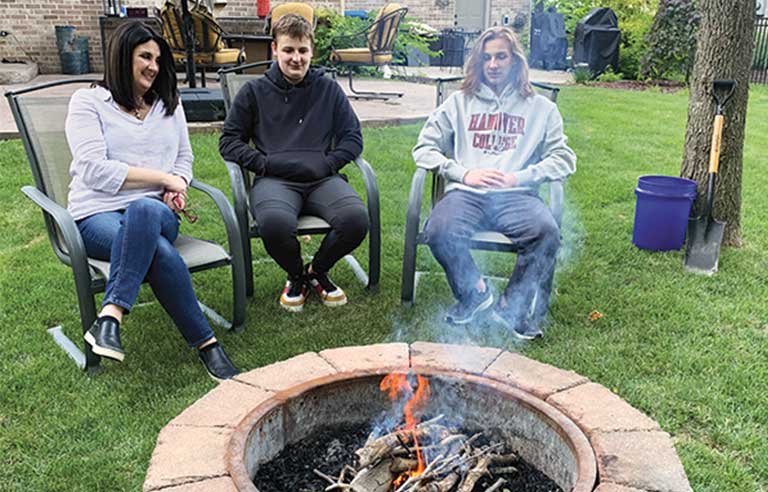
Backyard fire pits and campfires are popular centerpieces for catching up, sharing laughs and, of course, indulging in roasted marshmallows and s’mores.
But any activity involving fire requires extra caution – especially when kids are around. Nearly 11,000 people 19 or younger visited hospital emergency rooms with fire pit-related injuries between 2006 and 2017, and the majority were younger than 5, according to a study published in the American Burn Association’s Journal of Burn Care and Research in July 2019.
Whether you’re enjoying a fire miles from the nearest town or steps away from your home, following these tips will help keep you, your family and your friends safe.
Prepare your pit
From custom builds to DIY projects, permanent fire pits have become a popular backyard feature.
If you’re digging your own pit, Jeff Heinz, fire safety specialist for Palm Beach County (FL) Fire Rescue, recommends marking off the size of it and then digging out any grass and debris, leaving at least 3 inches of dirt or sand at the bottom. Next, build a 3-foot “safety zone” around your pit using small rocks.
The National Fire Protection Association says fire pits and campfires should be at least 25 feet away from all structures and flammable objects.
If you’re on a campsite and an established metal ring or rock pit is available, use it. If you’re building your own, make sure to clear a 3-foot safety zone around the perimeter.
Portable fire pits
One benefit of portable fire pits is they can be moved to the safest location based on the weather. During high winds, a fire has a greater chance of spreading outside your pit.
“If you plan to move the fire pit, do it before you light the fire,” said Emily McGee, director of communications for the Arlington, VA-based Hearth, Patio and Barbecue Association. Wait a few hours after a fire has been extinguished before relocating your portable pit.
Heinz recommends putting about 3 inches of sand in the bottom of a portable pit to make it less likely to tip over.
Bring your tools, and know before you go
So what else do you need to have on hand to keep things safe?
A trusty shovel, along with a hose that’s ready to spray or a bucket of water, are the preferred tools for quickly putting out a fire. If water isn’t available, keep a small pile of sand or dirt next to your pit to extinguish the fire as needed.
Fire pit cages and screens can help keep embers from escaping and causing burns or your fire to spread. They also can minimize the risk of someone falling into the pit. You can buy one online or at a home improvement store.
Planning a camping trip? Whitney Forman-Cook, communications director for the National Association of State Foresters, said it’s important to check the government website of the state you’ll be in to learn about any burning restrictions that may apply.
What to burn
If you’re going no farther than your backyard, Heinz says you should use seasoned (dried) hardwoods such as oak, beech or birch. But if you’ll be camping, wood from downed trees that have dried out makes good campfire material. The NASF website SmokeyBear.com recommends three types:
Tinder: Small twigs and dry leaves, grass, and needles to use at the base of your pit.
Kindling: Sticks smaller than an inch around to help a fire get going.
Fuel: Larger pieces of dry wood to keep the fire burning.
Fire needs oxygen to burn. Stacking larger pieces of wood in the shape of a teepee or log cabin increases airflow and minimizes smoke.
What not to burn
Trash belongs in a proper receptacle – not in your fire pit, Forman-Cook said. Burning garbage, along with construction materials or other non-wood products, can cause toxic fumes and create more smoke, Heinz added.
Never use gasoline or other accelerants. “You can’t control those,” Heinz said. “They can release toxic fumes or start an explosion.” The vapors from accelerants are flammable and can cause a fire to “jump around.”
Also, make sure the wood you choose isn’t wider than the size of your pit. This will help keep your fire from spreading outside your designated area.
Burning recently cut live trees, or “green wood,” which have high moisture content, is sure to annoy your guests and neighbors because it produces much more smoke than dry, seasoned wood.
Ready, set … light
Now that you’re ready to get a fire going, a fire starter kit is your safest bet. You can visit your local outdoors or sporting goods store – or go online – to purchase one. Kits often include waterproof matches, some type of kindling and a fire starter stick that will light in any conditions.
Want friends and family members to be safe around your fire? Arrange the chairs you’ll need before starting the fire. The one place you don’t want anyone to sit is on the bricks or large rocks around your fire pit or campfire.
“Those rocks get extremely hot, and they stay extremely hot,” Forman-Cook said.
Make sure older adults are seated upwind to avoid them having to move frequently, said Heinz, who said pets should stay a safe distance away and children must be monitored closely.
Another key requirement with any fire, Heinz said, is having a person in charge of monitoring the area who is able to act quickly if a problem arises. This person should be a responsible, sober adult.
“If you’re that person in charge, make sure you’re on top of it,” he said. “People forget that alcohol is flammable, and it impairs coordination, judgment and reflexes. That’s when bad things can happen.”
Extinguish the fire
When it’s time to put out your fire, start with the bucket of water or hose – or shovels of sand and dirt – you already placed next to the pit. Then, use your shovel to separate the remaining wood and smoldering embers.
“Don’t just assume, ‘I dumped water on it, so it’s good,’” Heinz said.
Next, stir the fire remnants around to make sure all embers are extinguished. Then, apply more water, dirt or sand. A fire shouldn’t be allowed to burn out on its own. Smoldering embers can reignite or spread and cause a larger fire.
“We want to prevent an escaped ember,” Forman-Cook said.