

OSHA’s Top 10 list of the most frequently cited standards for fiscal year 2024 doesn’t offer any surprises, including the appearance of Fall Protection – General Requirements at the top for the 14th straight time.
Still, “all these standards we’re talking about are relevant to protecting workers,” said Scott Ketcham, director of OSHA’s Directorate of Enforcement Programs, who added that violations “have led to tragedies that are preventable.”
Ketcham presented the preliminary list – which represents OSHA Information System data from Oct. 1, 2023, to Sept. 5 – during the 2024 NSC Safety Congress & Expo in Orlando, FL.
Here, we expand on the presentation with additional preliminary data from OSHA. We’ve also got a list of the year’s largest employer fines and an exclusive Q&A with Ketcham.
Most cited violations, fiscal year 2024
Total violations: 6,307
Fiscal Year 2023 ranking: 1 (7,188 violations)
This standard outlines where fall protection is required, which systems are appropriate for given situations, the proper construction and installation of safety systems, and the proper supervision of employees to prevent falls. It’s designed to protect employees on walking-working surfaces (horizontal or vertical) with an unprotected side or edge above 6 feet.
Top 5 sections cited:
- 1926.501(b)(13): Each employee engaged in residential construction activities 6 feet or more above lower levels shall be protected by guardrail systems, safety net systems or personal fall arrest systems unless another provision in paragraph (b) of this section provides for an alternative fall protection measure. – 4,724 violations
- 1926.501(b)(1): Each employee on a walking-working surface (horizontal and vertical surface) with an unprotected side or edge that is 6 feet or more above a lower level shall be protected from falling by the use of guardrail systems, safety net systems or personal fall arrest systems. – 702
- 1926.501(b)(10): Except as otherwise provided in paragraph (b) of this section, each employee engaged in roofing activities on low-slope roofs with unprotected sides and edges 6 feet or more above lower levels shall be protected from falling by guardrail systems; safety net systems; personal fall arrest systems; or a combination of warning line system and guardrail system, warning line system and safety net system, warning line system and personal fall arrest system, or warning line system and safety monitoring system. – 354
- 1926.501(b)(11): Each employee on a steep roof with unprotected sides and edges 6 feet or more above lower levels shall be protected from falling by guardrail systems with toeboards, safety net systems or personal fall arrest systems. – 275
- 1926.501(b)(4): “Holes.” – 128
Total violations: 2,888
Fiscal Year 2023 ranking: 2 (3,227 violations)
This standard addresses chemical hazards – both for chemicals produced in the workplace and those imported into the workplace. It also governs the communication of those hazards to workers.
Top 5 sections cited:
- 1910.1200(e)(1): Employers shall develop, implement and maintain at each workplace a written hazard communication program that at least describes how the criteria specified in paragraphs (f), (g) and (h) of this section for labels and other forms of warning, Safety Data Sheets, and employee information and training will be met. – 1,136 violations
- 1910.1200(h)(1): Employers shall provide employees with effective information and training on hazardous chemicals in their work area at the time of their initial assignment, and whenever a new chemical hazard the employees have not previously been trained about is introduced into their work area. Information and training may be designed to cover categories of hazards (e.g., flammability, carcinogenicity) or specific chemicals. Chemical-specific information must always be available through labels and Safety Data Sheets. – 843
- 1910.1200(g)(8): The employer shall maintain in the workplace copies of the required Safety Data Sheets for each hazardous chemical, and shall ensure they are readily accessible during each work shift to employees when they are in their work area(s). – 363
- 1910.1200(f)(6): Workplace labeling. Except as provided in paragraphs (f)(7) and (f)(8) of this section, the employer shall ensure each container of hazardous chemicals in the workplace is labeled, tagged or marked. – 315
- 1910.1200(g)(1): Chemical manufacturers and importers shall obtain or develop a Safety Data Sheet for each hazardous chemical they produce or import. Employers shall have a Safety Data Sheet in the workplace for each hazardous chemical which they use. – 252

Total violations: 2,573
Fiscal year 2023 ranking: 3 (2,950 violations)
This standard covers general requirements for all ladders.
Top 5 sections cited:
- 1926.1053(b)(1): When portable ladders are used for access to an upper landing surface, the ladder side rails shall extend at least 3 feet above the upper landing surface to which the ladder is used to gain access; or, when such an extension is not possible because of the ladder’s length, then the ladder shall be secured at its top to a rigid support that will not deflect, and a grasping device, such as a grab rail, shall be provided to assist employees in mounting and dismounting the ladder. In no case shall the extension be such that ladder deflection under a load would, by itself, cause the ladder to slip off its support. – 1,852 violations
- 1926.1053(b)(4): Ladders shall be used only for the purpose for which they were designed. – 310
- 1926.1053(b)(13): The top or top step of a stepladder shall not be used as a step. – 286
- 1926.1053(b)(22): An employee shall not carry any object or load that could cause the employee to lose balance and fall. – 92
- 926.1053(b)(16): Portable ladders with structural defects, such as, but not limited to, broken or missing rungs, cleats or steps; broken or split rails; corroded components; or other faulty or defective components, shall either be immediately marked in a manner that readily identifies them as defective, or be tagged with “Do Not Use” or similar language, and shall be withdrawn from service until repaired. – 86
Total violations: 2,470
Fiscal year 2023 ranking: 7 (2,493 violations)
This standard directs employers on establishing or maintaining a respiratory protection program. It lists requirements for program administration; worksite-specific procedures; respirator selection; employee training; fit testing; medical evaluation; respirator use; and respirator cleaning, maintenance and repair.
Top 5 sections cited:
- 1910.134(e)(1): The employer shall provide a medical evaluation to determine the employee’s ability to use a respirator, before the employee is fit-tested or required to use the respirator in the workplace. The employer may discontinue an employee’s medical evaluations when the employee is no longer required to use a respirator. – 508 violations
- 1910.134(c)(1): In any workplace where respirators are necessary to protect the health of the employee or whenever respirators are required by the employer, the employer shall establish and implement a written respiratory protection program with worksite-specific procedures. The program shall be updated as necessary to reflect those changes in workplace conditions that affect respirator use. – 366
- 1910.134(f)(2): The employer shall ensure an employee using a tight-fitting facepiece respirator is fit-tested prior to initial use of the respirator, whenever a different respirator facepiece (size, style, model or make) is used and at least annually thereafter. – 312
- 1910.134(c)(2): Where respirator use is not required. – 251
- 1910.134(k)(6): The basic advisory information on respirators, as presented in appendix D of this section, shall be provided by the employer in any written or oral format, to employers who wear respirators when such use is not required by this section or by the employer. – 144

Total violations: 2,443
Fiscal year 2023 ranking: 6 (2,539 violations)
This standard outlines minimum performance requirements for the control of hazardous energy during servicing and maintenance of machines and equipment.
Top 5 sections cited:
- 1910.147(c)(4): Energy control procedure. – 738 violations
- 1910.147(c)(7): Training and communication. – 477
- 1910.147(c)(6): Periodic inspection. – 377
- 1910.147(c)(1): The employer shall establish a program consisting of energy control procedures, employee training and periodic inspections to ensure that before any employee performs any servicing or maintenance on a machine or equipment where the unexpected energizing, startup or release of stored energy could occur and cause injury, the machine or equipment shall be isolated from the energy source and rendered inoperative. – 210
- 1910.147(d): Application of control. The established procedures for the application of energy control (the lockout or tagout procedures) shall cover the following elements and actions and shall be done in the following sequence. – 203
Total violations: 2,248
Fiscal year 2023 ranking: 5 (2,550 violations)
This standard covers the design, maintenance and operation of powered industrial trucks, including forklifts and motorized hand trucks. It also covers operator training requirements.
Top 5 sections cited:
- 1910.178(l)(1): Safe operation. – 531 violations
- 1910.178(l)(4): Refresher training and evaluation. – 305
- 1910.178(l)(6): The employer shall certify that each operator has been trained and evaluated as required by this paragraph (l). The certification shall include the name of the operator, the date of the training, the date of the evaluation and the identity of the person(s) performing the training or evaluation. – 286
- 1910.178(q)(7): Industrial trucks shall be examined before being placed in service, and shall not be placed in service if the examination shows any condition adversely affecting the safety of the vehicle. Such examination shall be made at least daily. Where industrial trucks are used on a round-the-clock basis, they shall be examined after each shift. Defects when found shall be immediately reported and corrected. – 172
- 1910.178(p)(1): If at any time a powered industrial truck is found to be in need of repair, defective or in any way unsafe, the truck shall be taken out of service until it has been restored to safe operating condition. – 153
Total violations: 2,050
Fiscal year 2023 ranking: 8 (2,109 violations)
This standard addresses training requirements for employers in regard to fall protection.
Top 5 sections cited:
- 1926.503(a)(1): The employer shall provide a training program for each employee who might be exposed to fall hazards. The program shall enable each employee to recognize the hazards of falling and shall train each employee in the procedures to be followed in order to minimize these hazards. – 1,351 violations
- 1926.503(b)(1): The employer shall verify compliance with paragraph (a) of this section by preparing a written certification record. The written certification record shall contain the name or other identity of the employee trained, the date(s) of the training, and the signature of the person who conducted the training or the signature of the employer. If the employer relies on training conducted by another employer or completed prior to the effective date of this section, the certification record shall indicate the date the employer determined the prior training was adequate rather than the date of actual training. – 489
- 1926.503(a)(2): The employer shall ensure each employee has been trained, as necessary, by a competent person. – 109
- 1926.503(c)(3): Inadequacies in an affected employee’s knowledge or use of fall protection systems or equipment indicate that the employee has not retained the requisite understanding or skill. – 94
- 1926.503(c): “Retraining.” When the employer has reason to believe that any affected employee who has already been trained does not have the understanding and skill required by paragraph (a) of this section, the employer shall retrain each such employee. – 6
Total violations: 1,873
Fiscal year 2023 ranking: 4 (2,835 violations)
This standard covers general safety requirements for scaffolding, which should be designed by a qualified person and constructed and loaded in accordance with that design. Employers are bound to protect construction workers from falls and falling objects while working on or near scaffolding at heights of 10 feet or higher.
Top 5 sections cited:
- 1926.451(g)(1): Each employee on a scaffold more than 10 feet above a lower level shall be protected from falling to that lower level. – 528 violations
- 1926.451(c)(2): Supported scaffold poles, legs, posts, frames and uprights shall bear on base plates and mud sills or other adequate firm foundation. – 267
- 1926.451(b)(1): Each platform on all working levels of scaffolds shall be fully planked or decked between the front uprights and the guardrail supports. – 224
- 1926.451(e)(1): When scaffold platforms are more than 2 feet above or below a point of access, portable ladders; hook-on ladders; attachable ladders; stair towers (scaffold stairways/towers); stairway-type ladders (such as ladder stands); ramps; walkways; integral prefabricated scaffold access; or direct access from another scaffold, structure, personnel hoist or similar surface shall be used. Cross braces shall not be used as a means of access. – 210
- 1926.451(g)(4): Guardrail systems installed to meet the requirements of this section shall comply with the following provisions (guardrail systems built in accordance with Appendix A to this subpart will be deemed to meet the requirements of paragraphs (g)(4)(vii), (viii) and (ix) of this section). – 101
Total violations: 1,814
Fiscal year 2023 ranking: 9 (2,064 violations)
This standard addresses appropriate personal protective equipment for workers exposed to eye or face hazards, such as flying particles and chemical gases or vapors.
Sections cited:
- 1926.102(a)(1): The employer shall ensure each affected employee uses appropriate eye or face protection when exposed to eye or face hazards from flying particles, molten metal, liquid chemicals, acids or caustic liquids, chemical gases or vapors, or potentially injurious light radiation. – 2,034 violations
- 1926.102(a)(2): The employer shall ensure each affected employee uses eye protection that provides side protection when there is a hazard from flying objects. Detachable side protectors (e.g., clip-on or slide-on side shields) meeting the pertinent requirements of this section are acceptable. – 32
- 1926.102(b)(1): Protective eye and face protection devices must comply with any of the following consensus standards: – 6
- 1926.102(a)(3): The employer shall ensure each affected employee who wears prescription lenses while engaged in operations that involve eye hazards wears eye protection that incorporates the prescription in its design, or wears eye protection that can be worn over the prescription lenses without disturbing the proper position of the prescription lenses or the protective lenses. – 2
Total violations: 1,541
Fiscal year 2023 ranking: 10 (1,635 violations)
This standard covers guarding of machinery to protect operators and other employees from hazards, including those created by point of operation, ingoing nip points, rotating parts, flying chips and sparks.
Top 5 sections cited:
- 1910.212(a)(1): Types of guarding. One or more methods of machine guarding shall be provided to protect the operator and other employees in the machine area from hazards such as those created by point of operation, ingoing nip points, rotating parts, flying chips and sparks. – 1,089 violations
- 1910.212(a)(3): Point of operation guarding. – 402
- 1910.212(a)(2): General requirements for machine guards. Guards shall be affixed to the machine where possible and secured elsewhere if for any reason attachment to the machine is not possible. The guard shall be such that it does not offer an accident hazard in itself. – 60
- 1910.212(b): Anchoring fixed machinery. Machines designed for a fixed location shall be securely anchored to prevent walking or moving. – 57
- 1910.212(a)(4): Barrels, containers and drums. Revolving drums, barrels and containers shall be guarded by an enclosure that is interlocked with the drive mechanism, so that the barrel, drum or container cannot revolve unless the guard enclosure is in place. – 13
These tables are based on OSHA Information System data from Oct. 1, 2023, to Sept. 5, 2024.
Top 10 standards cited as “serious,” fiscal year 2024
OSHA defines a “serious” violation as “one in which there
is a substantial probability that death or serious physical harm could result, and the employer knew or should have known of the hazard.”
| STANDARD | TOTAL VIOLATIONS | |
| 1 | Fall Protection – General Requirements (1926.501) | 4,932 |
| 2 | Ladders (1926.1053) | 2,210 |
| 3 | Hazard Communication (1910.1200) | 1,929 |
| 4 | Lockout/Tagout (1910.147) | 1,927 |
| 5 | Respiratory Protection (1910.134) | 1,746 |
| 6 | Scaffolding (1926.451) | 1,736 |
| 7 | Personal Protective and Lifesaving Equipment – Eye and Face Protection (1926.102) | 1,524 |
| 8 | Powered Industrial Trucks (1910.178) | 1,488 |
| 9 | Fall Protection – Training Requirements (1926.503) | 1,301 |
| 10 | Machine Guarding (1910.212) | 1,295 |
Top 10 standards cited as “willful,” fiscal year 2024
OSHA defines a “willful” violation as one “committed with
an intentional disregard of or plain indifference to the
requirements of the Occupational Safety and Health Act
and requirements.”
| STANDARD | TOTAL VIOLATIONS | |
| 1 | Fall Protection – General Requirements (1926.501 | 203 |
| 2 | Lockout/Tagout (1910.147) | 40 |
| 3 | Excavations – Requirements for Protective Systems (1926.652) | 32 |
| 4 | Fall Protection – Training Requirements (1926.503) | 16 |
| Excavations – Specific Excavation Requirements (1926.651) | 16 | |
| 6 | Personal Protective and Lifesaving Equipment – Eye and Face Protection (1926.102) |
15 |
| Toxic and Hazardous Substances – Asbestos (1926.1101) | 15 | |
| 8 | Ladders (1926.1053) | 14 |
| 9 | Scaffolding (1926.451 | 12 |
| 10 | Toxic and Hazardous Substances – Respirable crystalline silica (1910.1053) | 11 |
Citation Solutions
Safety+Health advertisers offer products and services to help you avoid citations related to OSHA’s Top 10 most cited standards
Sponsored by |
Next: Top 10 by OSHA region > |
Top 10 by OSHA region

|
Guess which industries had the most citations |
Guess which industries had the most citations
Don’t care to be quizzed? See the top industries by violation in the print edition.
|
Next: Top 10 penalties > Top proposed monetary penalties |
Top 10 penalties
The list of OSHA’s highest proposed monetary penalties in fiscal year 2024 comprises those stemming from a single incident or related incidents in which one or more employers are alleged to have failed to adhere to safe work practices. These failures put workers at risk for injuries and death. The following information was gathered from press releases issued by federal OSHA between Oct. 1, 2023, and Sept. 30, as well as data provided by the agency’s communications team.
(Note: Dollar amounts may be reduced as part of a settlement agreement or litigation.)
$2.5 million
EMPLOYER: MDLG Inc. (operating as Phenix Lumber Co.)
LOCATION: Phenix City, AL (OSHA Region 4)
BUSINESS TYPE: Sawmill
INSPECTION TRIGGER: Fatality
EVENT: A 67-year-old sawmill supervisor climbed on top of an auger to access a hard-to-reach area to unclog a woodchipper and was fatally caught in the machinery. The worker stepped onto the pan of the auger, which had been restarted, and lost his footing.A 67-year-old sawmill supervisor climbed on top of an auger to access a hard-to-reach area to unclog a woodchipper and was fatally caught in the machinery. The worker stepped onto the pan of the auger, which had been restarted, and lost his footing.
MAJOR CITATIONS: The company was cited for 15 willful violations, five serious violations and one repeat violation.
“Phenix Lumber’s willful disregard for the well-being of their employees leaves another family to grieve the loss of their loved one. This must stop. This worksite has become all too familiar to OSHA. Phenix and its owners have a legal responsibility to follow federal safety laws that are meant to prevent the exact hazards that cost this employee’s life.” – Kurt Petermeyer,
OSHA regional administrator in Atlanta
$1.9 million
EMPLOYER: Wagner Construction Inc.
LOCATION: Minot, ND (OSHA Region 8)
BUSINESS TYPE: Water and sewer line construction
INSPECTION TRIGGER: Planned
EVENT: The agency discovered that the company exposed workers to numerous trenching hazards during a project that included a residential water main replacement.
MAJOR CITATIONS: OSHA cited Wagner Construction for 16 repeat violations and one serious violation.
“Wagner Construction failed to keep their promises to the U.S. government and its employees by ignoring one of the construction industry’s most lethal hazards. With the substantial increase in the number of construction projects in North Dakota and across the nation, employers like Wagner Construction must take all necessary steps to make sure employees are safe on jobsites.” – Jennifer Rous, OSHA regional administrator in Denver
$1.3 million
EMPLOYER: Florence Hardwoods LLC
LOCATION: Florence, WI (OSHA Region 6)
BUSINESS TYPE: Sawmill
INSPECTION TRIGGER: Fatality
EVENT: An untrained 16-year-old worker became trapped in a stick conveyor machine while attempting to address an issue. The worker sustained crushing injuries to the chest and abdomen before being rescued. He was transported to the hospital and died two days later.
MAJOR CITATIONS: Florence Hardwoods was cited for 16 serious, eight willful and four repeat violations.
“It is incomprehensible how the owners of this company could have such disregard for the safety of these children. Their reckless and illegal behavior tragically cost a boy his life, and actions such as theirs will never be tolerated.” – Doug Parker, OSHA administrator
$1,038,918
EMPLOYER: Giant Construction Corp.
LOCATION: Barrigada, Guam (OSHA Region 9)
BUSINESS TYPE: Water and sewer line construction
INSPECTION TRIGGER: Planned
EVENT: The company neglected to provide the necessary safety equipment to employees working in trenches deeper than 5 feet.
MAJOR CITATIONS: OSHA cited Giant Construction for nine willful and two serious violations. It was the sixth time since 2014 the agency has cited the company.
“Giant Construction Corp. has shown a flagrant disregard for the safety of its employees and put workers at risk of serious and potentially fatal injuries. The significant penalties assessed after this inspection send a clear signal to Giant Construction Corp. and other employers that OSHA will not tolerate such
callous attitudes when employees are endangered.”
– Roger Forstner, OSHA area office director in Honolulu
$1,019,096
EMPLOYER: Florenza Marble & Granite Corp.
LOCATION: Chicago (OSHA Region 5)
BUSINESS TYPE: Cut stone and stone product manufacturing
INSPECTION TRIGGER: Referral
EVENT: An agency inspection to conduct air sampling at the company uncovered significant dust in the workplace and improper use of respirators. OSHA found that Florenza was exposing workers to unsafe levels of silica dust – as much as six times more than permissible limits – and further learned of multiple workers, including a father and son, needing lung transplants related to silicosis, an incurable lung disease.
MAJOR CITATIONS: The company was cited for 11 serious and 10 willful violations. Willful violations included those for failure to both establish a baseline of workers’ medical health to monitor silica exposure and perform medical surveillance to monitor exposure.
“Our compliance officers found silica dust levels nearly six times higher than permissible levels, and the owner made little or no effort to protect his employees from exposure. To make matters worse, [owner Brad] Karp was indifferent to his employees’
suffering and refused to accept any responsibility for protecting them, even after two insurance carriers dropped the company
for its egregious defiance of workplace safety standards.”
– Bill Donovan, OSHA regional administrator in Chicago
$1,017,248
EMPLOYER: Adrian Construction Group LLC
LOCATION: Franklin Lakes, NJ (OSHA Region 2)
BUSINESS TYPE: Framing contractor
INSPECTION TRIGGER: Planned
EVENT: As part of an inspection conducted under an OSHA Local Emphasis Program on falls in construction, an agency inspector observed violations for lack of fall protection, failure to ensure the use of eye protection, unsafe scaffolding and failure to provide hard hats for overhead hazards.
MAJOR CITATIONS: OSHA cited Adrian Construction for six willful and four serious violations. The company also was placed in OSHA’s Severe Violator Enforcement Program.
“Adrian Construction, under the ownership of Adrian Perea,
continues to show a blatant disregard for the safety of their employees. Placing them on the list of severe violators will intensify our scrutiny of their operations.” – Doug Parker, OSHA administrator
$810,703
EMPLOYER: Qualawash Holdings LLC (operating as Quala Services)
LOCATION: La Porte, TX (OSHA Region 6)
BUSINESS TYPE: Tank cleaning contractor
INSPECTION TRIGGER: Fatality
EVENT: A 53-year-old worker died from possible carbon monoxide poisoning and/or asphyxiation while cleaning a bulk liquid waste tank that had contained acetic acid. OSHA found that Qualawash didn’t ensure atmospheric testing was completed on the tank before the worker entered. The employer received citations for the same violations in 2020 after two workers died under similar circumstances the previous year.
MAJOR CITATIONS: Qualawash was cited for eight repeat and seven serious violations. Among the serious violations were those for not providing an attendant when workers entered permit-required confined spaces and overexposing workers to carbon monoxide.
“Had Quala Services acted responsibly and made the safety reforms as required in 2020, another employee would not have lost their life. This employer’s complete disregard for its employees’ safety is unacceptable. Complying with safety and health standards is not optional. OSHA will use all of its tools to ensure employers follow the law.” – Larissa Ipsen, OSHA area director in Houston
$551,719
EMPLOYER: CJ TMI Manufacturing America LLC
LOCATION: Robbinsville, NJ (OSHA Region 2)
BUSINESS TYPE: Frozen food manufacturer
INSPECTION TRIGGER: Referral
EVENT: An OSHA investigation determined that a worker amputation was a result of the company exposing employees to lockout/tagout hazards.
MAJOR CITATIONS: OSHA cited the employer for three willful, two serious and one repeat violation. The agency placed CJ TMI in its Severe Violator Enforcement Program in 2021.
“This company continues to leave its workers vulnerable to hazardous conditions that threaten their safety. These hazards must be addressed immediately to prevent another incident.”
– Paula Dixon-Roderick, OSHA area director in Marlton, NJ
$536,965
EMPLOYER: Legacy Cooperative
LOCATION: Hemingford, NE (OSHA Region 7)
BUSINESS TYPE: Grain cooperative
INSPECTION TRIGGER: Complaint
EVENT: The employer allowed the buildup of more than one-eighth inch of combustible grain dust in crucial housekeeping areas, including in the bottom belt tunnel and around elevator legs. These overlooked risks for fire and explosions, as well as failure to maintain dust collection systems, resulted in multiple violations.
MAJOR CITATIONS: Legacy Cooperative was cited for 16 serious and two willful violations, including those for not regularly inspecting equipment, exposing workers to fall hazards from unguarded stairway holes and a lack of handrails, and failing to close electrical openings.
“Grain dust fires and explosions are a well-known industry
hazard, which makes Legacy Cooperative’s failure to control dust where a belt’s friction could easily cause ignition inexcusable. Employers must develop companywide safety procedures to mitigate known grain handling dangers and ensure workers are trained to recognize hazards.” – Matthew Thurlby, OSHA area director in Omaha, NE
$536,262
EMPLOYER: Jindal Tubular USA LLC
LOCATION: Bay Saint Louis, MS (OSHA Region 4)
BUSINESS TYPE: Iron and steel pipe and tube manufacturer
INSPECTION TRIGGER: Fatality
EVENT: One worker died and another sustained multiple fractures to both legs when a steel pipe rolled over them as they built a pipe stack. The stack collapsed after the workers removed the chock block.
MAJOR CITATIONS: OSHA cited Jindal Tubular for 13 serious and three repeat violations. The employer has been cited for 32 major violations since 2019.
|
A conversation with OSHA’s Scott Ketcham |
A conversation with OSHA’s Scott Ketcham
OSHA and Safety+Health announced preliminary data for OSHA’s Top 10 most cited standards for fiscal year 2024 on Sept. 17 during the 2024 NSC Safety Congress & Expo in Orlando, FL.
Later, Scott Ketcham, director of OSHA’s Directorate of Enforcement Programs, answered questions from S+H Associate Editor Kevin Druley regarding the list, Ketcham’s background and actions safety professionals can take to help prevent hazards on the job. (This conversation has been lightly edited.)
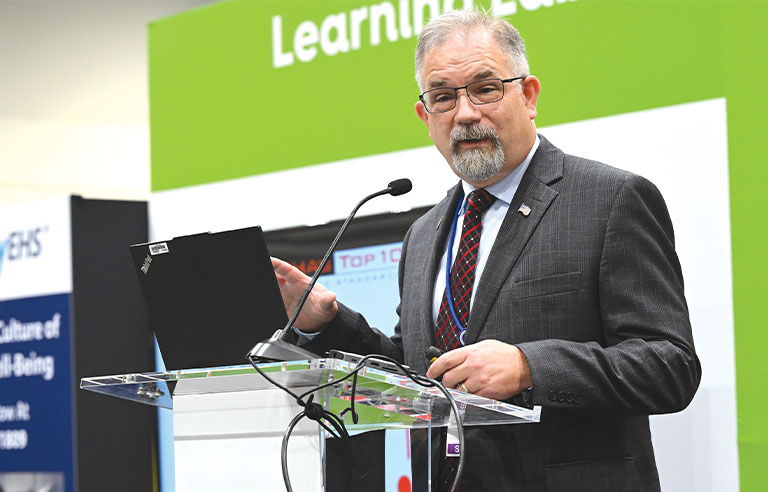
Safety+Health: Fall Protection – General Requirements is No. 1 for the 14th consecutive fiscal year. Fall Protection – Training Requirements has appeared in the Top 10 for eight years in a row. Why do falls continue to be a problem?
Ketcham: Falls are troublesome because they comprise such a large portion of the fatalities that OSHA investigates. Many workers who experience a fall that doesn’t result in a fatality can suffer a serious, life-altering injury, while others can recover from their injury. We know what control measures are necessary to reduce the risk of injury from a fall when working at height. The bottom line is that all workers deserve a safe job, with controls in place to prevent the hazards at their workplace.
S+H: Why, for more than a decade, have disabling and fatal injuries from falls continued in the construction industry?
Ketcham: Falls continue to be a problem because workers are required to perform work where they’re exposed to this hazard without the necessary fall protection systems available and in place or used. Most of the time this work happens without incident.
However, the more times or the longer a worker works at height without proper fall protection systems in place, the greater the likelihood they will experience a fall.
OSHA emphasizes three critical elements to enhance workplace safety, and these elements definitely apply to fall protection: plan, provide and train.
Plan: Anticipate potential hazards and develop proactive strategies.
Provide: Ensure access to the necessary safety equipment and resources.
Train: Educate all employees on safety protocols and the importance of compliance.
Many organizations provide valuable resources to address these issues and help provide fall protection systems.
S+H: What steps is OSHA taking to help employers abate fall hazards?
Ketcham: From an outreach perspective, OSHA has been actively working to prevent fall hazards. For example, OSHA partners with NIOSH, the National Occupational Research Agenda, and CPWR – The Center for Construction Research and Training to raise awareness about common fall hazards. In 2014, OSHA launched the annual National Safety Stand-Down to Prevent Falls in Construction. This event, which takes place every May, brings together many partners at the local level to engage their members, workers and their families.
The stand-down is a voluntary event where employers are encouraged to directly address employees about safety concerns, particularly those related to fall hazards and prevention. Although primarily focused on the construction industry, the stand-down is not limited to this sector. We want all employers in every industry to join the safety stand-down. We also want unions, other government agencies, employer associations, worker centers and safety equipment manufacturers to participate. The key is to reach as many people as possible.
More information can be found on the OSHA Stop Falls Stand-Down webpage.
From an enforcement perspective, OSHA’s National Emphasis Program, which now includes general industry and maritime, in addition to construction, is aimed at reducing fall incidents by prioritizing inspections in all workplaces where work at height is observed.
S+H: Which other trends or data from the Top 10 stand out to you?
Ketcham: Upon review of the Top 10 issues OSHA cites, it always occurs to me that there’s great interest in the subject. I’ve been working for OSHA for almost 30 years and these cited standards continually repeat over and over – changing in position over the years. I think it’s important to put into perspective that these hazards are real, they do lead to fatalities and injure workers, and they are preventable. They’re most commonly cited because, sadly, we’re still finding them in the workplace.
S+H: You’ve spoken about the importance of safety and health management systems and establishing safety as a core value. How can organizations integrate these into their operations and cultures?
Ketcham: Safety and health management systems provide a structure for employers and workers to identify and correct hazards, and improve the controls in place, to ensure they can start and finish their work safely. Rather than reacting to incidents or regulatory agency citations, management and workers collaborate to proactively identify and solve issues before they occur. Building a culture that integrates safe work practices into daily work requires employer commitment and involvement from workers. Employers should clearly communicate and demonstrate their commitment to safety. Worker involvement is a key component that enhances communication, uses the institutional experience and knowledge of the workers, and builds trust.
Employers, workers and the public can find information to help with implementing or improving their safety and health management systems by visiting these webpages:
S+H: The presentation also included data about the agency’s fatal injury investigations. What are some key takeaways?
Ketcham: First, I want to say that it’s important for all to understand that workplace fatalities are preventable. I’ve been in the safety business for over 34 years as an investigator, manager and senior leader. I’ve seen the effects of fatal incidents firsthand and have seen upfront the tragedies of losing a family member, co-worker or friend in the workplace.
I want to emphasize the importance of surveillance and prevention to seek out and reduce risk that would prevent these incidents. In each, a commonality OSHA has found is that, invariably, there were near misses and other indicators that worker safety was either not a priority or a safety and health management system was not fully implemented. During the presentation at the NSC Safety Congress & Expo, I shared anecdotes about categories of fatalities that OSHA has inspected over the past year. My advice on prevention is to fully implement a safety and health management system that identifies and corrects hazards on your worksite and develop a work culture that nurtures the importance of worker safety as a core value of the organization. This is a major step where we can make a difference in reducing needless injuries and loss of life.
S+H: Has OSHA continued adding compliance safety and health officers, as has been the case recently? What do new compliance officers and enforcement staff learn at the OSHA Training Institute to help them conduct inspections?
Ketcham: Upon hire, new CSHOs are enrolled and take a series of introductory courses that provide them with the fundamentals of conducting inspections. Topics include hazard identification, inspection techniques, and inspection policies and procedures. In addition to training at the OSHA Training Institute during the first three years, new CSHOs are paired with a mentor at the area office level and have frequent interaction with their supervisor. The new CSHOs are provided information to review and become familiar with such as, but not limited to, OSHA regulations, interpretations, OSHA policy directives, online resources and OSHA case files of interest. New hires accompany their mentor and other experienced CSHOs during field inspection activities and case file development, progressing from observing inspection work to eventually doing the inspection work while observed by senior CSHOs or their supervisor.
S+H: What kind of influence can National Emphasis Programs have on the Top 10? What updates can you provide about NEPs that are in the works?
Ketcham: OSHA National Emphasis Programs provide for inspection of worksites known to be performing high-risk work. These inspections are directly related to identification of every hazard on the Top 10 list. The NEP on falls and programmed construction inspections examine the use of fall protection, fall protection training, scaffolding, ladders and personal protective equipment on construction sites. Inspections related to OSHA’s NEP on amputations examine machine guarding and control of hazardous energy (lockout/tagout) on general industry sites. Multiple occupational health-related NEPs (those on silica, hexavalent chromium, lead) examine employer compliance with respiratory protection and hazard communication, in addition to other topics. Site-specific targeting inspections are conducted with a comprehensive scope, and frequently identify some or all the hazards mentioned. OSHA’s attention to worker conditions in the most hazardous industries has driven the identification and abatement of these conditions that could have otherwise resulted in injury or illness to workers.
OSHA regularly reviews its NEPs to gauge their impact and need. For example, the agency is reviewing its NEP on amputations and will make updates to ensure we’re targeting industries based on the most current injury data. The most recent NEP we implemented was in the warehousing and distribution industry, where generally elevated injury rates and ergonomic hazards were of particular concern. OSHA will continue to be data driven in its approach to targeting hazards and industries strategically to have the most impact on protecting workers.
S+H: What are some common misconceptions you hear about agency enforcement?
Ketcham: There’s a persistent myth that employers with 10 or fewer employees are broadly not covered by OSHA. This isn’t correct. Employers who have at least one employee are generally covered by the Occupational Safety and Health Act of 1970 and have an obligation to understand their responsibilities under that law. There are certain exceptions in OSHA policies for recordkeeping and planned enforcement activity that are dependent on the number of employees, However, employers should understand and take steps to meet their obligations under the OSH Act.
Some small employers may feel that compliance with OSHA regulations is so complex as to be impossible. In reality, though, OSHA finds an in-compliance rate during inspections to be anywhere from 20% to 30% annually. Although there are several OSHA regulations that may be applicable to the work an employer does, the effort required to comply is generally straightforward. Working with OSHA’s On-Site Consultation Program, which is provided free of charge, consultants can focus their efforts on small employers, which is a good first step to take in helping employers identify potential hazards to workers and find solutions to fix those hazards.
Employers often believe if they request assistance from OSHA’s On-Site Consultation Program, they’re more likely to receive an enforcement inspection. This isn’t accurate. OSHA consultations are confidential and separate from OSHA enforcement activities. Consultants are committed to working cooperatively with employers who wish to receive an inspection of their jobsite and assistance with coming into compliance with applicable OSHA regulations.
S+H: Which experiences or observations from early in your occupational safety career continue to influence you today?
Ketcham: I’ve always been a people person – in life and in work. The safety field gives me a tremendous feeling of accomplishment when we make the workplace safer. I remember the losses and try harder to do the right things to prevent further tragedies. When it comes down to it, I remember what a mother told me every year while I was in Lubbock, TX, when she reminded me that her son would have been a year older today if he hadn’t been killed on the job. It still makes me sad to think of that, but at the same time it makes me more determined to do my best every day to prevent needless tragedies – that’s what we’re in the business for, in my opinion, to make a positive difference for all.
S+H: What can employers do to avoid being a statistic in the FY 2025 Top 10 list?
Ketcham: Employers should commit themselves to ensuring safety is a core value within their organizational culture, with the ultimate goal of being able to anticipate, identify and correct hazards before they impact workers. It’s important that employers show leadership by infusing safety and health values into every policy, procedure and business decision in hopes of demonstrating to workers that their safe return home to their families is a primary and fundamental company value.
Developing an organizational culture of safety must also include involvement of workers in the establishment of a broader safety and health management system. We encourage employers and workers to consult our Safety as a Core Value webpage (osha.gov/safety-management/safety-core-value) for information on how to plan and approach development of a safety management system.
S+H: Where can employers turn for assistance?
Ketcham: OSHA is committed to providing employers with the tools and resources they need to meet their obligations under the OSH Act, and to embrace safety as a core value of their business.
OSHA’s compliance assistance specialists provide advice, education and assistance to businesses that request help with occupational safety and health issues. They also work with trade and professional associations to advance workplace safety and health.
In addition, OSHA’s On-Site Consultation Program offers free and confidential safety and occupational health advice to small and medium-sized businesses in all states across the United States, with priority given to high-hazard worksites. The consultation program is separate from the OSHA inspection effort, and employers can learn about potential hazards at their workplace, improve programs that are already in place and even qualify for a one-year exemption from routine OSHA inspections. These services are free of charge, no citations or penalties are issued, and the employer’s only obligation is to correct serious job safety and health hazards.
If your readers have questions or just want to learn more, I urge them to visit osha.gov, where the Help and Resources tab at the top of the website is a great starting point.
S+H: What might you like to add?
Ketcham: I know I’m speaking primarily to the safety community, but I would ask people to get to know their local OSHA area office staff and management in both State Plans and federal OSHA.
At OSHA, we’re all dedicated safety and health professionals with the same goal of protecting workers. When you need assistance, we’re there to provide compliance assistance in addition to performing our enforcement mission. Both are important to ensure workers are safe.
Safety ‘staple’: Richard Fairfax reflects on Top 10’s history
By Kevin Druley
Richard Fairfax devoted 34 years to working for OSHA – including as director of enforcement programs and deputy assistant secretary of labor for occupational safety and health. In the years that have followed his retirement from the agency, he’s spent more than 10 as a part-time consultant for organizations such as the National Safety Council.
One of his interests over that span: charting the expansion of the OSHA Top 10 Most Frequently Cited Standards presentation at the annual NSC Safety Congress & Expo.
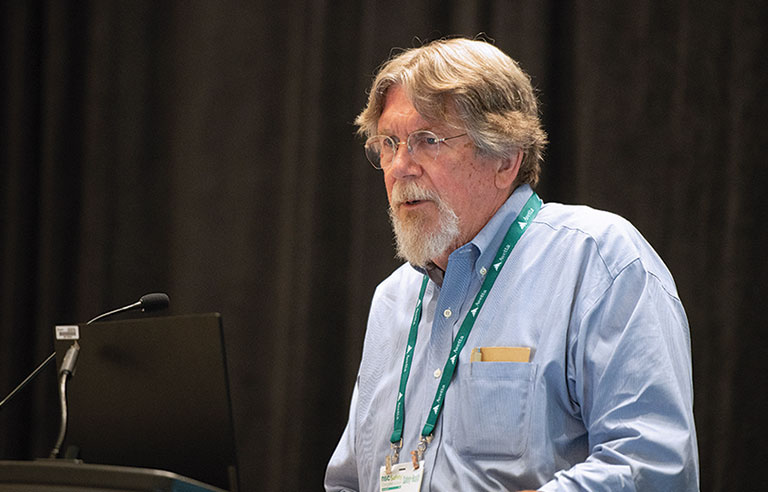
For much of the Top 10’s early history, Fairfax analyzed and presented federal data (using overhead projector slides) to a handful of onlookers on the Expo Floor. Soon, the audience – and the presentation – grew. Laptops and PowerPoint helped further things along.
“I think it’s become kind of a staple for the congress because there’s a lot of people for whom that’s their exposure to last year’s Top 10 violations,” Fairfax said. “Even though the violations don’t really change from year to year, there’s a lot of interest in that, which is good. It’s good to get that out there.”
Fairfax recalls the first iterations of the Top 10 occurring almost as an underground endeavor. That is, without publicity in Congress & Expo programs and Safety+Health.
In the event program for the 2004 show in New Orleans, then-NSC President and CEO Alan C. McMillan touted the Top 10 session as “a great new addition” and a “must-see for all attendees and exhibitors.” OSHA and S+H teamed up for the presentation on the Expo Floor at the Ernest N. Morial Convention Center on consecutive afternoons.
S+H coverage of the Top 10 dates back several years earlier, however. The magazine even experimented with different titles, including “OSHA’s Big 10” in 1998 and the more biblical “The 10 Deadly Sins” in 2001.
In 1997, then-S+H Associate Editor Al Karr wrote, “The list is little changed, OSHA and OSHA-watchers contend, for a combination of reasons. One reason is that the ‘hot’ standards cover pervasive, tough-to-correct workplace hazards, often in big industries.”
Fairfax, who recently announced his retirement from consulting, contends that the list’s constancy might be moot.
Just consider the annual influx of beginning safety professionals and Congress & Expo newcomers.
“I’ve had a lot of them come up and talk to me afterward about how helpful it was because they’re relatively new to the safety and health profession and it helps them when they’re doing their work to focus on the more serious hazards,” he said.
Fairfax remembers NSC originating the idea of the Top 10. He gladly took part in the project, first as a facilitator, then as a fan.
“I’m always in favor of anything where you get safety and health information out to people,” he said. “That’s always a good thing, you know?”
|
Next: Citation Solutions > Safety+Health advertisers offer products and services to help you avoid OSHA’s Top 10 most cited standards |
Citation Solutions
The following Safety+Health advertisers offer products and services to help you avoid citations related to OSHA’s Top 10 most cited standards.
Learn from OSHA’s top safety violations to evolve worker safety. OSHA’s Top 10 list of most cited standards hasn’t changed much over the years, revealing that traditional ways of thinking haven’t addressed serious injuries and fatalities. To protect our workforce, a more comprehensive approach is required. Learn how Avetta’s Safety Maturity Index truly improves workplace safety.
“BOA works with leading brands to deliver scientifically proven solutions that improve fit and performance. Our focus is ensuring that BOA® delivers superior stability, energy efficiency and durability, which reduce fatigue and improve a worker’s ability to navigate hazardous onsite situations,” says Dan Feeney, Ph.D., vice president of partner product innovation and development.
Board of Certified Safety Professionals
True safety leadership creates solutions that are relational, inspirational and transformational. In our podcast, BCSP and the leadership training experts at Dale Carnegie introduce you to safety professionals solving unique challenges in innovative ways. Let their insight guide you.
Nothing is more important to a business than the health and safety of its employees and customers. That’s why we go beyond providing products. We offer solutions to help you anticipate and address safety challenges before they arise. With Cintas, you can stay a step ahead by creating a safer and better workday.
Honeywell PPE offers value-add services, including training programs taught by certified and knowledgeable industry experts. From fall and respiratory informational training to hearing protection and conservation and eyewear fit test programs – Honeywell has a dedicated team to help your organization ensure compliance and save money by avoiding accidents and OSHA fines.
National Association of Safety Professionals
Hazard Communication is consistently the most cited standard in general industry. Discover why and how to address compliance in our intensive two-day Hazard Communication Train-the-Trainer course. Gain expert knowledge, determine training requirements and get updates on this often-misunderstood regulation. Seating is limited – register today to secure your spot!
Get over seven times more cuts with the SK-16 Quick-Change Concealed Blade Safety Knife, which means you and your team can focus on the task and leave the blade changes for later. Find more information on how you can increase your team’s efficiency and safety in our link.
Discover OSHEPRO: 8-in-1 EHS platform. Manage compliance, safety training, incident reporting, audits, inspections, Safety Data Sheet inventory, lockout/tagout procedures and ESG seamlessly. Achieve quick onboarding in less than seven days, with costs 20% lower than competitors. Elevate your workplace safety with OSHEPRO today.
PORTWEST introduces a new climbing-style helmet to its Height Endurance line. This high-performance helmet meets ANSI/ISEA Z89.1 Type II Class E standards, offering superior protection against top and side impacts. Ideal for electrical work and extreme temperatures.
Safety Rail Company is the leader in rooftop fall protection systems. Our integrated, single-source approach delivers a true turn-key experience. We handle all aspects of the process, from identifying risk and prescribing solutions to designing and installing the industry’s most comprehensive product line. We’re not just a safe choice for fall protection, we’re the safest.
The Sentric Safety Group has united the world’s leading safety solutions and trapped key interlock brands. We provide specialist solutions in the energy and industry sectors, as well as loading dock safety systems, designed to keep your personnel safe. Get in touch with us to learn more about our offerings.
The Sked Stretcher system offers greater versatility than any other system. It can be used to perform confined space, water, vertical-rope, military, helicopter and virtually any other types of rescues. It floats nearly vertically and will accommodate nearly any size patient. It’s compact, lightweight and backpackable.
TSI’s PortaCount™ Respirator Fit Tester helps ensure accurate, consistent fit testing in less than 2.5 minutes. Designed for more than basic testing, the software automates workflows, centralizes test data, and simplifies management and sharing. Attain regulatory compliance with confidence, while optimizing respiratory protection for your team with ease. Discover more.
Fall Protection – General Requirements (1926.501)
Board of Certified Safety Professionals
National Association of Safety Professionals
Hazard Communication (1910.1200)
Board of Certified Safety Professionals
National Association of Safety Professionals
Ladders (1926.1053)
Board of Certified Safety Professionals
National Association of Safety Professionals
Respiratory Protection (1910.134)
Board of Certified Safety Professionals
National Association of Safety Professionals
Lockout/Tagout (1910.147)
Board of Certified Safety Professionals
National Association of Safety Professionals
Powered Industrial Trucks (1910.178)
Board of Certified Safety Professionals
National Association of Safety Professionals
Fall Protection – Training Requirements (1926.503)
Board of Certified Safety Professionals
National Association of Safety Professionals
Scaffolding (1926.451)
Board of Certified Safety Professionals
National Association of Safety Professionals
Personal Protective and Lifesaving Equipment – Eye and Face Protection (1926.102)
Board of Certified Safety Professionals
National Association of Safety Professionals
Machine Guarding (1910.212)
Board of Certified Safety Professionals
National Association of Safety Professionals
| << Return to the beginning of the article |

