Fall is here, bringing with it beautiful colors and cooler weather for most of the country.
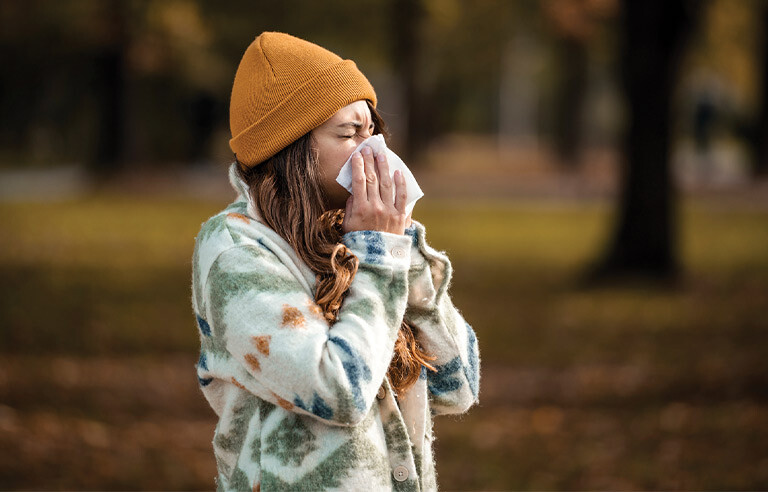
What’s also along for the ride? Seasonal allergies.
If you’re one of the many people who suffer from the itchy eyes, runny nose and ah-choos of fall allergies, the American College of Allergy Asthma and Immunology has five tips for you:
- Take your allergy medication every day. Continue taking it for two weeks after the first frost. “Both nasal and eye symptoms associated with ragweed allergies can linger after pollen is no longer in the air.”
- Don’t bring allergens into your home. If you’ve been outdoors, remove the clothing you’re wearing after you step inside and wash them. And don’t forget your shoes! Then, take a shower and wash your hair to remove any lingering triggers. Keep your home’s windows closed. Same goes for car windows.
- Wear a mask outdoors. “A NIOSH N95-rated mask can help you keep pollen at bay,” the ACAAI says. The organization also suggests you wear a hat and sunglasses to prevent pollen from getting in your eyes.
- Remove mold. Mold is a common culprit during the fall, found anywhere water is. “The key to reducing mold is moisture control,” the ACAAI says. “Be sure to use bathroom fans and clean standing water immediately. Scrub any visible mold from surfaces with detergent and water, and dry completely. You can also help ward off mold by keeping home humidity below 60% and cleaning gutters regularly.”
- Make an appointment with your allergist. Check in with your doctor. If you’re experiencing new allergy symptoms or your current symptoms are getting worse, you can discuss different treatment options during your appointment.