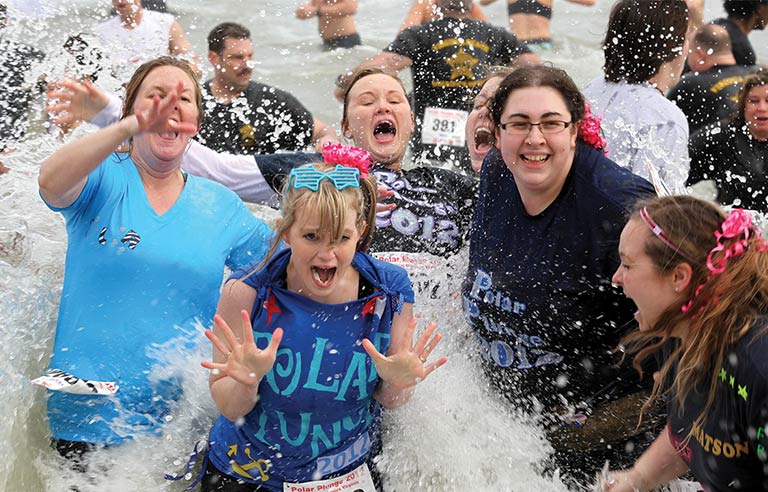
Have you heard of – or thought about taking – a “polar bear plunge”?
The wintertime jumps are common fundraising events. But being outdoors in ice-cold water, even for a short period of time, is a risk.
“Few people realize that water between 50° F and 60° F can kill you in less than a minute,” the National Center for Cold Water Safety says. “It’s actually so dangerous that it kills a lot of people within seconds.”
The main culprit? Cold shock. It’s the body’s response to the freezing water. Symptoms include a sudden, rapid increase in breathing, heart rate and blood pressure.
“That can cause a person to drown within seconds if they involuntarily gasp while their head is submerged,” the American Heart Association cautions. “The shock also places stress on the heart and makes it work harder. Being immersed in cold water triggers hypothermia faster than just being out in the cold, because water takes heat away from the body 25 times faster than air.”
If you decide you’re going to take a plunge, you’ll need to do some training beforehand. Experts say you can reduce your body’s reaction to cold shock by slowly acclimating it to cold water. That means spending time in outdoor water before it gets cold, and continuing to do so as temperatures outside drop.
No nearby bodies of water? An American Heart Association blog post suggests taking “increasingly cooler showers or baths at home.”
Other tips:
- Exercise outside to prepare your lungs for cold air.
- Never do a cold-water plunge when you’re alone.
On the day of the plunge, make sure you see emergency medical service workers onsite. They’ll be able to quickly help warm up anyone who’s struggling.