

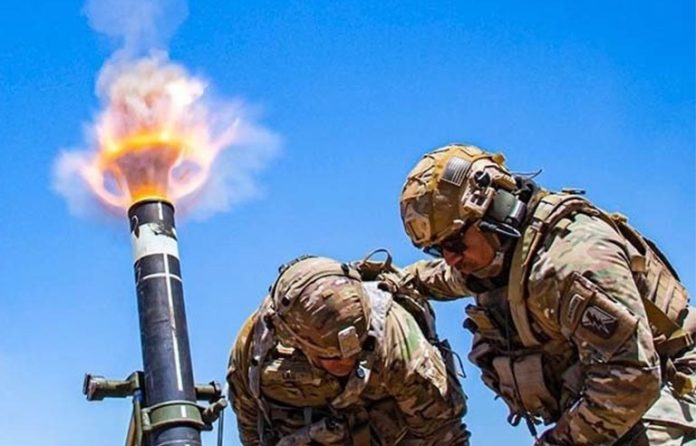
Washington — Legislation recently introduced in the Senate would direct the Department of Veterans Affairs to research the effects of “repetitive low-level blast injuries” on the mental health of military veterans.
Introduced on Dec. 10, the Precision Brain Health Research Act of 2024 (S. 5460) is sponsored by Sens. Jerry Moran (R-KS) and Angus King (I-ME). A press release from Moran’s office says the bill is designed to complement King’s Blast Overpressure Safety Act of 2024.
The Precision Brain Health Initiative was enacted as part of the Commander John Scott Hannon Veterans Mental Health Care Improvement Act of 2019.
Moran and King’s bill would require VA to create a 10-year research plan to “establish the effects of repetitive low-level blast injuries, where benchmarks must be reported to Congress, in order to develop further legislation for veterans who suffer with the effects of these repetitive blast exposures.”
Moran said in a separate press release: “Recent studies have tied low-level blasts, which service members are exposed to during training and in combat, to high rates of brain and mental health conditions, as well as suicides.
“This legislation will help us start to better understand why and how blast exposures are impacting service members and veterans and make certain VA is able to quickly incorporate these findings into clinical care for our veterans to receive a diagnosis and a treatment plan. This legislation will help make certain veterans have the evidence-based health care and benefits they deserve.”

