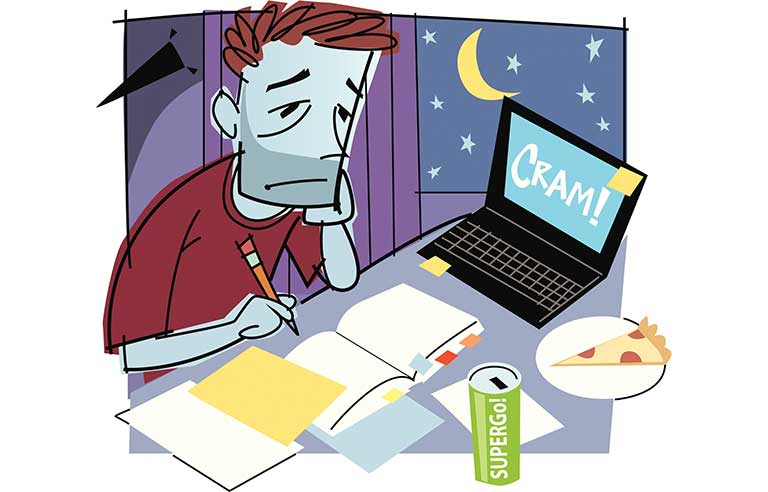
Hey, college students: Are you a fan of energy drinks? They may be messing with your sleep, a new study says.
Often marketed as mental and physical pick-me-ups, energy drinks contain an average of 150 milligrams of caffeine per liter, along with sugar, vitamins, minerals and amino acids in varying quantities.
To explore which aspects of sleep might be affected by energy drinks, or whether any sex-specific differences in these effects exist, researchers used data from more than 53,000 Norwegian college and university students (18-35 years old) in the 2022 Students’ Health and Well-Being Study.
Students who drank energy drinks daily slept, on average, about 30 minutes less a night than those who reported occasional or no consumption. The former group also took longer to fall asleep at night and woke up more regularly after falling asleep, leading to poor sleep efficiency.
Other findings:
- 51% of female participants who consumed energy drinks daily reported experiencing insomnia, compared with 33% who said they occasionally or never have an energy drink. Those percentages were 37 and 22, respectively, for their male counterparts.
- Women who consumed energy drinks daily were 87% more likely to sleep less than six hours a night.
- Men who consumed energy drinks daily were twice as likely to sleep six hours or less a night.
“Identifying modifiable risk factors for sleep problems among college and university students is vital and our results suggest that the frequency of energy drink consumption could be a possible target for interventions,” the researchers write.
The study was published online in the journal BMJ Open.