

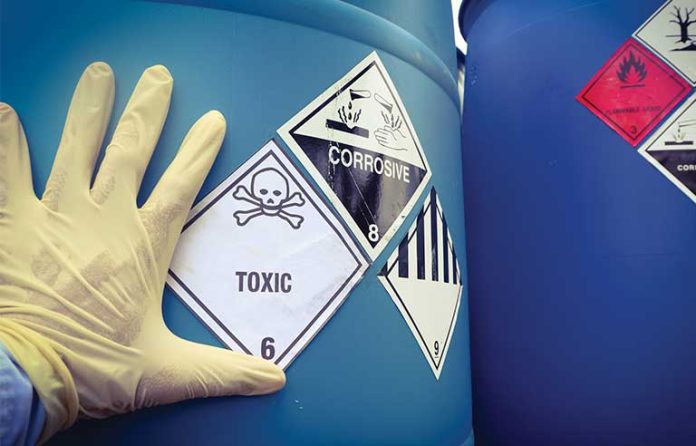
Whether chemical, physical or biological, some workplace hazards can affect workers’ reproductive systems – leading to fertility problems and potentially impacting the health of their children.
“Reproductive hazards alter their ability to have the family experience that a lot of workers envision, and that causes additional physical and mental pain and suffering,” AFL-CIO safety and health specialist M.K. Fletcher said. “Some exposures result in children who have medical disabilities that have to be treated for a lifetime.”
To ensure workers – and, by extension, their families – are protected from reproductive hazards, awareness, communication and the Hierarchy of Controls are key, experts say.
Hazards here, there, everywhere
Radiation, heavy metals (including lead), bloodborne pathogens and solvents – along with various chemicals – are among the more common reproductive hazards.
Many can lead to “take-home exposures.” These occur when a worker unknowingly brings home a chemical or pathogen on their skin, hair, clothes and/or shoes and, in turn, exposes family members to the hazard.
“Employers have that responsibility to look at what they’re bringing into the workplace, how it’s being used and how they’re controlling those exposures,” Fletcher said. “They’re the ones who have all the information from the chemical manufacturers, and they’re required to inform their employees.”
OSHA’s standards for general industry address some reproductive hazards. In 1910.97, nonionizing radiation is explained. In 1910 Subpart Z, the agency addresses air contaminants (1910.1000), lead (1910.1025), bloodborne pathogens (1910.1030), ethylene oxide (1910.1047) and other hazards to the reproductive system.
Frankie Wood-Black, division chair for engineering, physical science and process technology at Northern Oklahoma College, adds that workers and safety professionals should be informed about “all the new materials we’re dealing with – and all the nanomaterials. Those become a case where the chemical hazard protections need to be in place because we just don’t know, and we won’t know for another 10, 15, 20 years.”
NIOSH even recognizes shift work and demanding jobs as reproductive hazards. The agency’s website notes that working at night, during normal sleep hours or for long hours can alter the body’s circadian rhythms. Studies have linked this to menstrual disorders, miscarriages and preterm birth.
When it comes to identifying workplace hazards, employers should include employees in the process, Fletcher said. “A lot of times you have managers overseeing a process, but they’re not doing it day in and day out. The workers are, and they know where things fail and where things are more likely to fail and can offer some really informative input.”
The Hierarchy of Controls
When addressing concerns related to reproductive hazards, turning to the Hierarchy of Controls “is always the best,” Wood-Black said. “If you can engineer the hazard out of there, that’s wonderful.”
The Canadian Centre for Occupational Health and Safety recommends engineering controls such as reducing exposure to airborne contaminants via improved ventilation in work areas or installing exhaust systems.
For pregnant workers, experts recommend engineering and administrative controls.
“I was a laboratory manager when I was pregnant with my son,” Wood-Black said. “I just said, unless there was an absolute positive reason why I needed to walk into the lab – even though we had reviewed the lab and I was comfortable with what was in the lab – there were certain times I said, ‘I’m just not going into the lab.’ It was just an administrative control at that point.”
Substitution may also be possible, Fletcher said.
“Is there a safe alternative?” she asked. “If they can’t find a safe alternative, think about how you use this chemical in an enclosed space where workers aren’t going to be exposed.”
To reduce exposure, employers can also implement safe work practices – including policies that prohibit eating, drinking or smoking in areas where hazardous products are present.
In addition, workers should be given regular breaks, CCOHS says, along with appropriate personal protective equipment.
If workers are concerned about exposures to reproductive hazards, CCOHS recommends that employers implement a monitoring program to perform sampling that could include air monitoring, radiation dosimetry or medical surveillance.
Workers should report any concerns they have and, if they experience any symptoms, seek medical attention or individual counseling, if needed.
Caution and communication
Avoiding exposure to reproductive hazards can also be achieved through caution and communication. Workers and safety pros should ask questions about what they’re working with to understand the necessary precautions.
“You should be aware of how to handle it, how to mitigate it and what steps are being done to minimize exposures,” Wood-Black said.
When OSHA revised its standard on hazard communication (1910.1200) in 2012, the agency required chemical manufacturers, distributors and importers to break down Safety Data Sheets – formerly called Material Safety Data Sheets – into a 16-section format intended to make the information easier for workers to read and retain.
An SDS lists the physical, health and environmental hazards of its corresponding chemical, along with precautions for safely handling, storing and transporting the chemical.
Awareness and asking questions are especially important when new chemicals are brought into a facility. Wood-Black said workers and safety pros should ask, “Why are we bringing in this material to start with? “How is it going to be stored? Where is it going to be stored? How is it going to be transferred?”
Workers who are responsible for chemical selection also should be trained.
“They need to ask those questions before it gets to the safety professional,” she said.

