
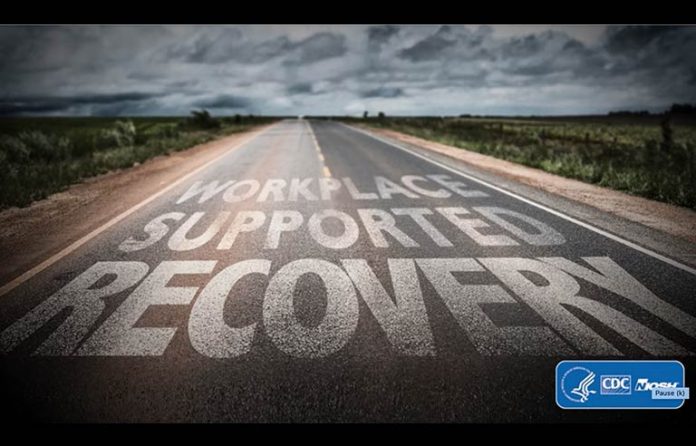
Washington — NIOSH has released a video intended to boost awareness of Workplace Supported Recovery programs, which provide resources for workers and employers affected by the ongoing opioid epidemic and other substance misuse disorders.
Speaking during the four-minute video published July 26, L. Casey Chosewood, director of the Office for Total Worker Health at NIOSH, cites National Center for Health Statistics data showing that more than 70,000 Americans died from drug overdoses in 2017 – more than any year on record. Among these fatalities, two-thirds involved opioids.
A NIOSH webpage for WSRPs refers to findings from the 2018 National Survey on Drug Use and Health that indicated about 70% of adults with alcohol or illicit drug use disorders are employed.
WSRPs provide employers with evidence-based approaches to mitigate risk factors related to substance misuse, as well as its progression to a substance use disorder. Additionally, the programs can assist workers who take opioids or use/misuse other substances after an occupational illness or injury. WSRPs further address workers in recovery who are staying at or returning to work.
“Like any other chronic disease that can be recognized, managed and accommodated in most workplaces, substance use disorders are treatable,” Chosewood says in the video. “People do get better and they can return to work. Workplace Supported Recovery programs can play a critical role in making that happen.”
NIOSH outlines several elements of successful WSRPs:
- Prevent work-related injuries and illnesses that could lead to the initiation of substance misuse
- Decrease difficult working conditions or work demands that might lead to daily or recurrent pain
- Promote the use of alternatives to opioids for pain management associated with a workplace injury or illness
- Provide information and access to care for a substance use disorder when it’s needed, including access to medication-based or medication-assisted treatment, together with individual counseling
- Support second-chance employment
- Provide workplace accommodations and other return-to-work assistance
- Provide peer support and peer coaching to bolster the social supports available to workers in recovery
- Promote a work culture and climate that’s supportive of workers in recovery, implementing such measures as awareness building, stigma reduction, and alcohol-free and health-focused work social events
Chosewood said NIOSH has included in its strategic plan for fiscal years 2019 to 2023 research goals aimed at addressing “gaps in knowledge regarding the opioid response.”

