
Washington — NIOSH recently introduced checklists to help employers assess damp areas and identify mold.
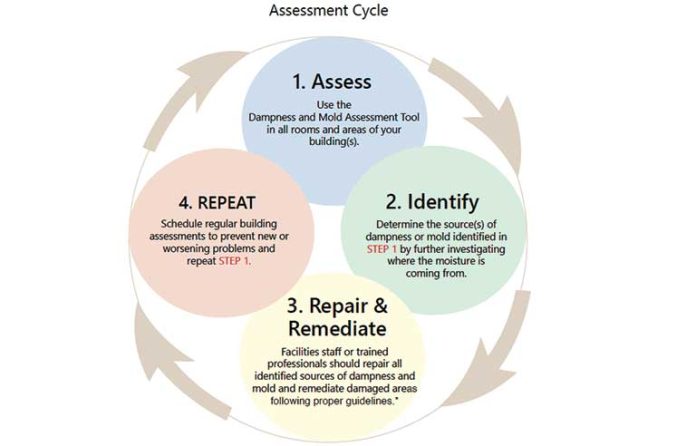
The Dampness and Mold Assessment Tool has two versions – one for general buildings and one for schools – as well as a four-step assessment cycle.
The resources include checklists and instructions to guide users through assessing rooms for dampness and mold, and then identifying the sources.
Dampness can result from water incursion that occurs from both interior and exterior sources, such as leaky roofs or windows, flooding, or high indoor humidity. These areas may promote the growth of mold, bacteria, fungi and insects, which can lead to the development or worsening of respiratory symptoms and infections, asthma, hay fever, bronchitis, eczema, and hypersensitivity pneumonitis, according to NIOSH.
The tools “provide an inexpensive mechanism to investigate, record and compare conditions over time,” David Weissman, director of the Respiratory Health Division at NIOSH, said in a Nov. 11 press release. “Implementing regular visual inspections for dampness can help to identify trouble areas before they become major problems and help to prioritize maintenance and repair.”
NIOSH encourages employees who suspect health issues are being caused by exposure to building-related dampness or mold to report new, persistent or worsening symptoms to their physician and employer.

