When strong winter storms knock out the electricity to homes, outages can sometimes last several days.
If that happens, food safety is a concern. “Without electricity or a cold source, food stored in refrigerators and freezers can become unsafe,” says Ready.gov, a federal website that encourages preparedness. When food reaches temperatures between 40° F and 140° F, bacteria “can grow rapidly.”
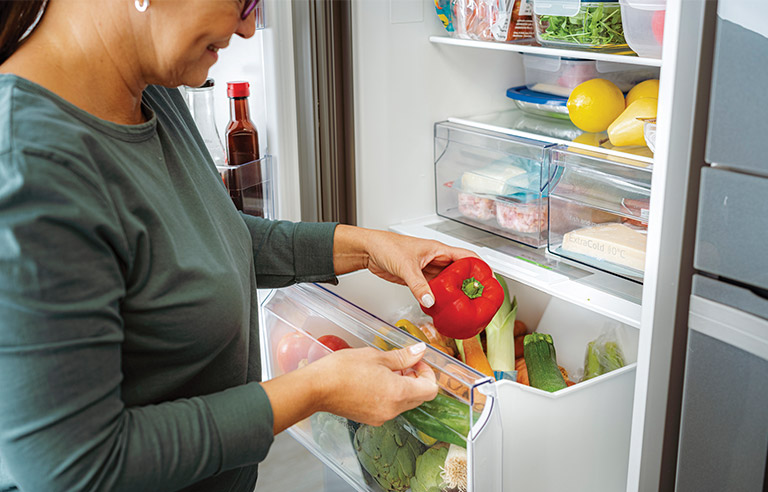
Help keep your food safe: If the power goes out, keep the refrigerator and freezer doors closed as much as possible. Food inside will keep cold for about four hours if doors stay closed.
Refrigerated or frozen foods should be kept at 40° F or colder. A refrigerator thermometer is handy to have for these situations. Any perishable foods such as meat, poultry, fish and eggs that have been at room temperature (warmer than 40° F) more than two hours should be thrown away.
Having dry ice on hand (and knowing where you can buy some before bad weather strikes) can help prevent you from having to toss food.
“Twenty-five pounds of dry ice will keep a 10-cubic-foot freezer below freezing for three to four days,” says Ready.gov. But dry ice needs to be handled safely:
- Don’t place it where it would come in direct contact with food.
- Wear dry, heavy gloves when handling dry ice, which can cause severe frostbite to skin.
- Never place dry ice in an unventilated room or car – carbon dioxide can build up.
- Don’t store dry ice in a working freezer – it could damage the motor.
Remember: “When in doubt, throw it out.”