

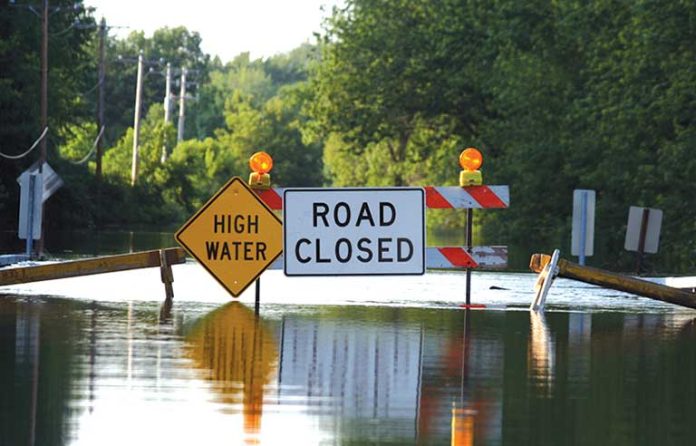
Washington — Aiming to help protect workers and volunteers before, during and after hurricanes or floods, NIOSH has published an updated guidance document featuring key resources and messaging.
The third edition of Hurricane and Flood Key Messages for Employers, Workers, and Volunteers is intended for employers, worker and volunteer organizations, public health agencies, emergency managers, and other NIOSH partners.
The resources and messages can be incorporated in communication plans that address hazards from extreme weather involving strong wind and high water, as well as be adapted for websites, press releases, media talking points, social media, fact sheets and other communications materials.
The guide includes a link to the Emergency Responder Health Monitoring and Surveillance National Response Team Technical Assistance Document, which describes how to implement activities in each phase of response and recovery.
Regarding overall health and safety, the guide covers:
- Food and water safety
- Medical considerations for relief workers – pre- and post-exposure
- Personal hygiene and handwashing
- Personal protective equipment and respirator selection and use
- Displaced animals, insects and arachnids
- Livestock and poultry wastewater and sludge
- Biological agents, including human remains, infectious diseases, mold and poisonous plants
- Exposures to asbestos, carbon monoxide, lead and silica
- Physical hazards, which can include chain saws and tree removal, confined spaces, electricity, fall prevention, fires, floodwaters, and noise.

