

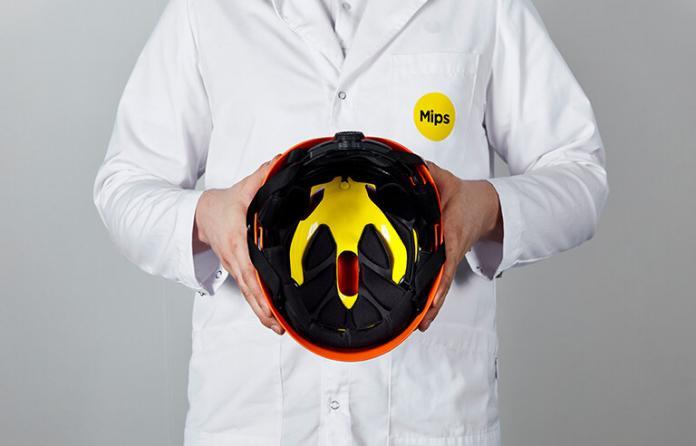
Choosing a safety helmet isn’t always easy — especially because not all helmets are built the same. In fact, what’s inside your workers’ helmets can make a big difference in protecting them on the job site.
The risk of angled impacts on the job site
Most industrial helmets are designed to withstand straight-on impacts. But real-life accidents don’t always happen this way. For example, a worker might slip and hit their head against a steel beam at an angle, or a swinging object could glance off the side of a helmet rather than striking it head-on.
How angled impacts can harm workers
Off-center impacts can generate rotational motion, which can lead to serious outcomes such as concussions or traumatic brain injuries (TBIs). That’s why we designed the Mips® brain protection system for industrial safety helmets.
How Mips technology can help protect workers during off-centered impacts
At the core of Mips’ safety system is a low-friction layer that’s designed to allow a small degree of movement between the helmet and the wearer’s head. This movement — about 10 to 15 millimeters in all directions — is intended to help redirect rotational motion that would otherwise be transferred to the head during an angled impact.
The idea is simple, but powerful: By allowing the head to move independently of the helmet for just a fraction of a second, Mips’ safety system intends to help reduce the motion that could contribute to concussions or more severe brain injuries.
The science behind Mips
Mips technology is backed by over 25 years of research and testing, drawing from expertise in both industrial safety and sports helmet development. It has been rigorously tested in conditions that replicate real-world industrial hazards to enhance its effectiveness in mitigating the risks associated with rotational motion.
Mips continuously refines its technology, drawing on insights from biomechanics, neuroscience and industrial safety research. The goal is simple: to enhance head protection without compromising comfort or usability. By incorporating helmets equipped with Mips technology into workplace safety programs, site managers can take a proactive approach to help reduce head injuries and improve worker well-being.
Choosing the right industrial safety helmet
For safety helmets, it’s what’s inside that counts. In fact, Mips makes it easy to see that there’s an additional layer of safety technology inside. Just look for the yellow logo. There’s plenty to consider to ensure a safety helmet fits the needs of your sites and crew.
- Rotational management
Helmets that feature Mips technology are designed to help reduce the risk of angled impacts and add another layer of safety for workers. - Comfort and fit
Your crew will likely be wearing their helmets for long periods, so making sure they’re comfortable will help increase the chances they keep them on. - Safety certifications
Most safety helmets are required to meet specific requirements, but it’s best to double-check that they’re up to date with the latest regulations in your industry. - Brand and style
In the world of construction helmets, there are plenty of choices. Be sure to choose one from a brand you know and trust.
Helmet safety shouldn’t be an afterthought
Job site safety is an investment — not just a cost. Choosing helmets with Mips technology can help reduce worker risk and keep your operation running smoothly. Because when it comes to protecting workers, every detail — including what’s inside their helmets — matters.
At NSC Safety Congress & Expo? See Mips up close at booth #1032.
Learn more about industrial safety helmets with Mips technology.
Spot the difference.

