
Responding is Jenna Carlton-Paulsen, account/training manager and instructor, RescueStat, Boise, ID.
With the rise of remote learning, virtual CPR and AED training has become a convenient option for many organizations. However, safety professionals must ensure these programs meet essential standards for compliance and effectiveness. Here’s how:
Ensure regulatory compliance. Training should follow the most current national CPR and emergency care guidelines. Although federal agencies may not directly approve specific courses, compliance with recognized training standards is essential, especially for industries such as health care, education and construction. It’s also important to check for any local or state-level requirements.
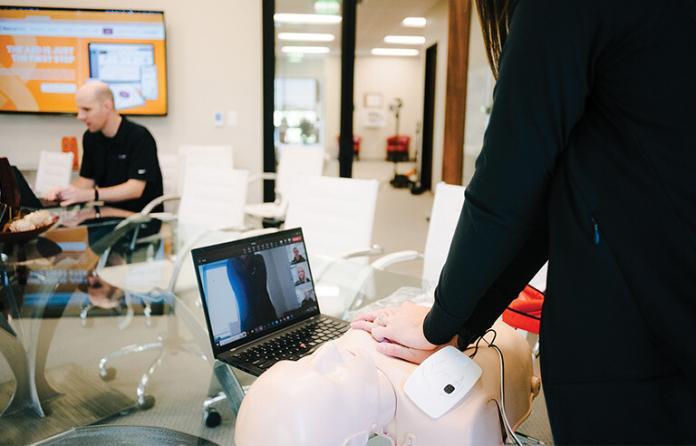
Verify hands-on skills. CPR/AED certification isn’t only about theory; it requires practical skills. Effective virtual programs include a way to assess hands-on ability, whether through blended learning (online theory in addition to an in-person skills check), completing the skills test on camera with a certified instructor, simulation kits or instructor evaluations. A program that skips physical/virtual camera verification may not be accepted for compliance or prepare learners adequately.
Review of curriculum quality. A strong training program uses up-to-date guidelines and offers realistic scenarios. Look for courses that cover adult, child and infant CPR; AED use; and choking response. Interactive content, quizzes and video demonstrations help reinforce key skills and improve retention.
Consider accessibility and user experience. The platform should be easy to use across devices such as desktops, tablets and phones. For diverse workplaces, check if the course is available in multiple languages and offers accessibility features such as captions or screen-reader compatibility.
Confirm certification and recordkeeping. After completion, participants should receive a valid, time-limited certificate (usually valid for two years). The system should allow for easy access to training records, downloadable certificates and reminders for recertification to help organizations stay audit ready.
Assess cost and scalability. Compare costs, especially for group or multisite training needs. Look for scalable options that provide flexibility for organizations of different sizes without compromising training quality.
Look to avoid these “red flags”:
- No hands-on skills assessment
- Outdated or generic curriculum
- “Lifetime” certification (CPR must be renewed regularly)
- No verifiable proof of training
Virtual CPR/AED training can be effective and compliant when carefully chosen. By focusing on current standards, hands-on practice, accessibility and reliable certification, safety professionals can ensure their teams are trained to respond confidently during emergencies.
Editor’s note: This article represents the independent views of the author and should not be considered a National Safety Council endorsement.

