

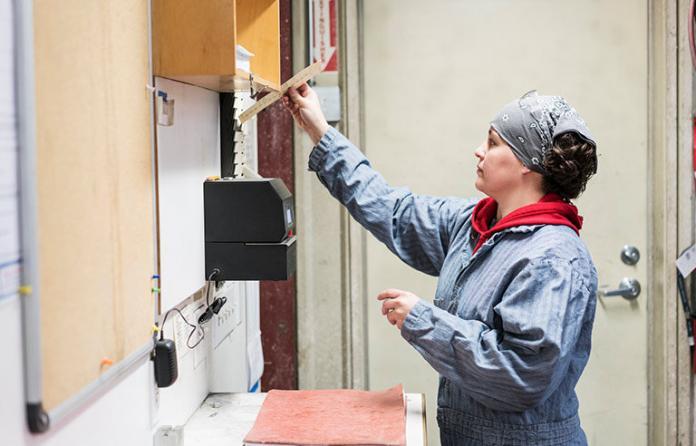
College Station, TX — Disruptions to the biological clock caused by shift work may increase the development and spread of aggressive breast cancer, a recent study out of Texas A&M University suggests.
Researchers divided mice that were genetically engineered to develop breast cancer into separate groups. One group lived on a standard night-day schedule while the other operated on a disrupted light cycle to compromise internal clocks.
The circadian-disrupted group developed cancer around the 18th week, roughly four weeks before the standard group. The disrupted group exhibited tumors seen as more aggressive and more likely to spread to the lungs, as well as compromised immune systems that accelerated cancer growth.
“It wasn’t just that tumors grew faster,” lead study author Tapasree Roy Sarkar, an assistant professor in biology at Texas A&M, said in a press release. “The immune system was actively restrained, creating more favorable conditions for cancer cells to survive and spread.”
One positive: The researchers found that blocking a specific receptor that suppresses immune system activity may help mitigate tumor growth and the spread of cancer. The team intends to use that finding to examine “how the effects of chronic circadian disruptions might be reversed in humans, with the aim of improving health outcomes for night-shift workers and others with irregular sleep schedules, like flight attendants and frequent travelers.”
The study was published in the journal Oncogene.

