
Cincinnati — Busy workdays can trigger mental overload, but employees may increase their focus – and prevent injuries – by “checking in” with themselves, a University of Cincinnati researcher suggests.
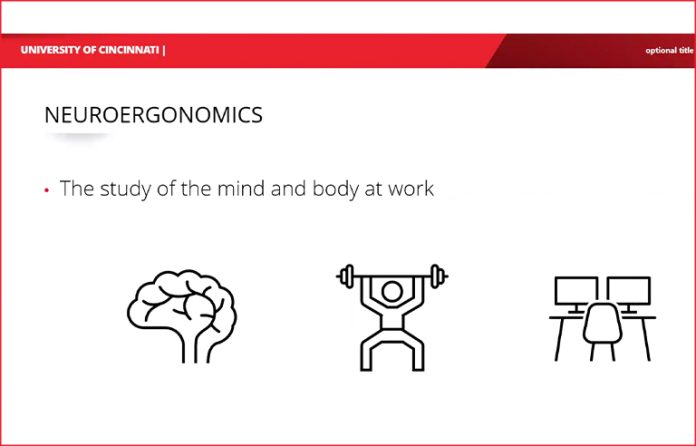
Speaking during a recent webinar coordinated by the Center for Occupational and Environmental Health at the University of California, Berkeley, UC doctoral candidate M.K. Wintz addressed the potential benefits of neuroergonomics, which is the study of how the brain and behavior interact at work.
By integrating their minds and bodies through cognitive and mindfulness exercises, Wintz said, workers can limit risk factors for workplace injuries. That’s particularly important, she added, amid an aging workforce and research showing that multitasking increases workplace injury risk.
“Cognitive function is correlated with workplace accidents,” Wintz said during the webinar. “There’s a way higher likelihood of slips, trips and falls continuing to get worse as our workforce ages if we don’t continue to take intervention on reducing those slips, trips and falls.”
Wintz cited regular mental check-ins and mindfulness exercises as possible avenues for boosting “attentional focus,” which can improve performance and decision-making. One example: a worker stopping to focus on their breathing before performing a repetitive activity such as lifting.
Although a perceived “productivity expectation” might influence workers into thinking there’s no time to pause, employers and workers should train themselves to think differently, Wintz said.
“Especially when … you’re lifting that same weight over and over,” she added. “That extra second, well, yes, it adds an extra moment to the lift, but you’re more likely to lift more powerfully, more engaged. So, the task is going to be easier and safer.”
In addition to focusing on or counting breaths, Wintz suggested using sensory exposure awareness to channel attention. For example: Pause for a moment before a task or during a water break to ask yourself what colors you see or if you can notice three smells.
“These two-minute breaks or ‘mind-body snack breaks’ where you start to increase your mind-body awareness can help us cope with dual tasking,” Wintz said.

