

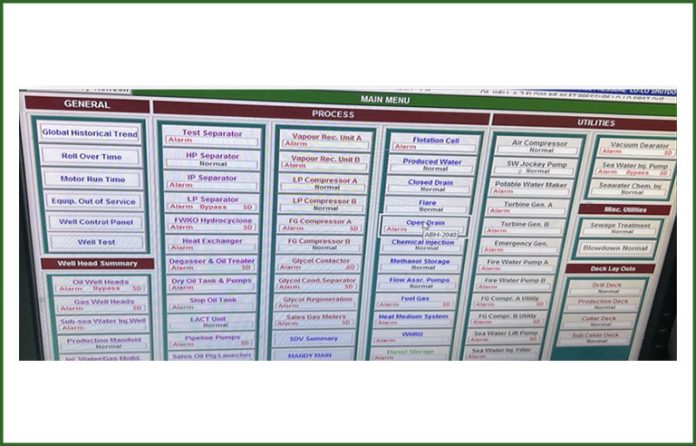
Washington — Inspections of various offshore facilities recently conducted by the Bureau of Safety and Environmental Enforcement identified a lack of proper documentation and tagging of temporarily out-of-service safety devices.
In a recently issued safety alert, BSEE says the “multiple incidents of noncompliance” were related to agency rules on platforms and time delays on pressure safety low sensors.
A performance-based risk assessment found that although “multiple facilities and operators had internal policies to flag/tag temporarily out-of-service safety devices and track bypasses,” the facilities weren’t adequately documenting them.
Additionally, BSEE reports that the data historian – a software application that analyzes data and provides histories for alarms, control actions and other operational events – wasn’t functional at several of the facilities.
The agency calls on operators to document “all authorized safety system bypasses, inhibits or overrides” in logs. Facilities should create a written process if data historians aren’t operational.
Other recommendations:
- Document any changes to the ladder logic needed for construction and ensure these changes are reverted before the project’s completion.
- Evaluate the offshore data historian and determine if it can record and store electronic data records when operator interventions occur.
- Ensure a computer-based system’s human-machine interface can display all bypassed safety devices and operational conditions.
- Develop systems to verify compliance with safety system bypass procedures.

