


What are your biggest safety and health challenges at work? What are the top issues the safety profession needs to address? Do the rewards of the job outweigh the frustrations?
Our former Job Outlook is now the State of Safety. We asked questions about you, your work, your employer and the profession to provide a more detailed look at what it’s like to be a safety pro today.
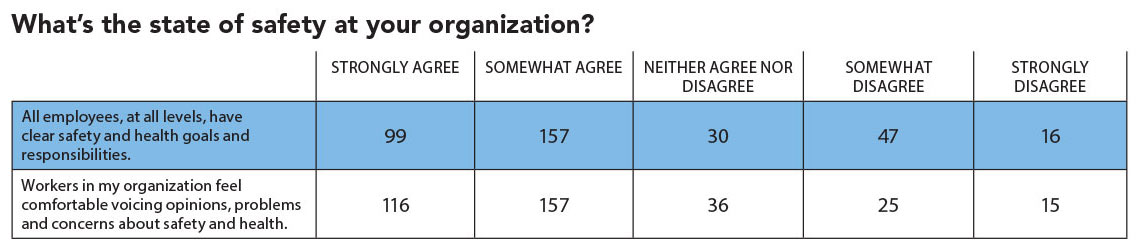
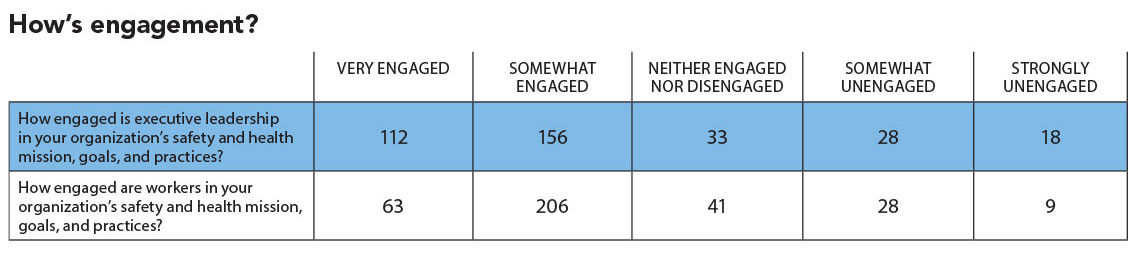
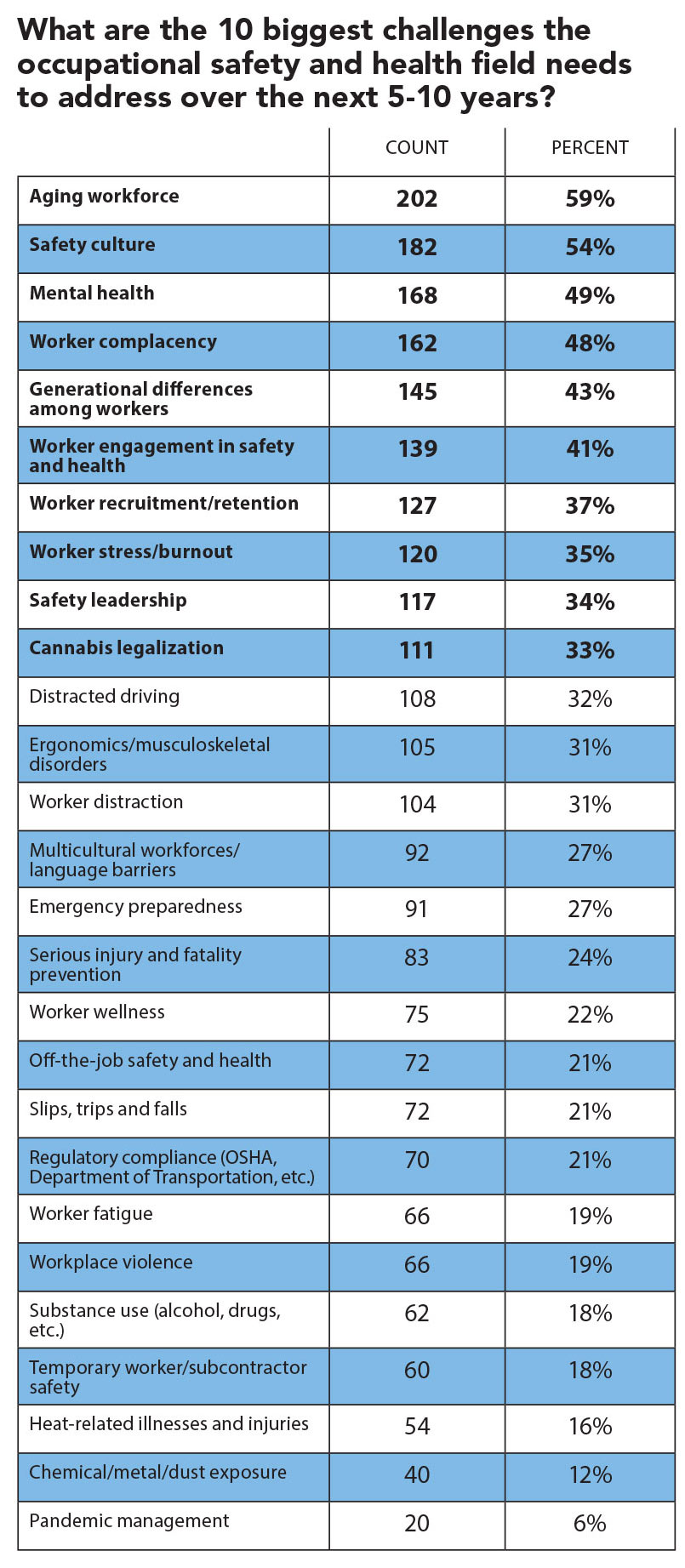
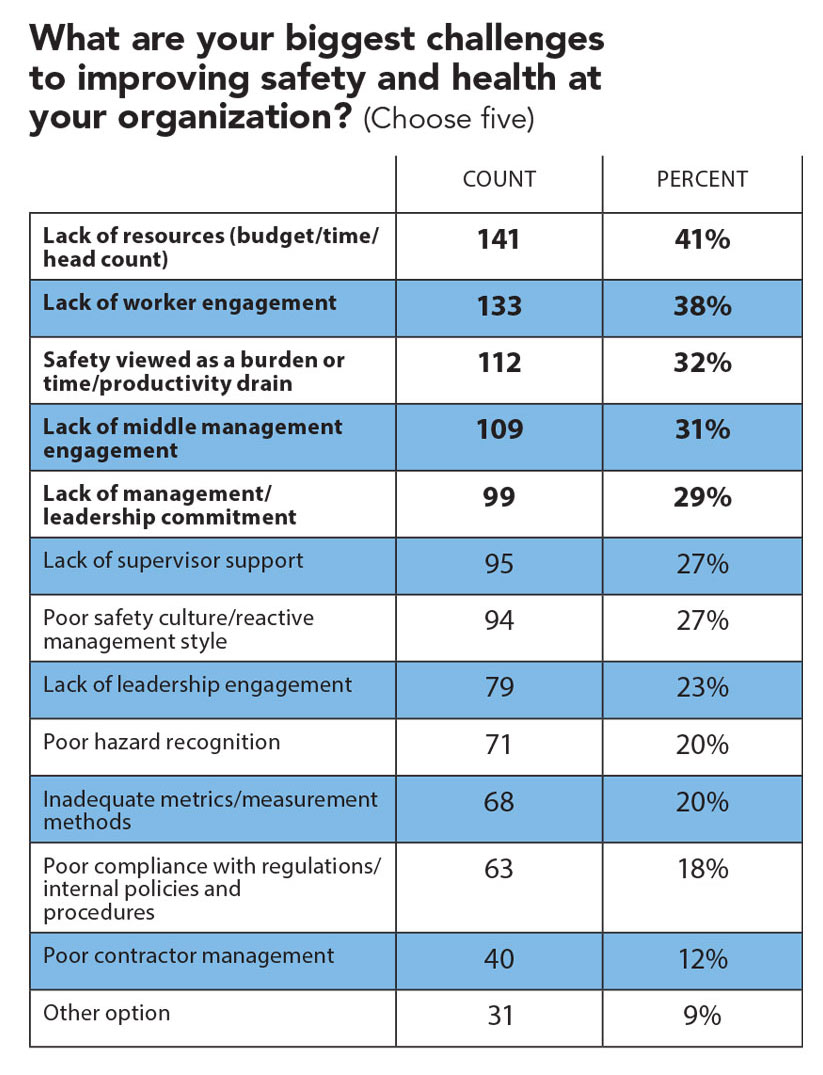
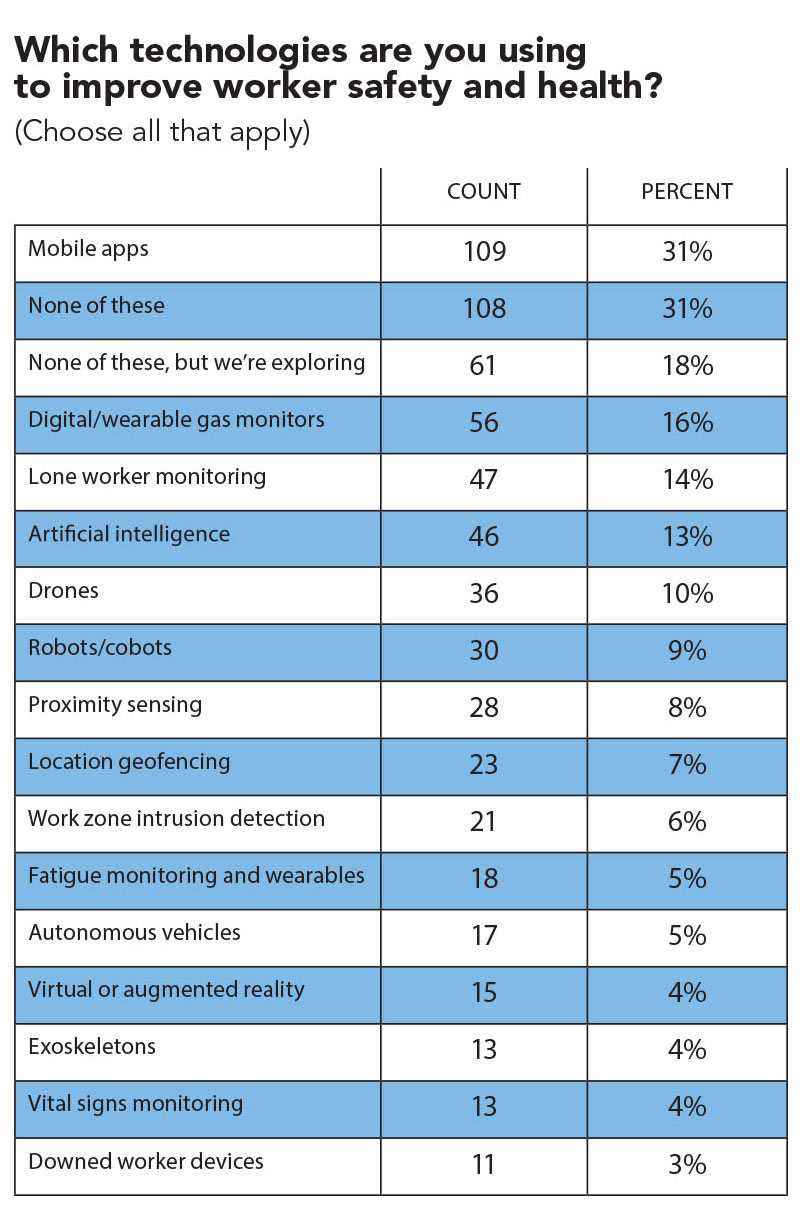
Charts touching on the highlights were published in the print edition of Safety+Health‘s April 2025 issue. You can browse graphs and tables representing the full results of the study below, and read respondent answers to open-ended questions starting on the next page.

Page 2 of 3
Page 1: Survey results | Page 2: Advice for new safety pros | Page 3: Attracting new people
RESPONDENT COMMENTS
What advice do you have for people who want to or have recently joined the profession?
Discover your passion; safety is a vast field full of possibilities. Stay open-minded and eager to learn, and remember to put yourself in others’ shoes. This perspective will enable you to truly grasp the challenges they face and empower you to contribute to solutions and innovation.
The first goal is to earn the respect of the workforce. Credibility is everything.
Always have that willingness to learn. Safety is an industry that requires adaptability, requires constant learning and frequent research. You have to be a forever student.
Listen first. Anyone new to a position can come in excited to change the world and make it a better place. However, a person can’t improve a system they don’t understand. Listen and learn what already works, and what doesn’t and why, before trying to change things.
This is not a job to sit at a desk, although at times you will. The biggest responsibility in this profession is to get out and talk with employees, hear their stories, ask them about what hazards they deal with each day. In the safety profession, decisions need to be made but that should not always fall on safety’s shoulders; it takes a team, and what’s important is you must be comfortable with working hard to involve as many areas of the business as you can so that everyone feels they play a part in creating that safe work environment.
Be prepared for people to not want to change even though it will make their work safer. They will still try to find shortcuts.
Try to obtain management buy-in for incremental changes that reduce risk. Improvements do not always need to be 100% but partial improvement can make all the difference in reducing frequency, likelihood and/or severity of risk. Don’t let the idea of perfection stand in the way of incremental improvement in risk reduction. Start with the most severe and/or most immediate risks first.
It’s OK to accept that not everyone sees the same value in what you are responsible for as you do. It’s typically not personal or intentional.
You’re entering a leadership career. Network to find a mentor or sponsor. While you’re climbing the ladder, continue to seek out educational opportunities that focus on leadership and technical skills.
Listen, ask questions, do not go in heavy-handed. You have to help people identify solutions without making them feel forced. Help them to come to the correct answer on their own using communication techniques to help get buy-in and help leadership to view you as a valued partner rather than someone bringing in a bunch of definitive programs that they can’t or won’t support.
The greatest professional growth opportunities are those that take you outside your comfort. Seize those opportunities to grow and develop your skillset and knowledge base.
Realize you can’t fix everything today.
You are the bridge between management and laborers. You have to know that and be able to meet both where they are and find a way to keep laborers safe and show management you care about the bottom line. Be flexible, be creative, be patient, compromise where you must but don’t bend where you shouldn’t!
Be professional, always. Know that the business is likely managing multiple priorities at any given time. Safety needs to be accounted for and supplying a real working budget is key to success. Alignment with leadership and understanding their needs will help you gain a seat at the table as a business leader/influencer.
Don’t get discouraged. If you prevent one injury or accident from happening, that’s a win. It takes time to build a safety culture, especially if you’re starting from scratch. Join the National Safety Council, get with your workers’ comp provider – they have training resources that they will share with you.
Learn all you can from an experienced professional. If you can’t find one, go online or seek them out in your community and listen close to them. If you have a specific craft you’re the safety person for, learn elements of that craft from someone who has knowledge in that craft. Old salties can teach you a lot.
It is a great job but be ready for a challenge.
Persevere. Oftentimes within the EHS profession, you’ll run into barriers to the work you’re trying to do: budget, culture, management commitment, etc. The best thing to do is the right thing to do. Keep pushing to do the right thing and you’ll see the results you need over time.
Building a safety culture is challenging. You lead by example. Don’t give up. Your enthusiasm will pay off.
Connect with your co-workers. All employees that you oversee will be your eyes and eyes when you’re not around and, when you earn their trust, they will come to you. Don’t start this position coming off like a prison guard. Get involved in the work; how can you correct someone when doing their job if you never did it yourself? Put yourself in their position and get their thoughts on ways to improve an area.
Thicken your skin. Learn how to not take personally criticism that is geared towards the organization.
Listening is very important; we are not always right and can learn from one another. Don’t do it for a paycheck; do it because you care about the company, crews and what you do for a living.
Be open to going into a branch of safety you didn’t originally expect to go into. Get a diverse background in safety.
If you do not know the answer, DO NOT make one up. Always ask the person doing the work (frontline workers) what would work and what would not when it comes to altering a work process.
Always consider the practical application of safety programs and integration into normal operations. The number one thing that slows safety progress is safety tasks appearing as “additional work” piled on top of the other things they have to do. Most safety activity is not conducted by a safety professional. We advise, measure and develop the practices that others need to use.
Stay humble in your approach to safety, and never stop asking lots of questions. Don’t ever let your own bias cloud your judgement or actions when it comes to safety in your organization.
Become a member of a safety-affiliated organization; read the trade magazines, etc.; attend the webinars/continuing ed/conferences to keep learning/keep up with the profession and be able to network with likeminded people.
Be curious and listen! Understand the job task your workers are doing and how equipment they use operates. Ask them what scares them the most about their jobs and what are their suggestions are to make things safer. Really listen and act on their responses.
The best approach is to collaborate with people and not have the “gotcha” mentality. Although compliance is an important part of the job, you build the compliance with trust and education – which you will never achieve if you are looked at as the “Safety Guy” who is here to catch us doing something wrong.
Get the respect from your organization prior to you trying to change safety immediately. Watch and listen before doing.
Don’t assume you know how to implement safety programs just because you have a degree. The work reality is very different than the theory.
Develop and continuously grow your foundational and functional knowledge of the aspects of the profession. Don’t rely on Google knowledge or AI to tell you what to do. AI does not have passion and empathy, people do. To have effective interactions with others, you truly need to care, listen effectively (listening is not waiting for your turn to talk), be understanding and humble.
Stay curious and keep learning – whether it’s through formal education, self-study or on-the-job experience; continue exploring new trends, tools and techniques in the field. The more you learn, the more you’ll grow.
Depending on the organization, safety is either viewed as an asset or a hindrance. Just be prepared for both and don’t get discouraged. Prioritize and communicate with employees that their safety is #1.
Ensure you maintain a healthy work/life balance. DO NOT bring your job home with you.
My biggest advice when it comes to safety is to be as professional as possible because you are going to have people mad at you during your career. Another advice I would give to people is to go out there and do walk-arounds to be out there with the employee because they are the biggest hints you can get form safety violations.
Every aspect of your organization depends on safety, from sales, to operations, to recruitment and retention. Make the “safe” choice the easiest choice by supporting workers with the tools and resources they need to be safe at work. Do what’s right, report what’s wrong, and empower employees to do the same.
Stay curious and keep learning: The learning process doesn’t end with a degree or initial training. Whether it’s through formal education, self-study, or on-the-job experience, continue exploring new trends, tools, and techniques in the field. The more you learn, the more you’ll grow.
Learn to really listen, w/out interrupting or attempting to solve/assign corrective actions, to what your workers are saying about H&S conditions, about the reasons for an incident that just occurred. Be their champion with management – learn how to “fight” for worker training; for implementing realistic & sensible H&S protocols at the jobsite.
Don’t expect to make $100K right away. You will have to gain several years of shop/field/real life experience and change companies a few time before you find the right company who actually takes safety seriously and cares about the workforce and doesn’t just see safety as a “we have to have it.”
Do not give up! Continue to strive for the employees and work towards a cohesive relationship between management and workforce.
Your soft skills are more important than your ability to regurgitate safety standards. If you cannot get managers and employees to like you and listen to you and TRUST you, it won’t matter what you know.
Production pays the bills. Without work there are no workers; with no workers there is no need for safety. Learn to balance out the task, the employee and the situation. There is a time to stop, a time to work and a time to work smart.
Add an HR component to their professional skillset.
Network with fellow safety professionals.
Don’t stop learning. Take classes, read, go to conferences, whatever, just don’t stop learning. You’ll never know it all.
You have to love people. They will see through someone who is all about “me.”
Attend free webinars and subscribe to industry newsletters, join local ASSP chapters, network with other safety professionals. Get CSP certification; work in the field first.
Find a mentor and learn all you can with a focus on soft skills.
Know your trade.
How important it is to like people and genuinely care about them.
We have two ears and one mouth. Listen to understand twice as much as you speak. When you do speak, speak with authenticity and commitment. Follow through on the actions you say you’ll take and don’t commit to things you don’t intend to follow through on.
Locate a mentor in your business field (utility, construction, office) who exhibits an “into safety” demeanor.
Communicate upstream as much as possible to get a feel for how they want to look at things.
Avoid being the police; that is not this job.
Don’t let the critics get to you. Know your job and help the people you care about.
Be passionate. Don’t take attacks/resistance personally.
Building a safety culture is challenging. You lead by example. Don’t give up. Your enthusiasm will pay off.
Rely on pull learning vs. push learning.
Always listen to your co-workers and engage in conversations.
We get an opportunity every day to make an impact in the lives of others. If you have a servant mindset, safety can be your career!
Listen to the frontline workers and help them, immediately, or at least communicate what you are doing to correct issues. Keep them updated. Transparency has been the key for me.
Do what you say you are going to do.
Get engaged at the bottom level but engage those at the top level to interact and communicate with all employees.
Be patient. Learn all angles of the job.
Be patient, listen, get mentored and don’t be afraid to speak up.
Consult with / work with (and listen to) an experienced health & safety professional (e.g., one or more mentors). Never quit learning and studying. Keep an open mind. Keep on plugging – in health and safety there is no “finish line.”
See the larger picture and understand the drivers for executives, operations, HR and employees. Bring collaboration to these groups looking for the win where everyone can participate.
Don’t jump in thinking you can change the world.
Ensure that the company president, vice president, and all supervisors are 100% “into” workplace safety.
Patience of a safety coordinator is crucial and you can’t take problems personally.
Take time to personally talk with employees about anything. Get to know the people they are. If an employee come to you with a concern, make sure it gets addressed or circle back with specifics. If employees ask and realize nothing gets accomplished, they will quit asking.
Sometimes you will need a thick skin to perform your duties. Don’t lose sight of your principles.
Keep unsafe issue visible to the organization and keep moving issues to completion.
Be involved in interacting with the people and the process of what you produce/product manufacture.
Understand that as important as safety is operations, and production will always take priority over safety.
Safety can be a very rewarding career, but be prepared for resistance and learn how to overcome.
You never stop learning.
Take the time to learn the business.
Listen, observe and engage; these will serve you well to learn about the culture (and subcultures).
Keep learning! Be a mentor to others as you can. Learn other skills as you go along.
Collaborate across all departments. See the forest through the trees (big picture – cause & effect). Communication is key – set the expectations and conduct follow-up and follow-through.
Recognize that you won’t make a lot of money.
Be persistent/tenacious about bringing issues to management’s attention.
Solve the problem/don’t overanalyze it. The statistics, data, and rah-rah is nice, but if you can’t fix the problems that managers encounter with health and safety issues/compliance, then nobody cares to listen to the stats – especially if they are always poor or subpar.
Work with the project team; don’t be the obstacle. Figure out how to make what’s needed a win-win for all parties.
Safety is a life-long learning career. It is constantly changing and evolving.
Network. Get involved with professional organizations like NSC early in your career. Get your safety certifications (ASP, CSP, etc.)
Advise – Ask questions and go slow.
It is okay to ask for help or admit not knowing. There are a lot of resources out there; look into it and use it.
Develop relationships.
Stay alert. Stay focused. Stay connected. A disciplined approach will overcome the difficulties of the challenge.
Don’t think one-size-fits-all when it comes to safety initiatives.
Be a person of your word.
Do not start with the rules and regulations, start with the heart. You need to make sure they know you care for the right reasons.
You have to love what you are doing and care for each employee.
Learn the jobs and associates in your company. After you learn what their duties are, get the supervisors on board with the Safety Vision. After the vision, create programs and train. Obtain metrics to measure then have outside audits.
Take as many online training courses and webinars as possible to get a holistic view of the profession and better understand what you can bring and use to your program.
Talk to the workers in the field. Spend time with them, ask their opinions. Ask questions & really listen – be a sponge. Learn from everyone – janitor to C-Suite.
Grow a contact list of other professionals.
Stay at it. It is a very rewarding career, with no two days the same.
Apply yourself constantly.
Work on establishing a meaningful connection with employees.
Increase your knowledge.
Take small bits. Don’t try to change the world all at once. Choose your battles and be passionate about your convictions.
Work on solutions, as monitoring hazards is useless.
Listen to concerns and let workers be part of the solution, while letting them learn the Hierarchy of Controls and risk management.
Learn, learn and learn.
Stay patient and remember this is a marathon, not a sprint. Change takes time.
Learn how to listen; don’t assume you know just how to “fix” it. Learn the jobs people are actually doing before you try to make changes.
We are very much outside of management and production; we need to see both sides to effect change or progress, involving ourselves with both production and management. Listening to both sides and making sure that they can understand the opposite viewpoint. As much as we want to, we cannot force the issue – often it takes explaining the background of the concern or the facts.
Always give feedback.
Never stop learning.
Learn from others. Ask questions.
Have an open mind, be a good listener, have patience to solve problems and issues.
Follow this career path if you have the passion for it; most important thing is to enjoy and have passion for what you do.
Commit to a journey of lifelong learning by consistently seeking new knowledge and skills throughout your life, whether through formal education, self-study, or engaging with others. Embrace curiosity and remain open to new experiences, as each opportunity to learn can enrich your understanding and personal growth.
Find a company with a good safety culture. I created the safety programs at my company from the ground up, and if I wasn’t here pushing still, it would probably fall by the wayside, so for sure find a company to work for that cares about safety.
Get a solid foundation of technical knowledge, dedicate yourself to improvement of soft-skills, and align yourself with an organization that truly believes in the value of EHS.
Develop skills using drone technology, Artificial Intelligence, and robots safety/collaborations.
Be curious & listen! Understand the job task your workers are doing & how equipment they use operates. Ask them what scares them the most about their jobs & what are their suggestions are to make things safer … really listen & act on their responses.
Be willing to move as new opportunities arise, be flexible, continue to learn and constantly improve skills/education, find a mentor.
Find a great network and mentor.
Look and learn. Gain that experience and then use it as you continue to progress.
Document everything (emails, pictures, notes).
Find a way that works for you to stay on top of paperwork. Start tracking metrics ASAP and get support from yard supervisors/managers so not 100% of safety responsibility falls on you. Learn your industry & your people well.
Get out into the workforce to watch and learn what is really happening.
Get others in all levels involved. To have a true understanding of the safety culture and morale of employees you need to let others voice their concerns and share in making and enforcing policies and procedures.
Be open to listen and learn from the respective field specialists in the business of mining, construction, etc. Be interested in researching and reading safety-related articles and news/write -ups.
Stand up for yourself. Then, in turn, you can provide for your employees.
Understand the process before trying to determine controls for it.
Learn as much as possible of the details. The key to success is attention to details.
Our job is to help staff to be safe. Take time to talk to workers and try to mentor them.
Be patient.
Focus on solving the underlying problem from the point of view of the worker.
Be flexible.
Don’t get too excited when something goes wrong.
Be professional, but not too professional.
Be a good communicator. Listen to others to develop corrective measures.
Not everything is black and white; you are the expert; tough to enforce a standard when one was never taught the standard.
Listen before reacting.
Be a sponge for safety. You can focus on your new boss or older employees in your organization or volunteer organizations.
Network.
Be self-motivated and willing to learn.
Stay the course because it is rewarding career and oftentimes well paying.
Spend as much time on the shop floor as possible – LISTEN to your people and they will tell you where the risks/hazards are.
Find a mentor.
Get time in the field as much as possible. It’s not always the safety professionals with a degree that get the great jobs. It could be those with years of service in the field that know their line of work and care for the safety of others.
Be humble. Don’t act like you know everything.
Go for it – just a must in any workplace.
Being compassionate about safety is what others are looking for. Take the time to know your employees so when you make appropriate changes to their work environment for their safety in mind, they will respect your decision.
You can trap more flies with honey. A person will forget what you have done for them, but they will never forget how you made them feel.
Excellent written and verbal communication skills.
Knowledge of workplace safety for a manufacturing environment, with some knowledge of both OSHA and ANSI safety standards.
An ability to effectively communicate with all employees, no matter their job responsibility, and treat those employees with respect.
Facilitate the company’s safety team and monthly safety team meetings.
An ability to effectively and efficiently provide safety orientation to all new employees, with the orientation experience being specific and targeted to the job the new employee will be performing. An ability to communicate with members of the administrative team as well as production supervisors relative to workplace safety issues. An ability to use a number of communication techniques so to engage all employees in existing safety programs, regulations, and responsibilities to ensure that safety is always top of mind for employees.
Do not try to be a “safety cop” sneaking around, trying to catch people. Work with the team, communicate, be open, do not be judgmental.
Communication is key to all facets of ES&S.
Ease into it.
Find out what your employer values and what the career opportunities are. It’s no longer clear, and many companies are mistaking letters after a name as competency, without knowing what those letters mean or understanding the value of experience.
Obtain as much knowledge and certification as possible.
Know your people! If you don’t build trust, then you will not achieve anything.
Obtain your degree and certification.
Be a good listener and jump in to assist with tasks and projects.
Be patient & willing to learn. Spend time on the shop floor with employees. Conduct thorough root cause analysis of incidents & follow up on corrective actions.
You must understand the business you are supporting to succeed as a safety professional. Then you can determine and assess employee safety.
Pay attention to what the customer is saying and don’t be too quick to offer an opinion.
Be passionate about your calling. Choose your battles and don’t try to swallow the elephant in one bite.
Always exercise good leadership skills, traits, and principles. Always seek continuing education and training opportunities. NETWORK!!
There is always something new to learn.
Take advantage of any training offered. Train as much as possible, as that is when you learn the most preparing to teach the class.
Be willing to stand on principles and ethics. Don’t just worry about compliance enforcement.
Increase your reach; expand your social network.
Do not compromise on the requirements of legislation and standards.
Protect your values in all situations.
First think about the health and safety of humans, animals and our nature.
Continuously improve yourself.
Very good career choice. Compliance is Law.
Ask questions.
Don’t pretend you know everything.
Understand the regulations and think about how your organization can be productive/competitive while maintaining compliance.
Do not be a cop!!! Be a resource, and if you don’t know don’t wing it – ask for help.
Always talk about the elephant in the room.
Stay strong in your commitment in the safety and health field, continue to learn, be multidisciplined, continue to grow within your organization/company, hone your communication skills.
Be nice. Communicate with employees who are resistant to change that you understand their position, but safety has changed to help better protect them.
Learn all you can though training, videos, and mentors.
Deep dive into the technical matter first.
Try and win over your people and not go at it like a safety cop.
Understand and have knowledge of the work processes. Observe and gain insight into the dynamics of the workforce. If working in the capacity as owner responsibilities’ be respectful not to encroach upon peoples roles; go through the right channels and work on building a good rapport. It’s important to understand not everyone can be approached the same way. Never make assumptions, be an active listener.
Practice, patience – especially in large organizations.
A certain degree or cert will not automatically make you a HSE superhero. You have to do the work every day and be involved to get sustainable results.
Get as much formal education as possible.
Become a SME in your field, serve your clients, listen to your clients, leverage the expertise of other safety professionals.
Earn a safety degree from an accredited university and mentor under a qualified safety practitioner.
Learn the technical aspects of safety first, before you seek to be a manager, and do not chase job titles.
Learn about the costs of incidents. Many don’t know workers’ compensation. If you can help cut costs, you can show value. That is how you get your foot in the door to save people from pain, discomfort and loss.
Train yourself to understand how safety and risk management impact the bottom line of a business.
Take things one step at a time. Let all levels express their ideas/concerns. Clearly state priorities and what you can/can’t currently do.
Buckle up – safety is a wide range that covers many topics in a variety of work industries.
Don’t give up or give in; stand true to the changes or processes that need to be done
Safety and compliance are two different things.
Stay positive and learn as much as you can about the operation. Spend time doing what frontline employees do, so there is credibility.
You are in this profession not only for yourself or paychecks but for others: communities and making difference!
Establish the ability to have a set annual safety budget that you have a voice in setting, and have training allowance included in your starting package.
Be open to listening to the crews. They are the ones doing the work & understand what needs to be done, then can support it being done safely.
Take the OSHA 510 and 501 classes at Georgia Tech. Then take the recurring OSHA 503 class. If any environmental compliance will be involved, also take the “Managing Environmental Compliance” class at Georgia Tech.
Keep an energetic and positive mindset even when events are challenging.
Always be willing and show by example your willingness to follow all suggestions you make for others to follow.
Don’t stop learning. I am not an EHS expert … and I have never met one.
Embarking on a career in the safety profession can be both rewarding and challenging. For those who aspire to join or have recently entered this field, it is crucial to cultivate a strong foundation of knowledge and skills. Start by immersing yourself in the latest safety regulations, industry standards, and best practices. Earning relevant certifications, such as OSHA or NEBOSH, can significantly enhance your credentials. Building relationships with seasoned professionals through networking events and professional associations will provide invaluable insights and mentorship opportunities. Embrace continuous learning and stay updated with technological advancements that can improve workplace safety. Develop excellent communication skills to effectively convey safety protocols and foster a culture of safety within your organization. Lastly, always prioritize empathy and attentiveness in your approach, as understanding the human element is essential in ensuring a safe and healthy work environment.
Sponsored by
Columbia Southern University

Page 3 of 3
Page 1: Survey results | Page 2: Advice for new safety pros | Page 3: Attracting new people
RESPONDENT COMMENTS
What can be done to attract new people to the profession?
Create avenues and/or programs for people coming out of high school to better understand and pursue the career through college/right out of high school. Oftentimes, the joke is that the majority of people working in the EHS area got into the role by “accident.” Be intentional about highlighting it a career path to high school students rather than relying on people to continually “accidently” fall into the profession.
I believe many young people perceive safety as “nerdy,” but I wish they could see the variety and rewards of the work we do. It’s amazing how many younger individuals get involved in safety because a family member is in the profession. I feel we can do more to educate people about this field, perhaps through high school career days. It would be fantastic if we could engage more professionals to participate in these events for high school students and college freshmen.
Emphasize the well-rounded nature of the job. We are no longer safety cops. We are professionals working to ensure everyone can go home safe, every day, whatever that takes.
Recruiting! Especially at the high school level and beyond. Many don’t know or see a path in this and how applicable it is to other realms of employment, and the career path value it has.
More mentoring and internship opportunities.
More opportunities to start in the field. Using internships or mentorships might help the people get a foot in the door.
There should be more presence at job fairs and advertising in major cities. NSC and similar organizations could promote the profession on billboards or in digital ads. It needs to be in places where young people are looking.
More involvement with STEM, robotics and LEGO competitions. Local community colleges have combined degrees into a single general degree. More degree focus on IH and safety. Include a safety and health course in college business curriculums.
Competitive pay and opportunity for professional improvement.
Engage younger workers to take safety and health courses and show the job satisfaction that comes with helping others.
Have more educational, intern and mentoring programs.
Improve wages for safety professionals. It’s difficult to recruit qualified staff with limited financial resources.
Offer incentives, pay perks and more safety training to cover job requirements.
Offer a career development program so untrained people can apply and become safety specialists.
The variation of different industries and environments one can chose to work is a perk of the profession. If you want to work outside in health and safety, you can. Or, if you prefer an indoors manufacturing environment, you can do that too, etc. It really isn’t a “sit in an office all day” profession, unless you make it that way.
Change the narrative about the safety position. It’s far too often recognized as an unwanted position, i.e. “safety snitch.”
The outside view and attitude toward safety professionals need to shift. It’s difficult to encourage anyone to join a profession that’s considered a “roadblock” to productivity and “safety cops.” To dig deeper into that, though, there are some safety professionals who do perform their jobs as a cops, which gives everyone else a “bad name.” The safety profession is in need of a major overhaul and rebranding. We, as safety professionals, cannot keep saying that safety integration into the workplace is a failure of management and employees lacking engagement and accountability – we need to look at ourselves.
We need to better define what a professional in safety is. Some think it’s OSHA 30 and they’re in! Others, professional certs; some, a degree; and then there are some that believe a safety professional is a combo or something else. Hard to promote a career in this environment.
Career engagement as a safety professional is truly a calling that demands profound passion and dedication. It’s a role that not everyone is suited for, but for those who embrace it, the opportunities to make a difference are limitless.
I think we need to better prepare safety and health professionals for what they will experience. There doesn’t seem to be a big focus on teaching soft skills to future safety leaders. If they join an organization that lacks safety perspective or solid safety leadership from the top, they’ll probably end up forcing standards and regulations using the proverbial “stick” rather than enticing and leading with the “carrot.”
Communication of the applicable importance and true end-goal: eliminating preventable incidents.
Tell high school kids/early college kids about the profession; many young people aren’t aware there is such a career path. Universities that have safety programs – like Indiana University of PA – have to be so much more vocal.
Increase pay! Money talks, everything else walks.
Help those interested understand the difference between safety and compliance and also how they tie together. Letting them know it is also a great balance between office/administrative work and time to walk around, view work practices, chat with employees. Safety has a multitude of job responsibilities that vary often.
Career engagement as a safety professional is truly a calling that demands profound passion and dedication. It’s a role that not everyone is suited for, but for those who embrace it, the opportunities to make a difference are limitless.
It seems to be allowing for more flexible work hours and locations, and flexible work assignments. This does not always fit within our traditional model.
Sell safety in everyday scenarios. I challenge my staff to give me one example that doesn’t involve safety.
Clear paths to leadership inside and out of EHS roles needs to exist. The growth path is small and few places have a growth path out of EHS departments if there isn’t another level. EHS professionals need to present themselves, and in turn be seen, as value add to the business and an essential personnel to support healthy business growth. EHS professionals need to feel heard, but also understand the business needs and appetite for risk.
We need a better level of structure within our industry. The old method of hiring the person who got injured or, nowadays, someone who has taken a few safety classes at their local junior college isn’t enough. Also, there needs to be more clear designations between each stage of advancement in safety. A new person to the field can’t do the same work as a person who has been in the business for ages. School doesn’t equate to good safety leaders. Lastly, safety leaders need to have a bigger array of skills that isn’t necessarily safety-related, i.e. social and psychological skills.
We need to attract younger individuals to the profession and give them the opportunity to gain experience.
Help people interested in the profession understand that the field includes risk management knowledge, skills, and abilities not just safety knowledge. Schools and universities also should start training students about the business of safety, not just regulations and standards.
Value the commitment and positives safety professionals can bring to an organization through cost savings, employee satisfaction and a stable work environment.
People are always surprised with how many different areas safety can bring you and career options. We get to care for people and improve quality of life, and benefit our overall economy simply by what we do. Showcasing that is enticing.
Promote and HSE degree majors in colleges and universities; make scholarships available. Put the programs within Biology, Chemistry and Engineering schools in universities as an optional major or area of concentration for students. If you don’t advertise it, nobody knows it exists.
Provide a positive safety culture in your organization.
More accessible and affordable training and certifications. Focused case studies as examples and templates to allow new talent to take hold and grow.
I do not think there is a shortage of safety people. There is a shortage of qualified safety people that I’m sure want to do the right thing but do not have the knowledge to do so. I think safety should be advertised more often because of how big it is, and that might help people to get into safety and make it more discoverable.
There are only a few positions on each site. The majority of our applicants believe they can just sit back and relax; they fail to understand the meaning of predictable hazard awareness and learning. The burden is a challenge to entice employees to engage in learning a skill thoroughly enough to provide quality oversight and pay them enough to stay.
Communicate the benefits and positive interactions with people.
Construction is cyclical in nature, so it can be difficult to retain people for long periods of time when work is slow. Offer a clear career path with professional development plans and mentorship programs.
IMHO, safety is a calling. Either you want to do it to help others, or you don’t. So unless there’s a way to teach caring for others over raw capitalism where everyone steps on everyone else …
Highlight the science behind health and safety (ergonomics, industrial hygiene, etc.) to make it more appealing.
Don’t abolish OSHA – expand it!!! Expand/promote NIOSH.
There should be more presence at job fairs and advertising in major cities. NSC and similar organizations could promote the profession on billboards or in digital ads. It needs to be in places where young people are looking.
Redirect resources to areas/operations of highest risk.
Refocusing senior leadership on mentoring and influencing and not just EHS ops management.
Recruiting and training from workers and trades.
Practical workshops.
Mentor new personnel with older staff to help learn what is necessary vs sending out on their own.
More undergraduate program offerings.
Develop program for retired teachers to get into the field, promote community colleges with safety certificates.
Reintroduction of job rep training.
Awareness campaign, lower barrier to entry especially for certifications like ASP, GSP, CSP etc.
Unfortunately, with the new administration, employee safety and OSHA will no longer be viewed as important. Corporate and CEO profits will be the driving factors and safety, and environmental protection will be going the way of the dodo.
Raise regional pay rates.
For government sector, wages equal to the private sector.
Executive level management needs to understand appreciate and support the importance of our contribution to their bottom line in reducing cost.
College recruiting, the importance of a safe job environment, and how safety is relevant in every career field.
Need safety professionals to care about what they do, and not just be there for the paycheck.
More awareness televised.
Unsure. Possibly better recognition of the need for such professionals by many organizations who perceive safety and health as a burden or too costly.
Standardization of education / training and certification of health and safety professionals.
More outreach and focus on the organization.
Better awareness at the high-school and secondary education level that health & safety is a career path.
1. The candidate must know that all layers of the company – upper management to production employees – understand and buy into the importance of workplace safety. 2. Supervisors must be instructed as to how to appropriately discipline an employee for not adhering to safety rules. Most supervisors were production employees and have had little or no training as to how to discipline an employee. Too, supervisors need to know that upper management will have their back as to this issue.
Establish professional development tracks/clear growth plans within an organization.
More support for Risk Assessment, Safety, and Loss Control competencies. Most people do not know what safety/risk professionals actually do or the skill sets that they need to have to become successful.
Office jobs … most applicants want a job that is in a nice office without any fieldwork.
Encourage higher education for safety personnel.
Offer on-the-job training.
More universities on the West Coast that offer Environmental, Health & Safety degrees.
Appropriate pay scales. Emphasis on management participation and training. Teach in school.
Provide company-paid OSHA training and certifications. Increase the salary for safety professionals.
Clear path of engagement within companies.
Support from upper management.
Increase salaries and status.
Career advancement for younger professionals.
Job security and comparable compensation.
More promotion for the rewarding work of being a safety professional.
Offer attractive compensation packages.
Support from senior leadership and better pay. Accountability.
Safety organizations auditing leadership on local levels, as well as top executives, about racism and recrimination and doing something about it.
College-level participation. Utilize Industrial Technology and Engineering departments.
Increase in wages. Paid sick time. Better vacation.
Begin teaching our youth early.
More online courses.
Career path to entice line workers to join EHS.
Increase pay and benefits. Since most organizations have only one safety professional there is no real room for growth, so having an avenue to grow professionally.
We need to deploy EHS & Sustainability (EHSS) information among community. Besides, we need to integrate EHSS with Quality and Production management system.
Attractive salaries.
Awareness and training.
Higher pay.
High School career/job fair, or whatever similar they have now.
Money and benefits as well as career advancement.
Additional legal requirements for companies could create more demand for hiring of safety professionals.
Publicize career path at the high school level and college level.
Few high school graduates even know that a career in safety even exists.
Provide incentives (sign-on bonus, relocation package, education courses).
Strong mentor program and ability to recognize universal knowledge/skill designations.
Organizations like NSC or others could continue to get in front of the national news to share the win-win situation that safety will protect Americans and will reduce the medical burdens on our society. It’s not all about “get the job done and get out.” Some people rush and get hurt. More sharing of the safety factors could possibly work better for American industry.
Better integrate safety education at lower levels of education to promote awareness, personal safety and understanding of psychological factors of personal safety in everyday life. If young people learn of the value of thinking about their safety when they do the things, they will understand the importance of this practice and that will encourage more people to want to learn more, which leads to more choosing safety science as a secondary school major, which in turn puts more qualified applicants into the market.
Make contractors more accountable.
Better pay and educational benefits.
Outreach at universities, esp. to adjacent but non-EHS majors (i.e. environmental science, chemistry, physiology, etc.)
Help high schools and colleges highlight this profession to students. Hold job fairs at events for this profession.
The remuneration for safety professionals needs to be made attractive and competitive.
Training … management getting involved with employees.
If safety is promoted at work and ALSO outside of work, then maybe people may start asking how to get involved.
Employers only hiring qualified professionals for safety roles.
Treat safety as a high priority and mean it. Leadership participation and actions are needed.
More local Chambers of Commerce could sponsor or host more S&H educational opportunities for company employees to learn more about S&H/IH.
A health and safety professional should not be the “all” to everything. What that means is the typical health and safety person is also the person that handles all aspect of hazardous materials monitoring, permitting, etc. The EH&S role has become a very burdensome assignment that does not allow the individual to complete all required tasks at their highest attention. Basically, every S&H professional is also the company’s EH&S professional. This has been a burden and should be reevaluated to create more safety professionals that can respond to and correct site situations.
Increase incentives.
With less people in and entering the manufacturing profession, the type of entry-level employee is much different than it was 10 – 15 years ago.
Better pay. Better respect for the position.
Shadow programs with students before internships.
Offer personality tests free to home in on students’ strengths because safety is a people business.
Offer a career development program so untrained people can apply and become safety specialists
We work in Municipal and Industrial Water and Wastewater treatment. I think it needs to be stressed more during annual local and national meetings such as WEF, AWWA, Rural Water Districts, etc. The industrial side seems to be more on top of safety just because our clients (oil refineries) are more diligent.
College outreach programs.
Education on the job tasks and responsibilities.
Raise the standards.
I think more involvement with career days at schools. Most students are unaware of safety as a career path.
Intern and mentorships.
Changing the organizations’ cultures to make safety a company core value. Demonstrate this transparently through facts about the company’s safety history. Provide safety professionals with clear steps for growth and progression through the company.
Based on employer demand and employment needs. Most need: manufacturing, construction, and service industries.
How broad this field is and what different types of roles could look like.
Provide them the benefits of safety in their daily life.
Publicize professional growth opportunities, earning potential, ability to transfer skills and move across industries easier than other professions.
It’s not getting new people. It is getting people who are willing to travel for the work. An amazing number of people don’t want to see the rest of the U.S., and only want a job conveniently located next to their home. Very rarely is the work going to come to you; you need to go to the work.
Stimulate their passion for ensuring their co-workers’ safety and health is a valuable thing, with the self-pride of going home at the end of the day with every employee going home the same way he came in.
Pay higher wages.
Sign-on bonus, designated career path, cross-training, advanced training, mentoring.
Make a clearer education path known to the general public, especially for high-school students. Easier access to education. Associate’s Degrees/Technical Diplomas for safety that can help lead to further education.
Teach generations that the profession exists and what is involved in this profession.
Cheaper and more qualification possibilities. Higher wages.
Stop others from allowing a position to be filled with just a safety girl or guy. What I mean by that, if a person is hurt, has an illness, or is mentally challenged they will put that person in a safety position. This shows that the position can be filled by anybody, and that is not the case.
Have more educational, intern and mentoring programs.
Having the right safety leadership that’s suitable for the safety culture you want to build, frequent site visits by executive team that engage with the workers and ask the right questions that shows their commitment to their safety and promote new and young workers to engage in safety as part of the onboarding process. Get them actively engaged in safety initiatives right from the start.
Treat S&H professionals with more respect.
Raise awareness of the profession at both the elementary and high school levels through outreach.
Pay=roles actual responsibilities
Higher pay, more recognition.
We don’t need to attract new people to the profession. Invest in existing people first.
We need to attract qualified practitioners and grow the profession from accredited safety programs at universities where entry level professionals are well rounded. Too many unqualified practitioners are entering the field through the certification mills, performing poorly and discrediting the profession.
I don’t know the answer – but when we did our interview in the past year for 2 positions a couple of things stuck out. Wanting to work remotely was the big topic; the experience was minimal but they wanted high pay.
Better outreach to share information about the profession and opportunities.
Having safety-related certifications that don’t require a degree or can be subsidized by work experience / hours in the health and safety industry can broaden our ability to attract new people.
Better visibility of career path and more opportunities for those who want to grow the skillset
I am not certain this is a good field to try to attract people to pursue. Much of the time, in my experience, the best-performing EHS people have been the ones who started in a different role and then found the EHS field through necessity and/or filling the needs of a company. Spending a portion of one’s career in a different field before being pressed into EHS can bring some significant advantages.
Sponsored by
Columbia Southern University

