

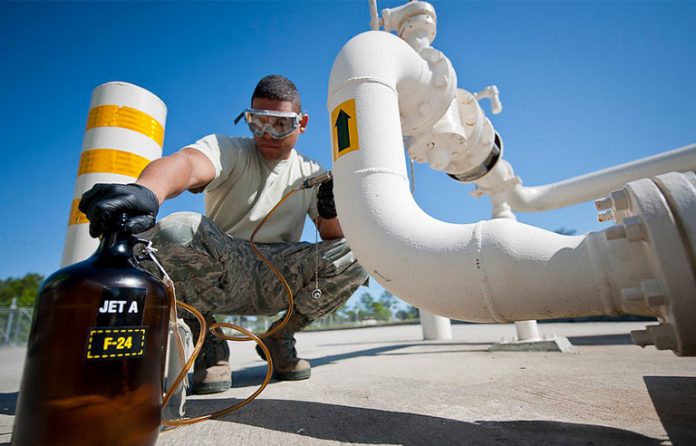
Washington — The health risks and symptoms of exposure to jet fuel are the focus of a new report recently sent to Congress by the Veterans Administration’s Health Outcomes Military Exposures service.
Required under the Promise to Address Comprehensive Toxics Act of 2022, the report includes a detailed history of health safeguards implemented by the Armed Forces in an effort to reduce service member exposure to jet fuel.
In addition, it provides a brief overview of the possible health effects of exposure on the nervous system (hearing and eye conditions) and respiratory system (reduced lung function and breathing problems), as well as on mental health (depression, attention issues, etc.).
It also identifies new research opportunities to close “critical gaps,” including a lack of data on how the duration of exposure affects health outcomes. “Without understanding how the length of time someone was exposed to jet fuel impacted their health, it would be difficult to develop clear guidelines for to reduce risk,” the report states. “There were also gaps in understanding how jet fuel exposure affects various body systems.”
A VA press release states the agency is “pursuing additional research to learn more about the health needs of veterans who may have been exposed to jet fuels during military service.”

