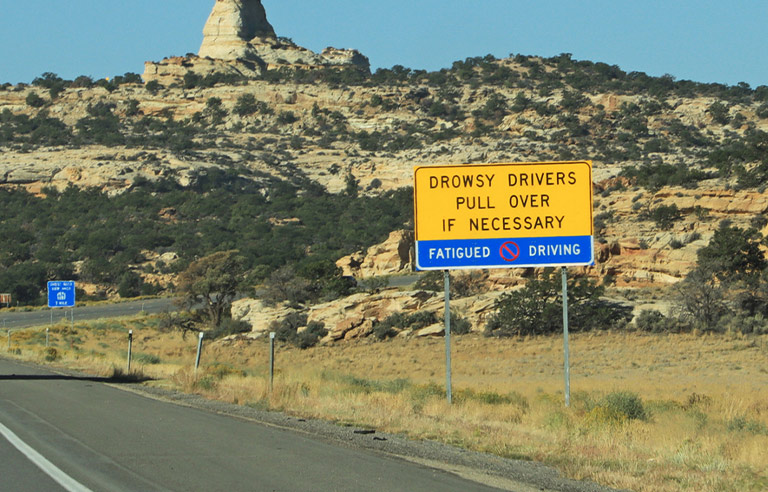
The number of suspected drowsy driving-related deaths in 2023 was exponentially higher than what federal statistics indicate, according to the Governors Highway Safety Association.
As part of a study, Jim Hedlund, a roadway safety statistician with consulting group Highway Safety North, analyzed data from multiple sources, including the Fatality Analysis Reporting System and the Crash Investigation Sampling System. He found that more than 6,300 people died in suspected drowsy driving-related incidents in 2023. The federal government’s official statistics have that number at 633.
“This massive gap exists because fatigue, unlike alcohol or drugs, leaves no physical evidence that can be tested after a crash,” a GHSA press release says.
It also cites a AAA Foundation for Traffic Safety study that showed nearly 20% of Americans admit to driving while drowsy at least once in the previous month.
“The problem cuts across demographics, but some groups face heightened risk: younger drivers (including college students), parents of children up to age 17, historically underserved individuals, people working night shifts (such as nurses) and long-haul truck drivers,” the release continues.
The GHSA offers four sets of recommendations:
- Promote healthy sleep habits for everyone. Drivers should practice good “sleep hygiene,” which includes sleeping in a quiet, cool, device-free environment and avoiding caffeine or alcohol before bedtime.
- Make use of vehicle technology. Advanced driver assistance system features can monitor for telltale signs of drowsiness (such as yawns or long blinks) and issue visual, auditory or haptic alerts to remind drivers to take a break. Notably, none of the current systems prevents a driver from ignoring them and continuing to drive, or from turning them off entirely.
- Change the culture at work and school. Employers should implement responsible scheduling and travel policies to minimize fatigue. School districts can consider shifting high school start times to later in the day to help teens get more rest. One study of high school student drivers found significantly lower crash rates with a later school start time.
- Build more, smarter infrastructure. Infrastructure changes such as rest stops, rumble strips and cable median barriers can help prevent drowsy driving-related incidents, wake up drivers or reduce the severity of a run-off-the-road crash.
“We talk about the dangers of drunk, drug-impaired and distracted driving – but drowsy driving belongs in the conversation, too,” GHSA Chief Executive Officer Jonathan Adkins said. “It’s the fourth ‘D’ that kills thousands every year; it’s time we give it the same urgency.
“By raising awareness among drivers, helping train law enforcement and expanding in-vehicle technologies, we can help ensure that fewer families experience the tragedy of a fatigue-related crash.”