
Denver — A phone call. A gift card. A letter. A box of crayons. What do these things have in common?
They’re all things that can be used by leaders to engage new employees and drive home to them the importance of safety – not only for themselves but for their family members. Plus, they’re all things that leaders can control, explained Brian Fielkow, executive vice president of risk resources at Acrisure.
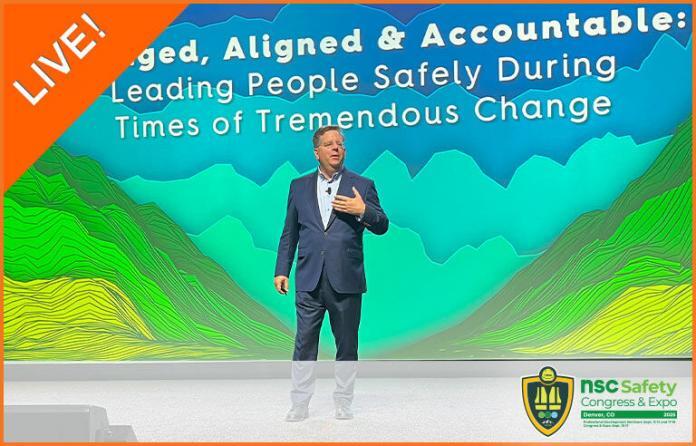
Delivering the Leadership Keynote on Tuesday during the 2025 NSC Safety Congress & Expo, Fielkow discussed a variety of ways leaders can have an impact on safety – from the workplace to home – through controllable actions.
“Focus on the hello,” Fielkow told the safety professionals in attendance. “Make sure you’re rolling out the red carpet for that new hire their first day on the job.”
When he was CEO and owner of Houston-based Jetco Delivery Services, the company on the first day of every month sent a letter to the home of new employees. It explained the importance of safety to the organization, encouraged them to ask questions of company leaders and was accompanied by a gift card.
“We said, ‘Take a loved one or a friend out to celebrate you joining our company,” Fielkow said. “Why didn’t we just give it to them at work? Because we wanted the families to see it, too.”
Jetco also had a unique way of getting the youngest family members involved in safety.
“Every couple of years, we would send home a box of crayons, a blank piece of paper and a letter saying, ‘Have your kids, grandkids, nieces, nephews draw what safety means to them,’” he said.
Jetco started a “safety brand” called Driving to Perfection (aka D2P), and some of the drawings would incorporate that message, said Fielkow, who shared artwork and messages from young ones.
One example read, “It means everything to me that my aunt comes home safely every day.”
Another drawing of a Jetco truck driving away from a house read, “Bye, and never forget what’s important. D2P.”
“Our message,” Fielkow said, “was getting through to the people that matter most – the people who made sure their loved ones were rested and ready when they went to work, before they undertook their safety-sensitive role.”
Fielkow said a CEO recently told him that he and the C-suite were too busy to welcome every new employee.
“I said, ‘You’re right. But are you too busy to record a welcome video? Are you too busy for the employees to see you on video on the first day of the job, so they know it’s important to you?’”
Fielkow noted that a longtime friend who owned a trucking company with 4,000 vehicles would personally call every new employee to welcome them.
“Even if you can’t do that, make sure the employee’s new supervisor does that to establish a personal relationship before we get to the nuts and bolts of the business,” he said.
Other letters sent to employees’ home warned about the risks of distracted driving, especially for new drivers, and working at height, such as doing work on a home’s roof.
During the presentation, Fielkow shared messages about the importance of building trust, listening, ongoing training and how to discuss the return on investment of safety to company leaders.
The benefits of these safety efforts are massive, he said.
“When safety works, companies and their employees thrive,” Fielkow said. “When it doesn’t, the financial and human costs are steep. They’re devastating.”

