
Columns

Managing food allergies in the workplace

Food allergies, whether mild or serious, are medical conditions that affect up to 15 million people in the United States, according to Food Allergy Research & Education, a nonprofit organization.

Editor’s Note: The role of enforcer

Editor Melissa J. Ruminski discusses safety enforcement.

OSHA updates guidelines for safety program management

OSHA has updated the agency’s Safety and Health Program Management Guidelines for the first in nearly 30 years, a move OSHA administrator David Michaels calls “a great step forward.”

Safety Leadership: A resolution for 2017: Be an intentional safety leader

Steven Luttrull from DEKRA Insight discusses why leaders “cannot afford to be on autopilot or get caught up in a routine that is known, comfortable or easy to check off the list.”
- Digital Partners -

The Campbell Institute: Successful safety through worker ownership

Richard Cerenzio from ISN shares his story of how a purple octopus helped reduce hand-related injuries at one company.

Dwelling on work-family conflict leads to health problems: study

Corvallis, OR – Repeatedly thinking about conflicts between work and personal life puts people at risk for physical and mental health issues, according to a study from Oregon State University.

Research highlights heart benefits of commuter and recreational biking

Odense, Denmark – People who frequently bike to work or in their free time have a decreased risk of heart disease, according to two studies recently published by the American Heart Association.

Commute by bike? Stay safe and follow the rules

For workers who live close enough to the office to commute by bike, the benefits can be great. Biking to work is good exercise, you save money at the gas pump and – by ditching your vehicle – you’ll be helping the environment.
- Digital Partners -

Workers in stressful, low-control jobs have higher risk of early death: study

Bloomington, IN – Workers in high-stress jobs who have little control over workflow and other key decisions are at a higher risk of dying early, according to a study from Indiana University’s Kelley School of Business.

CDC Foundation examines negative impact of tobacco use in the workplace

Atlanta – Smoking costs the U.S. economy more than $300 billion a year in direct medical care costs and lost productivity, including $5.6 billion in productivity losses related to secondhand smoke, according to the CDC Foundation.

Next Webinar

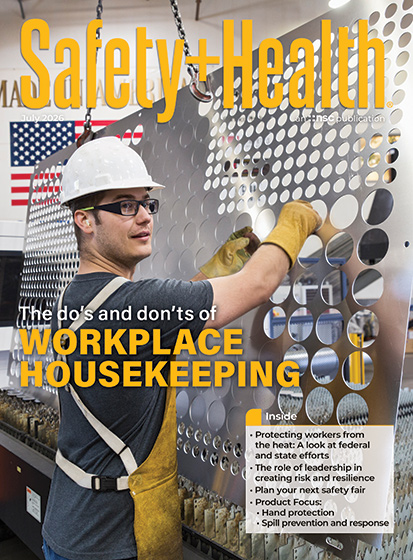
Current Issue
What's Trending

From our Partners

Earn recertification points

Board of Certified Safety Professionals

Take a quiz about this issue of the magazine and earn recertification points from the Board of Certified Safety Professionals.
